



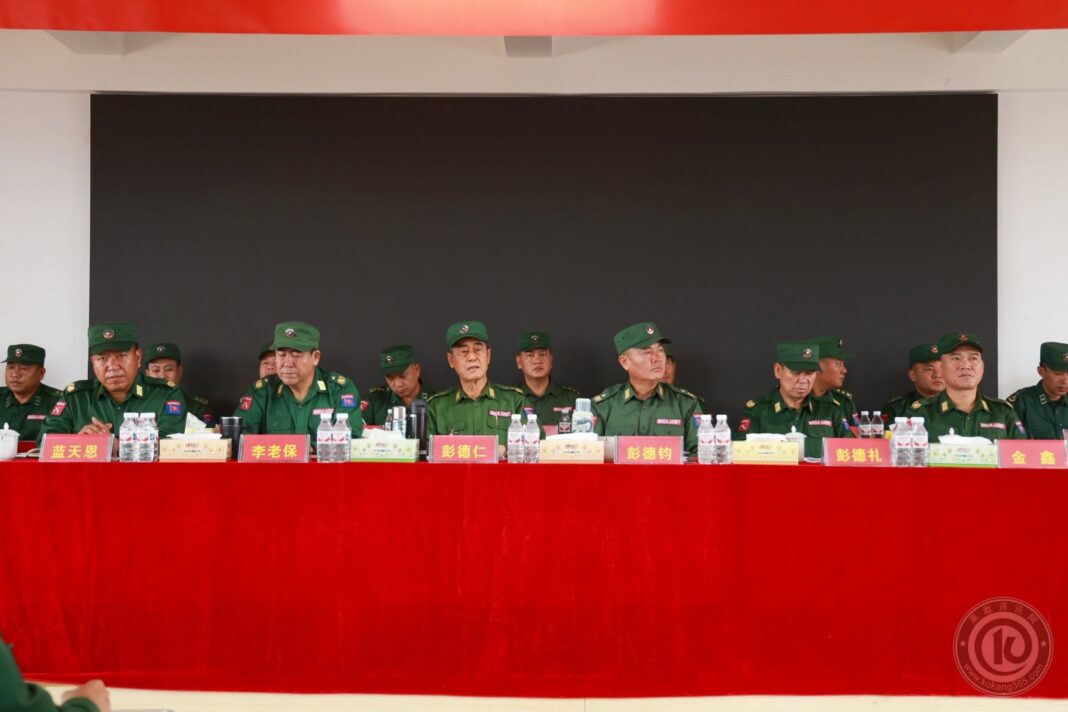
The Kokang ethnic armed group, formally the Myanmar National Democratic Alliance Army (MNDAA) and operating under the Myanmar National Truth and Justice Party (MNTJP), originally emerged as a revolutionary force dedicated to overthrowing Myanmar’s military dictatorship and establishing a Federal Democratic Union. Aligned with the Three Brotherhood Alliance (3BHA), its early rhetoric championed national liberation. However, its trajectory has dramatically shifted. Today, the MNDAA is increasingly viewed as a proxy for China, functioning as a key collaborator in a three-way arrangement involving the group itself, the Myanmar junta, and Beijing to advance Chinese interests under the Belt and Road Initiative (BRI) and the China-Myanmar Economic Corridor (CMEC). This evolution marks a stark departure from its founding aspirations. While the 3BHA also includes the Ta’ang National Liberation Army (TNLA) and the Arakan Army (AA), their paths have diverged: the AA remains the most active and successful fighter against the junta, whereas the TNLA has largely sought accommodation with both the military and China to ensure its survival.
Following “Operation 1027,” the MNDAA expanded its control far beyond the original Kokang Self-Administered Zone (SAZ), seizing vast swathes of northern Shan State including Hsenwi, Kunlong, Kutkai, and parts of Muse, Lashio, and Hsipaw. These areas constitute the traditional homeland of the Shan people, alongside Kachin and other multi-ethnic communities. Crucially, the group now commands the Lashio–Muse Road, the primary artery for border trade with China. While the initial expulsion of the Myanmar military was met with relief, the MNDAA’s subsequent administration has generated significant backlash. Its governance is increasingly characterized as authoritarian, centralized, and Kokang-centric, raising fears of a new form of military dictatorship and potential inter-ethnic conflict.
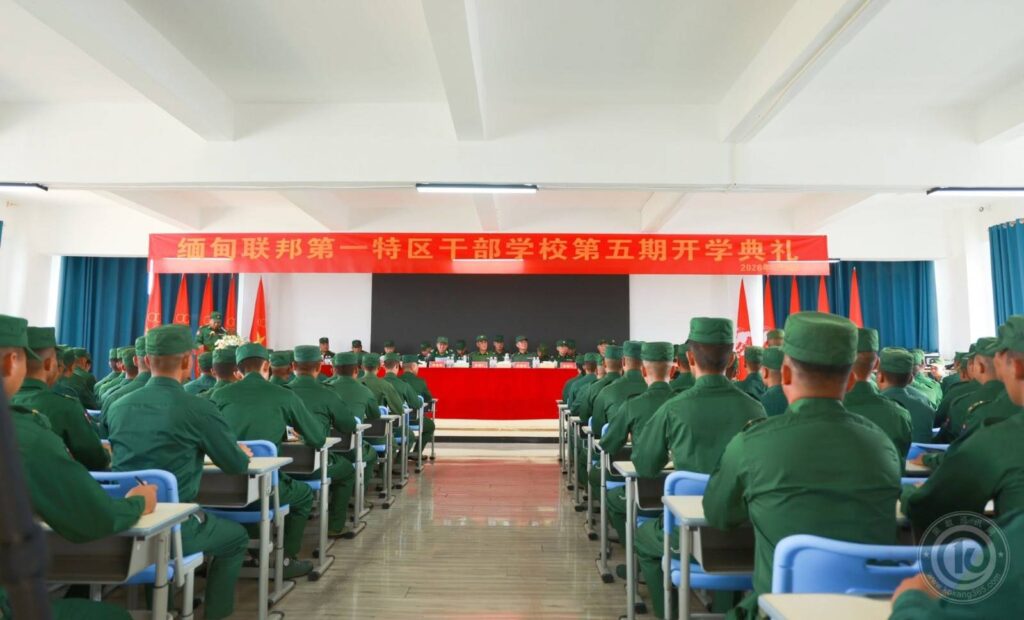
The MNDAA has transitioned from a reactive insurgent group to a formalized, state-like apparatus known as “Kokang Special Region 1.” Despite this structural shift, power remains intensely centralized, with decision-making processes that ignore local feedback and marginalize non-Kokang ethnic groups such as the Shan, Ta’ang, and Kachin. These communities increasingly view the administration as an occupying force that seeks to overwrite their history and culture. The governance model relies heavily on a “cadre” system that mirrors practices associated with the Communist Party of China, emphasizing administrative discipline and strict control. Reports indicate efforts of forced assimilation, including the replacement of Ta’ang village names with Chinese script, bans on Shan flags, and the enforcement of Chinese language and customs. Locals accuse the administration of “forced Sinicization,” noting a potential demographic shift as ethnic Chinese from Yunnan migrate into the region under the cover of the MNDAA and other ethnic armed organizations like the United Wa State Army (UWSA).
Justice, Security, and the Specter of Public Executions
In the realm of justice and security, the MNDAA has replaced statutory Myanmar law with a punitive system based on Kokang customary law. This system is characterized by severe corporal and capital punishments, a complete lack of due process, and no avenue for appeals. While urban security has improved in certain pockets, the public largely perceives these heavy-handed tactics as intimidation rather than justice. Non-Kokang residents, in particular, feel excluded from a fair legal framework.
The severity of this approach was starkly illustrated on June 13, 2026, when the MNTJP and the Special Region 1 administration held a massive public judicial ceremony in Lashio (Laukkaing). Attended by thousands of residents, party officials, and military representatives, the event was framed as a decisive step toward establishing the “rule of law” and social stability following the region’s recapture. During the ceremony, the court announced verdicts for two cases of intentional grievous harm and five cases of intentional homicide. Four convicts—Yang Jia Jian (who killed his father), Wang An Quan (who killed his mother), Zhang Tao Qing (who shot a debt collector and her husband), and Ma Aye (who killed his daughter while under the influence of drugs and committed necrophilia)—were sentenced to death.
Following the reading of the verdicts, these four individuals were publicly displayed in the streets before being taken to a designated execution site where they were shot dead. The remaining three defendants received prison sentences: Dong Guang De (7 years) and Yang Shi Qi (12 years) for intentional injury, and Ma Da (death sentence suspended for two years) for intentional homicide. The administration used the event to send a stark warning to the population, emphasizing that no one is above the law and that crimes involving violence, drug use, and the violation of human dignity will be met with the harshest penalties. Officials stated that the public execution of the four convicts was necessary to demonstrate the strength of the new judicial system and to deter future criminal activity, marking a transition from a period of lawlessness to one of strict legal order under the MNTJP’s leadership.
Conversely, the health sector has emerged as a relative success, bolstered by Chinese-trained doctors and medical staff from the Civil Disobedience Movement (CDM) who sought refuge in the region. For example, on June 9, 2026, the Health Department of the Kokang Special Region 1 announced a free eye care initiative for residents aged 65 and older in the Hsenwi, Kutkai, and Mongkoe townships. The program, aimed at providing free eye tests and glasses, operated from 9 am to 3 pm at local general hospitals on specific dates: June 11 in Hsenwi, June 13 in Kutkai, and June 15 in Mongkoe. Local authorities urged families to bring their elderly relatives suffering from vision issues to the designated hospitals during these windows to receive treatment.
The Economic Cost of Integration: Currency, Land, and Livelihood
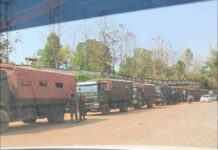
Economically, the administration is heavily dependent on transit and customs fees generated by Chinese cargo trucks. Infrastructure development prioritizes the protection of commercial interests over comprehensive urban planning. Local businesses are being priced out by low-cost Chinese imports, and the Kyat has been effectively replaced by the Yuan as the primary currency, creating significant financial hurdles for the local population. Aggressive land management policies have led to the confiscation of land for Chinese investors, particularly for banana plantations and mining operations. These actions have sparked protests that are met with detention and torture, further alienating the local populace.
A report by the Shan Herald Agency for News (SHAN) on May 27, 2026, detailed how residents of Hsenwi Township are facing a severe cost-of-living crisis. Local businesses, ranging from grocery stores to entertainment venues, now primarily price goods in Yuan, forcing residents who only hold Kyat to pay inflated, unofficial exchange rates. This currency shift has driven up the price of basic necessities dramatically; for instance, the cost of an egg has surged from roughly 150 Kyats to over 400 Kyats, while a cabbage can now cost up to 3,000 Kyats.
The economic strain is compounded by a growing influx of Chinese investors who are leasing abandoned properties and farmlands at rates far beyond the reach of local residents. Locals report that Chinese license plates are common on the streets, and MNDAA officials are accused of leasing land to Chinese investors for large-scale agricultural projects like tissue bananas and sugarcane. This economic displacement has left ordinary residents feeling trapped between rising prices and stagnant local incomes.
Beyond economic pressures, the fragmented territorial control between the MNDAA and the Myanmar military has created significant administrative hurdles. Travelers moving between MNDAA-controlled Hsenwi and military-held Lashio are often forced to swap vehicle license plates to avoid fines of up to 600,000 Kyats, a practice residents describe as extortion by military police. Meanwhile, the MNDAA has accelerated the issuance of “Kokang IDs,” charging 20,000 to 25,000 Kyats per document. These local identification cards reportedly grant holders special travel privileges to Chinese border towns like Mangshi, further cementing the region’s integration with China while creating a new bureaucratic and financial barrier for locals without such documentation.
Social Friction: Erosion of Trust and Forced Recruitment
Public support for the administration has reportedly collapsed, with estimates suggesting only 30% of residents now back the leadership, while 70% resent it. The leadership ignores community feedback and treats the population with a distinct lack of respect. Residents live in fear of criticizing the administration, and protests against land seizures are met with arrest, beatings, and torture. Civil Society Organizations face severe restrictions, although Shan civil society remains active in documenting these abuses. Additionally, forced recruitment has become a source of deep social friction, with armed groups often targeting families that already have members serving in other groups.
A SHAN report from June 10, 2026, highlighted that residents of Mong Yai Township are fleeing their homes in fear after the MNDAA launched a forced recruitment drive targeting villagers based on household registration records. On May 23, MNDAA officials ordered village administrators from four specific tracts to supply one recruit within ten days; when local leaders appealed for the order to be revoked on June 3, their requests were flatly rejected. Consequently, village heads face arrest and physical abuse for failing to meet quotas, while families of identified individuals have abandoned their homes to avoid conscription.
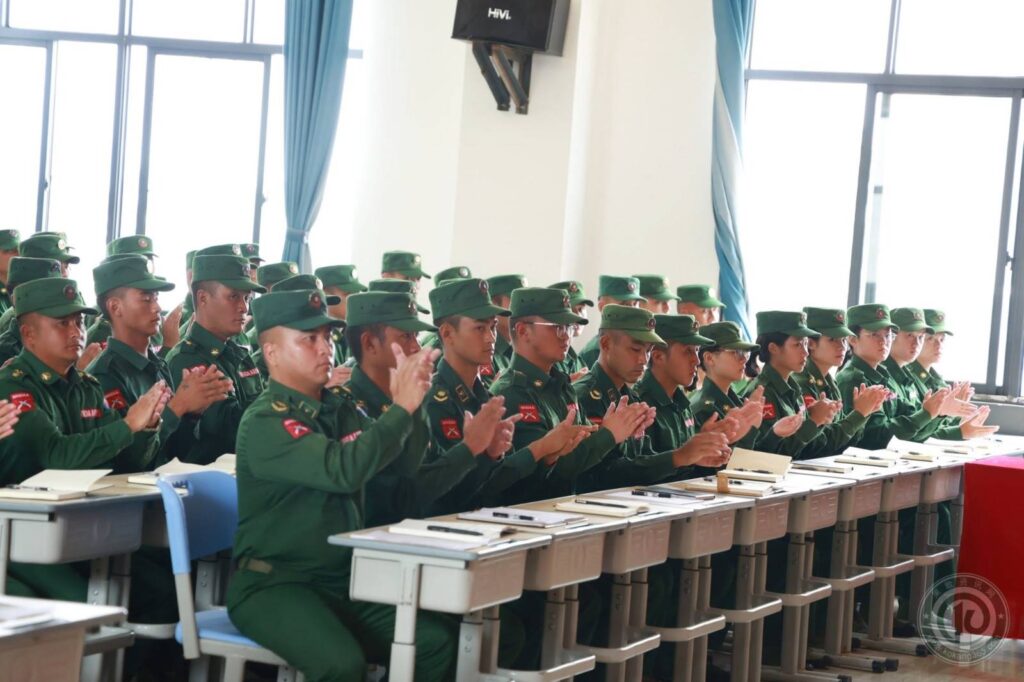
The MNDAA is reportedly using data collected during a registration campaign that began in September 2025, where locals were warned that failure to register would classify them as “outsiders.” Residents now view these administrative documents not as a means for civil governance, but as a database for military conscription. Selected recruits, including women, are being sent to Hopang and Kunlong for training. Despite the presence of other armed groups in the area, such as the TNLA, UWSA and Shan State Progress Party/Shan State Army (SSPP/SSA), locals report that no other factions have intervened to protect the affected communities, leaving them vulnerable to the MNDAA’s coercive tactics.
The Strategic Shift and Future Outlook
The strategic shift toward becoming a proxy for China is now evident. As the MNDAA’s territory expanded beyond its initial expectations, the group realized it needed external support to maintain control. Consequently, its administration now prioritizes Chinese economic interests, securing border trade routes and facilitating investments in pipelines and infrastructure. This arrangement provides the MNDAA with military protection and financial stability but severely limits its autonomy. Beijing exerts pressure on the group to align with its interests, including restraining rival groups like the PSLF/TNLA. There are also reports that China has effectively seized territory by building fences along the border within Myanmar, a move the MNDAA has not resisted.
Looking ahead, the region faces a precarious future. By failing to accommodate the multi-ethnic reality of the area, the MNDAA administration has created a dangerous spark for future ethnic conflicts. The influx of Chinese nationals and the perception of demographic engineering are critical flashpoints. Meanwhile, the Myanmar military is likely to continue a containment policy, in northern Shan State rather than launching a major offensive, given its engagements elsewhere countrywide. Peace talks remain stalled, and unlike the TNLA, the MNDAA faces no pressure to retreat to its original SAZ boundaries, suggesting that current deals are based on military power rather than local wishes. Observers warn that if Ethnic Resistance Organizations continue to rely on taxation, forced recruitment, and the exclusion of local voices, they risk failing to govern effectively and may inadvertently trigger a “foreign invasion” narrative that could fracture the entire resistance movement.
Analysis
The MNDAA’s administration has proven efficient at territorial consolidation and revenue generation, yet it fundamentally lacks legitimacy among the non-Kokang populations it governs. The transition from a liberation movement to a China-aligned proxy has come at the cost of its original federalist ideals and its relationship with the diverse ethnic groups in northern Shan State. Without a significant shift toward inclusive governance that respects local identities and ensures economic sharing, the region faces a high risk of sustained instability, ethnic fragmentation, and the potential for a new, internal conflict that could undermine the broader fight against the Myanmar military junta. The current trajectory suggests that the MNDAA’s short-term gains in power and security may lead to long-term strategic failure if it cannot address the deepening resentment of its own population.
In sum, the core anxieties of “Sinicization” coupled with a Kokang-centric push must be addressed. The erosion of sustainable livelihoods in their own homesteads, combined with the fear of Chinese population transfer from Yunnan into northern Shan State, leaves non-Kokang ethnic groups insecure about losing their identities. Unless these fears are alleviated, the prospect of harmonious coexistence will remain elusive, likely resulting in unending inter-ethnic conflict rather than a stable, unified resistance that would empower the revolution.




Leave a Comments