

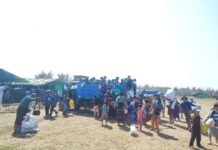
“Whether it’s the military council or the Kokang army, the people just want fairness. We have no power to choose who should rule us, and we refuse to be manipulated,” said Sai Lu, a displaced resident of Lashio, his voice breaking.
In the misty highlands of Northern Shan State, Lashio is no longer just a city, as it’s the frontline of a political tug-of-war. Caught between military factions and foreign influence, ordinary citizens are left with little more than fear, uncertainty, and a fading sense of agency.
A Quiet New Year Turned Tense
Since April 17, New Year’s Day on the Burmese calendar, Lashio has been undergoing a tense and unexpected transition. The Myanmar National Democratic Alliance Army (MNDAA), also known as the Kokang army, began relinquishing control of the city to the military council. The handover is widely believed to have been brokered under significant pressure from China, raising serious questions about sovereignty, transparency, and the wellbeing of local communities.
The Helicopter Arrival That Changed Everything
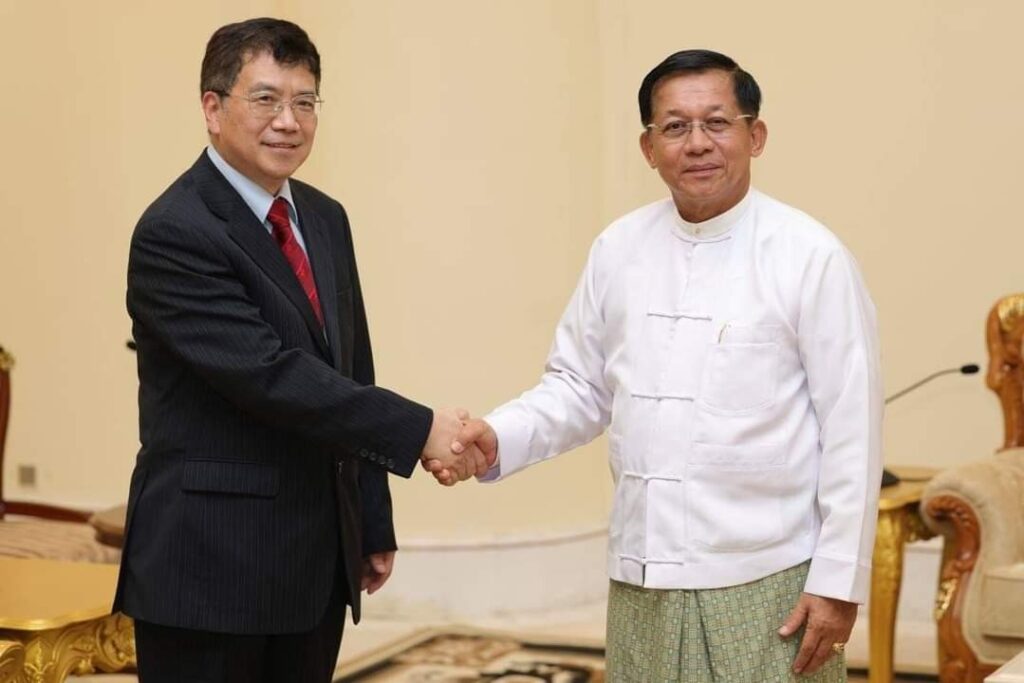
The transition was foreshadowed the day before, on April 16, when two helicopters landed unexpectedly at Lashio airport. Aboard were high-ranking military council officials and Chinese diplomats, including Deng Xijun, Beijing’s Special Envoy for Asian Affairs. Their arrival signaled the start of delicate negotiations to facilitate the military’s return—talks that few residents or resistance groups saw coming.
On April 17, tight security surrounded the “Two Elephants” Hotel in Ward 2, where a high-stakes meeting took place between the Kokang army, Chinese envoys, and military leaders.
“General Ko Ko U is expected to join on April 21, and Deng Xijun won’t leave until the process is complete,” a military source inside Lashio confirmed.
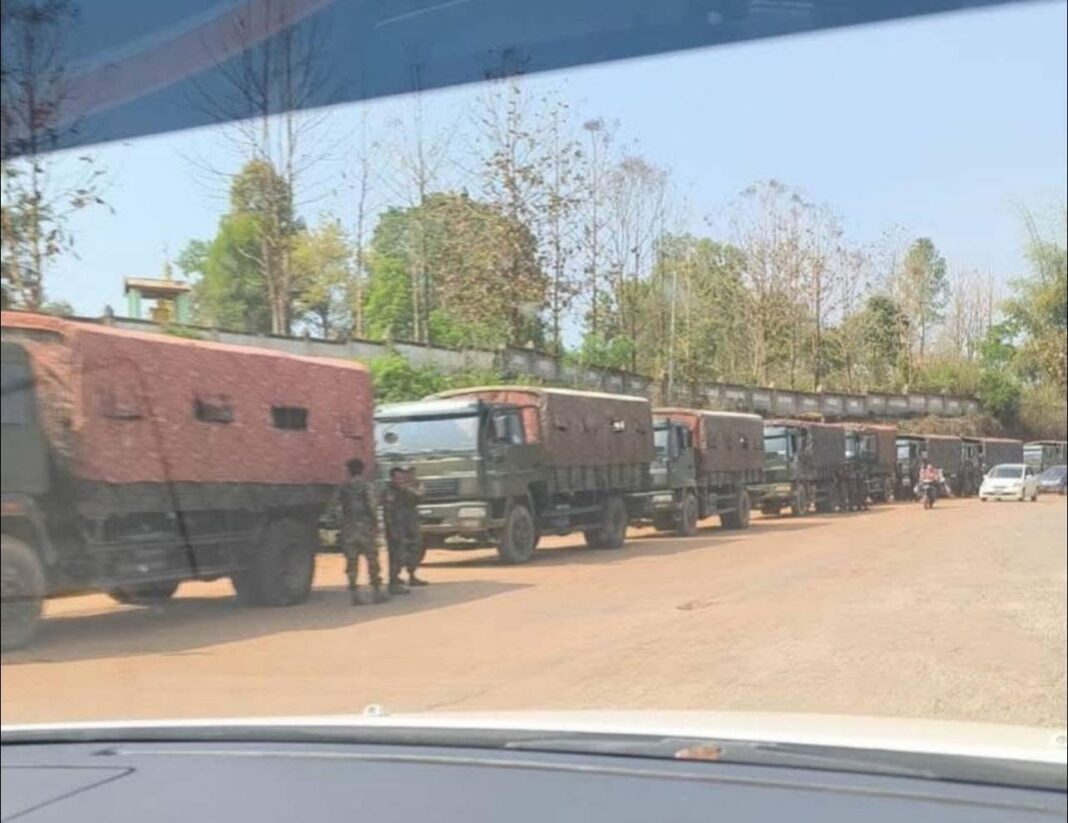
China also marked its presence with a convoy of 30 vehicles bearing “Ceasefire Monitoring Team” banners, entering the city on April 19 via the Chin Shwe Haw, Kunlong route.
Diplomacy on the Surface, Fear Below
While the return of officials and foreign monitors suggests diplomacy, the atmosphere in Lashio is anything but calm. The military is quietly reinstating key administrative departments, General Administration, Immigration, and Military Security, all under civilian guise. Meanwhile, Kokang troops continue to encircle the city from a two-mile radius, maintaining control over surrounding villages.
“There’s fear that violence could break out at any time,” said Sai Lu. “People remember what happened in Muse. Lashio could be next.”
Basic services have deteriorated. Healthcare is especially strained, with little equipment and exorbitant medicine prices.
“The hospital director might be back, but without supplies, what’s the point?” said Nang Thida, another resident. “Even a simple dose of medicine costs 10,000 to 20,000 kyats now. It’s unbearable.”
China’s Heavy Hand
China’s growing footprint in Lashio is unmistakable. Reports suggest plans to open a trade or consular office in the city, further cementing Beijing’s involvement. The Kokang army is also setting up a liaison office, signaling long-term coordination.
“Whether they like it or not, both the army and Kokang must follow China’s lead,” a veteran revolutionary from Shan State observed. “Lashio isn’t becoming autonomous, it’s becoming a buffer zone for China.”
Kokang flags and signs proclaiming Lashio as part of Special Region 1 have already been taken down. Kokang troops now man checkpoints, and a new order, imposed from beyond Myanmar’s borders is being established.
A Silenced Majority
For Lashio’s residents, this power shuffle isn’t about political ideology, it’s about survival.
“There’s no one here to explain what’s happening to the people,” Sai Lu said. “Lashio feels like a puppet on strings pulled by foreign powers. No one is speaking for us.”
Though trilateral talks concluded on April 22, the outcomes remain undisclosed. Over 200 military vehicles have already entered the city, supported by Chinese logistics. While soldiers now wear civilian clothes, their growing presence is clear.
A City Held Hostage
What’s happening in Lashio is more than a simple military repositioning. It reflects a deeper national crisis—one where local voices are ignored, foreign powers dictate outcomes, and communities are left powerless.
As Sai Lu poignantly stated: “They treat us like toys in a game. But we’re not pieces on a board. We’re human beings.”
Until the people of Lashio regain their voice and decision-making power, the city will remain in limbo, a symbol of a country struggling for self-determination and justice.

Leave a Comments