




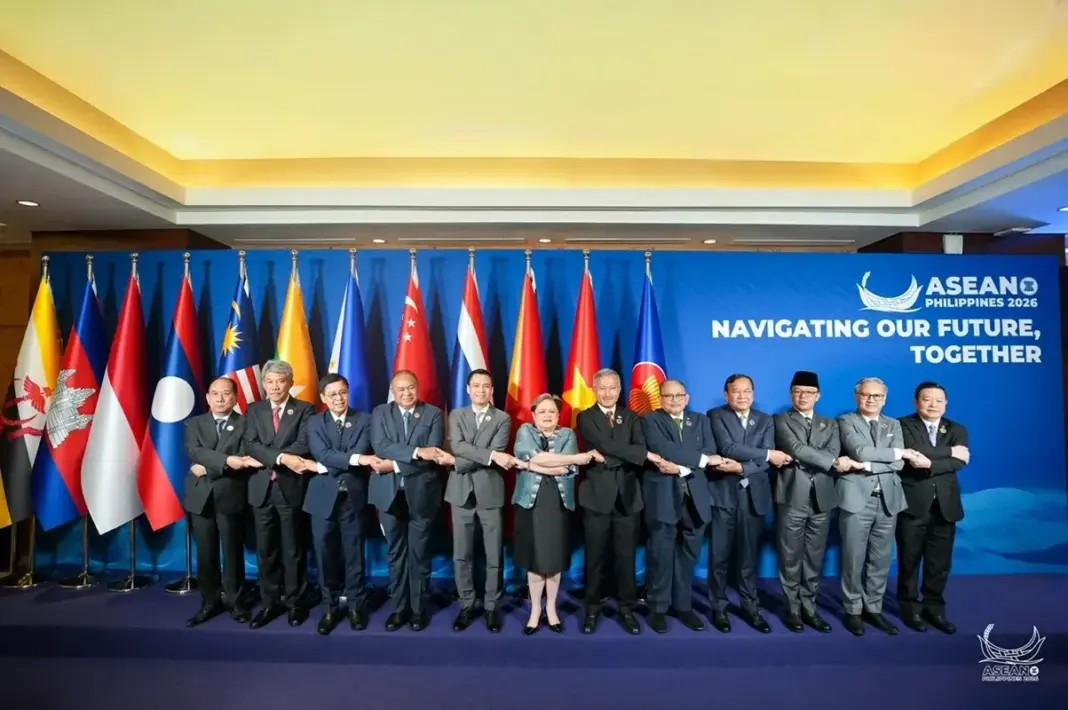
In the high-stakes chess game of Southeast Asian geopolitics, the People’s Republic of China has long held the position that stability in Myanmar is synonymous with the survival of the military junta led by Min Aung Hlaing. For Beijing, the generals in Naypyidaw represent a predictable, albeit brutal, neighbor who can keep its borders secure and its Belt and Road Initiative projects moving. However, a profound shift is underway on the ground. The Steering Council for the Emergence of a Federal Democratic Union, a broad alliance of ethnic armed organizations and the National Unity Government, is executing a sophisticated strategy that threatens to turn China’s greatest fear—instability—into its own undoing. As the junta’s attempt to manufacture legitimacy through manipulated elections crumbles, the resistance is offering Beijing a stark choice: continue propping up a failing state or engage with the only force capable of delivering the stability China desperately craves. This strategic pivot is set to face its most critical test at the upcoming 48th ASEAN Summit in Cebu, where the legitimacy of the Myanmar regime will be dissected, potentially sealing its fate as a pariah state, even as regional dynamics fracture along the lines of Thailand’s pragmatic engagement.
The Illusion of Quasi-Civilian Legitimacy
The junta’s recent maneuvers, including the staging of a widely condemned election and the cosmetic relocation of Aung San Suu Kyi from a prison cell to a minister’s house, were designed to project an image of a normalized, quasi-civilian government. Beijing initially welcomed these half-measures, hoping they would quell international criticism and secure its economic interests. Yet, the reality on the ground tells a different story. Far from pacifying the country, the election has only deepened the rift, with March 2026 already recorded as one of the deadliest months for civilians since the 2021 coup. The resistance argues that the junta’s strategy is not a path to order but a recipe for perpetual chaos. By insisting on a monopoly of power through force and fraud, the military has ensured that it cannot govern, making the country a persistent liability rather than a stable partner. This growing disconnect between the junta’s claims of legitimacy and the reality of its rule is about to collide with the diplomatic machinery of ASEAN in Cebu, complicated by the divergent approaches of member states like Thailand.
Thailand’s Pragmatic Gamble and the Risk of ASEAN Fragmentation
Thailand’s position represents the most significant wildcard in this equation. While the Philippines, under its current chairmanship, pushes for a harder line against the junta, Thai Foreign Minister Sihasak Phuangketkeow is advocating for a return to direct engagement, even inviting the Myanmar junta’s foreign minister to meet regional counterparts. Thailand’s approach is driven by immediate, tangible pressures: the spillover of conflict, refugee flows, and the need to secure its own northern border. By seeking to restore diplomatic ties with Naypyidaw, Thailand risks shattering the bloc’s unity and providing the junta with the very legitimacy it so desperately seeks. If Thailand succeeds in normalizing relations with the military government, it could undermine the efforts of the Philippines and other members to isolate the junta, effectively creating a two-tier ASEAN where the military government is treated as a legitimate partner by some and a pariah by others. This fragmentation plays directly into the junta’s hands, allowing Min Aung Hlaing to claim that the region still recognizes his authority, even as the rest of the world turns away.
The Cebu Crucible: A Battle for Regional Consensus
The upcoming ASEAN Summit in Cebu, therefore, becomes the battleground for the soul of Myanmar’s future. A coalition of former foreign ministers and UN experts has already urged ASEAN leaders to abandon the ineffective Five-Point Consensus and adopt a tougher stance, demanding a ban on all junta officials, including working-level diplomats. If the Philippine chairmanship succeeds in rallying the bloc behind this measure, the junta will suffer a catastrophic blow to its legitimacy. It would signal that ASEAN no longer views the military as a legitimate interlocutor, stripping it of the diplomatic cover it has relied on to conduct its affairs. However, the success of this move hinges on whether Thailand and other members with vested interests in the status quo can be persuaded to prioritize long-term regional stability over short-term diplomatic convenience. If the bloc remains divided, the junta will continue to exploit these cracks, using Thailand’s engagement as a shield against broader isolation.
The SCEF’s Rise as the De Facto Government
Conversely, the chances for the opposition alliance, the SCEF, look increasingly promising in this new diplomatic environment, provided they can navigate the complex web of regional interests. The summit provides a platform for the National Unity Government to present itself not just as a resistance movement, but as the legitimate government of Myanmar. The call to recognize Win Myint as the country’s legitimate president is gaining traction, especially as the junta’s election results are dismissed as fraudulent by the international community. If ASEAN moves to recognize the NUG and the SCEF as the true representatives of the Myanmar people, it would fundamentally alter the regional power dynamic. The alliance would transition from a rebel group to a recognized political entity, capable of engaging in formal diplomacy and securing international aid. This shift would validate the resistance’s narrative that they are the only viable alternative to the junta, undermining the military’s claim to sovereignty.
China’s Strategic Dilemma: The Pro-West Fear and Border Realities
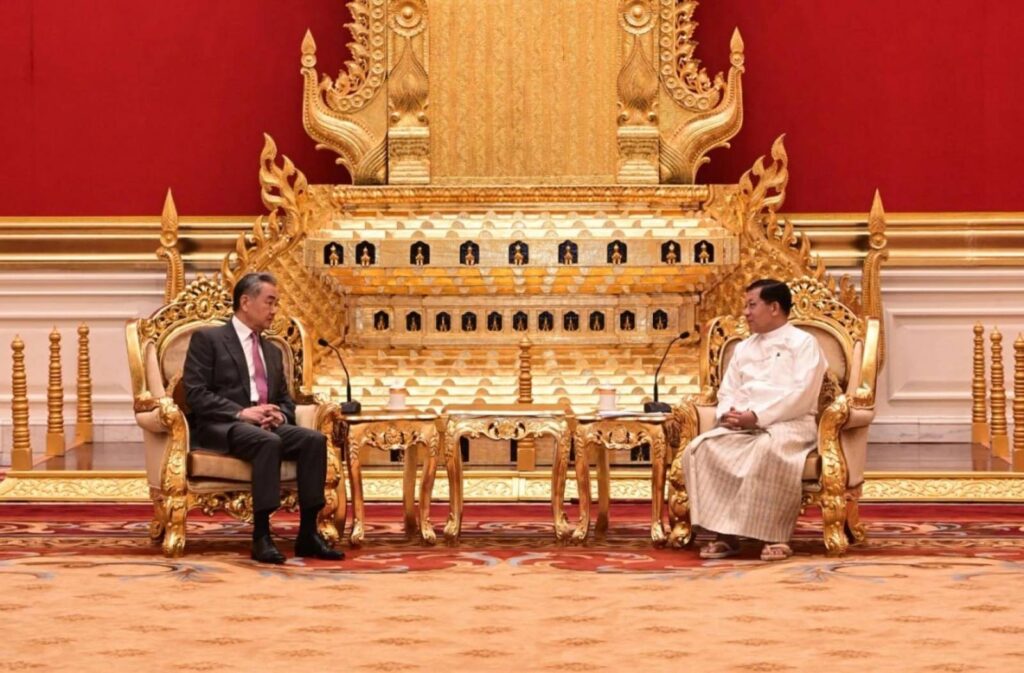
China’s role remains the central variable in this equation. Until now, Beijing has put its whole weight behind Min Aung Hlaing, driven by a deep-seated fear that the anti-junta SCEF is pro-Western and could align Myanmar with the United States and its allies. This ideological suspicion has blinded China to the junta’s failures. However, China is also dealing with the Arakan Army (AA) with “knitted gloves,” recognizing the group’s control over the Rakhine coast, which is critical for the Kaladan Multi-Modal Transit Transport Project linking India to the Bay of Bengal, as well as for Bangladesh’s efforts to repatriate Rohingya refugees. The AA’s strategic position forces China to maintain a delicate balance: it must support the junta in Naypyidaw to maintain its official stance, while simultaneously engaging with the AA to secure its economic interests on the ground. This duality exposes the limits of China’s influence; it cannot prop up a regime that cannot control its own borders, nor can it ignore the reality of the resistance’s growing power.
The Path to Stability: Decoupling Beijing from Naypyidaw
The resistance’s strategy toward China is not one of ideological confrontation but of pragmatic reorientation. The SCEF understands that Beijing is not a monolith driven solely by political loyalty to the junta. Beneath the central leadership in Beijing lies a complex web of provincial interests, particularly in Yunnan, and state-owned enterprises that prioritize economic survival and security over political alliances. The resistance is actively engaging these local actors, offering them something the junta cannot: security guarantees. By publicly declaring Chinese assets as neutral and committing to the protection of Chinese workers and infrastructure within their territories, the SCEF is effectively decoupling Beijing’s economic interests from the junta’s political survival. They are sending a clear message that the path to a safe environment for Chinese investment runs through the resistance, not the military.
This approach exploits a growing frustration within China’s own policy circles, a frustration that will be amplified by the ASEAN Summit. The junta has proven incapable of controlling its own border regions, leading to a surge in cross-border crime, refugee flows, and the threat of conflict spilling into Chinese territory. The resistance, by contrast, has demonstrated an ability to govern, collect taxes, and maintain order in the areas they control. The narrative being crafted by the SCEF is simple yet devastatingly effective: the junta is the source of the instability, while the resistance is the solution. If China continues to pour resources into a regime that cannot secure its own borders, it is merely burning money. Conversely, if Beijing engages with the SCEF, it gains a partner capable of delivering the peace and order that Beijing claims to want. The ASEAN Summit will be the venue where this narrative is tested against the bloc’s collective will.
The Arakan Army: The Gatekeeper of Strategic Interests
The Arakan Army’s role is particularly pivotal in this dynamic. Their control over the coastal region means they are the gatekeepers of China’s strategic interests in the Bay of Bengal. The SCEF’s ability to coordinate with the AA ensures that Chinese logistics remain open even as the central government collapses. This de facto relationship bypasses the junta entirely, creating a shadow diplomacy where Chinese border officials deal directly with the resistance. This reality forces Beijing to acknowledge that the junta’s authority is increasingly theoretical, while the SCEF’s authority is operational. The ASEAN Summit will likely highlight this disconnect, as the bloc seeks to engage with the only entities that can actually influence the ground situation.
Conclusion: The End of the Junta’s Diplomatic Shield
Ultimately, the resistance is playing a long game that traps China in its own logic, a trap that the ASEAN Summit could spring. Beijing’s stated goal is stability, but its actions are supporting a regime that generates chaos. The SCEF is offering a way out: a federal union that respects ethnic diversity, secures borders, and guarantees the safety of investments. The choice for Beijing is no longer between a democratic government and a military junta; it is between a failing dictatorship that threatens its interests and a functional, albeit imperfect, coalition that can secure them. As the junta’s legitimacy evaporates with every failed election and every new atrocity, the cost of propping it up will eventually exceed the cost of engaging with the resistance.
The near future will likely see China attempting to hedge its bets, perhaps by quietly reducing support for the junta while maintaining a facade of neutrality, especially if the ASEAN Summit results in a formal shift in recognition. However, the momentum is clearly with the resistance. The SCEF has proven that it can fight, govern, and negotiate. It has turned the junta’s greatest weakness—its inability to control the country—into its own greatest strength. By offering China a path to stability that does not require the military, the resistance is forcing Beijing to make a cold, calculated decision. The ASEAN Summit in Cebu will be the crucible where this decision is made, potentially marking the end of the junta’s diplomatic shield and the beginning of a new era where the resistance is recognized as the legitimate voice of Myanmar. The era of the junta’s unchecked power is ending, not just because of the bullets on the battlefield, but because of the shifting winds of legitimacy and the pragmatic needs of its neighbors, including a Thailand that may soon realize that engagement with a failing regime is a dead end.










Leave a Comments