




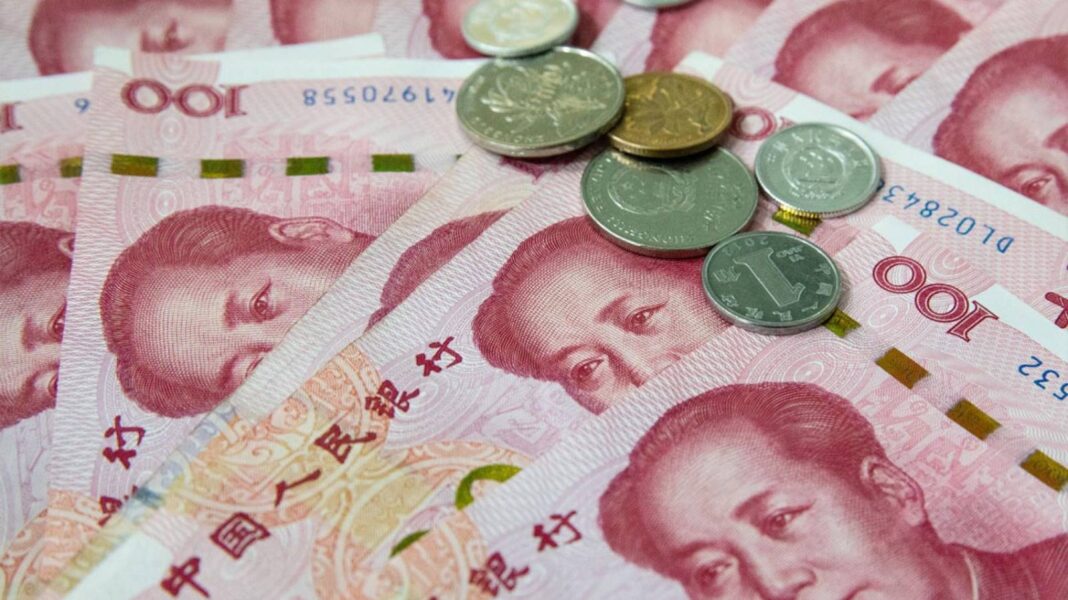
Residents of Hsenwi Township in northern Shan State say they are struggling with soaring commodity prices as the Chinese Yuan increasingly replaces the Myanmar Kyat in daily trade and business transactions.
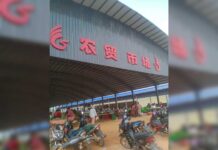
Hsenwi, currently under the control of the Myanmar National Democratic Alliance Army (MNDAA), has seen a growing influx of Chinese investors since the armed group seized control of the area. Locals say businesses ranging from grocery stores and pharmacies to restaurants and KTV lounges now primarily operate using Chinese Yuan instead of Myanmar Kyat.
A woman in her 30s from Hsenwi told SHAN that many shops no longer calculate prices in Kyat, forcing residents without Yuan to pay inflated exchange rates.
“We only have Myanmar Kyats, but prices are calculated in Yuan,” she said. “If we pay with Kyats, they charge us above the normal exchange rate. For example, if 100 Yuan equals 61,000 Kyats, they demand 63,000 Kyats instead. When the Kyat loses value, ordinary people are the ones who suffer.”
Residents say the growing influence of Chinese businesses has sharply increased the cost of living in the town. According to locals, the price of a single egg has risen from around 150 Kyats to more than 400 Kyats, while a cabbage that previously cost about 500 Kyats now sells for as much as 3,000 Kyats.
“Chinese businessmen can still afford these prices because their incomes are much higher,” the woman added. “But local people are trapped in the middle. Prices keep rising, and we can barely afford basic necessities anymore.”
Local merchants say towns near the China-Myanmar border, including Hsenwi, Hopang, Kunlong, and Chinshwehaw, have become increasingly dependent on Chinese goods, trade networks, and currency flows.
Residents also report that Chinese investors are renting homes, shops, and farmlands abandoned by people displaced during the fighting, often at prices far beyond what local residents can afford.
Vehicles bearing Chinese license plates are now commonly seen throughout Hsenwi, while some locals accuse MNDAA officials of leasing local farmland to Chinese investors for large-scale cultivation of tissue bananas, sugarcane, and watermelons.
The division of territorial control between the MNDAA and the military has also created new burdens for residents traveling between Hsenwi and nearby Lashio.
While Hsenwi remains under MNDAA administration, Lashio is controlled by the military. Residents say drivers traveling between the two towns are often forced to change their vehicle license plates depending on which territory they enter.
“If you forget to change your license plate before entering Lashio, you can be fined immediately,” one resident said. “People are reportedly forced to pay between 400,000 and 600,000 Kyats.”
Locals accuse military police in Lashio of exploiting the situation to extort money from travelers.
Since late November 2025, the MNDAA has also accelerated the issuance of Special Region (1) household registration documents and local identification cards in Hsenwi.
Residents say so-called “Kokang IDs” are being issued to around 200 people per day, with fees ranging from 20,000 to 25,000 Kyats per person.
Border traders told SHAN that the documents reportedly allow holders to travel as far as Mangshi in China through the Mong Ko and Chinshwehaw border crossings with Chinese approval.




Leave a Comments