



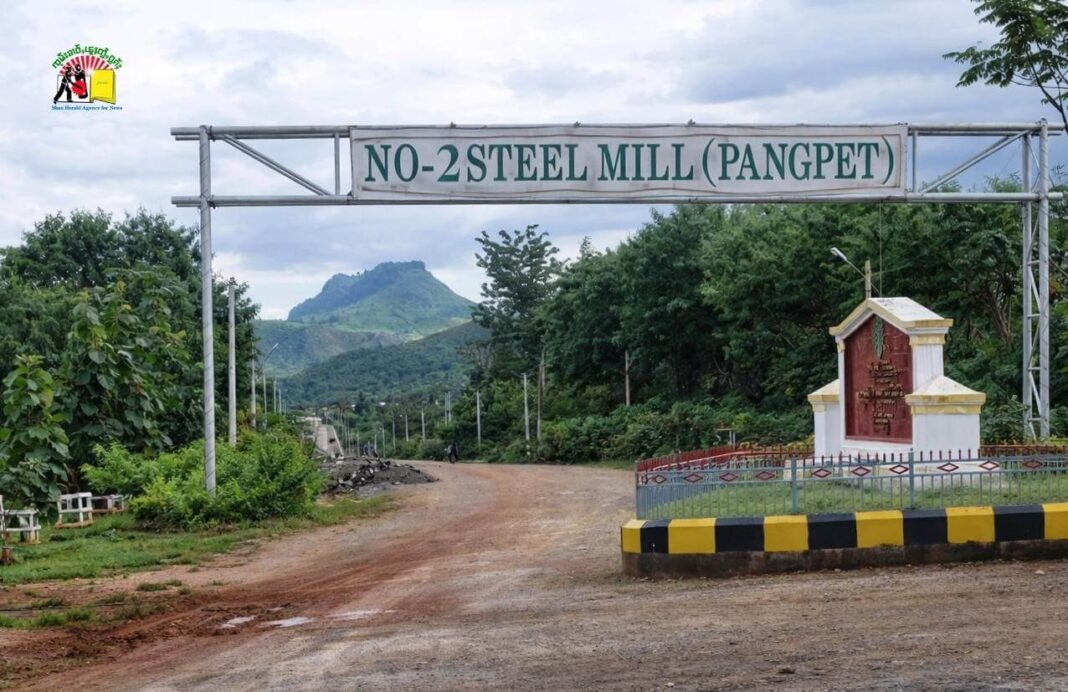
A new oxygen and nitrogen production plant has officially begun commercial operations at the No. (2) Steel Mill – Pang Pet (Pinpet) in Taunggyi, southern Shan State, according to local residents. However, the project continues to face strong criticism from residents and environmental observers over land seizures and environmental damage linked to the factory.
The opening ceremony on March 8, 2026, was attended by Shan State Chief Minister U Aung Aung, experts from Russia’s TPE Co., Ltd., the chairman of the Pa-O Self-Administered Zone, and other government officials, according to reports by state-run MRTV.
The newly opened facility is designed to produce oxygen and nitrogen for use in the iron-smelting process at the Pang Pet steel mill. During the ceremony, Chief Minister U Aung Aung said the project would contribute to regional development and create employment opportunities, describing the Pinpet project as a “milestone of cooperation” between Myanmar and Russia.
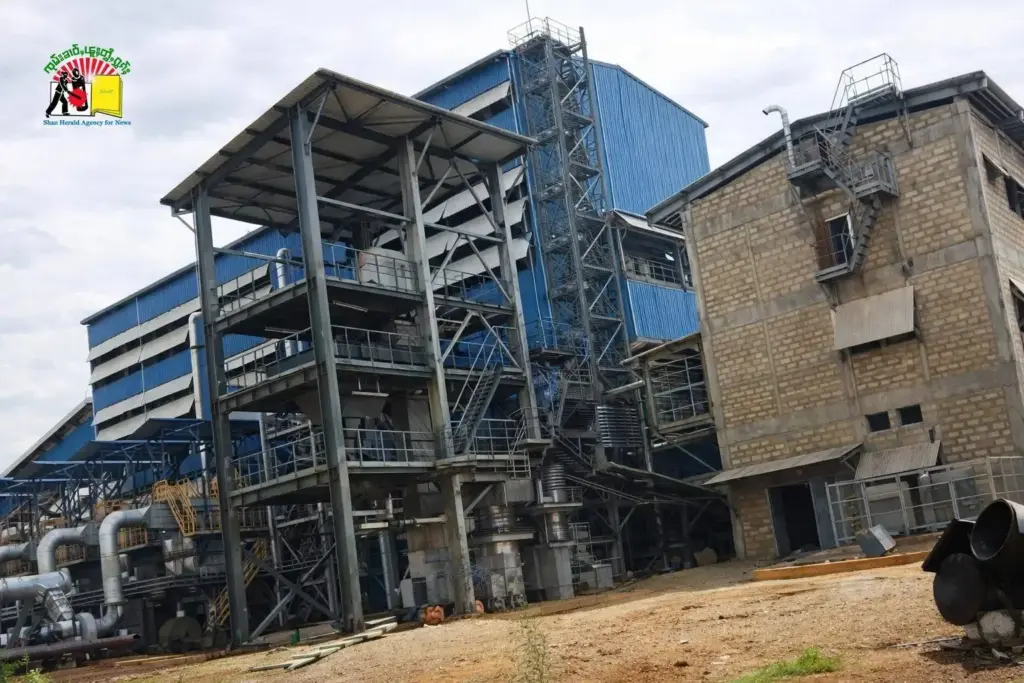
Despite the official praise, residents living near the factory say they are facing serious consequences, including the loss of ancestral farmland and environmental degradation.
Residents in the Pong Inn area reported that factory wastewater is being discharged into Nam Tabat Creek, raising concerns about pollution and public health.
A local healthcare worker told SHAN that residents in the area have experienced persistent skin irritation and rashes.
“The itching comes and goes for a long time. Even medicine doesn’t clear it up. We believe it is related to the water, especially for those who come into contact with the runoff,” she said.
Nam Tabat Creek serves as an important water source for communities in Taunggyi, Hopong, and Hsihseng townships, where it is used for rice cultivation and fishing. The creek flows for nearly 30 miles through Karenni State before eventually joining the Salween River.
Environmental expert Sai Khur Hseng said the pollution affecting the Pong Inn area is likely caused by industrial waste discharged upstream from the Pang Pet factory.
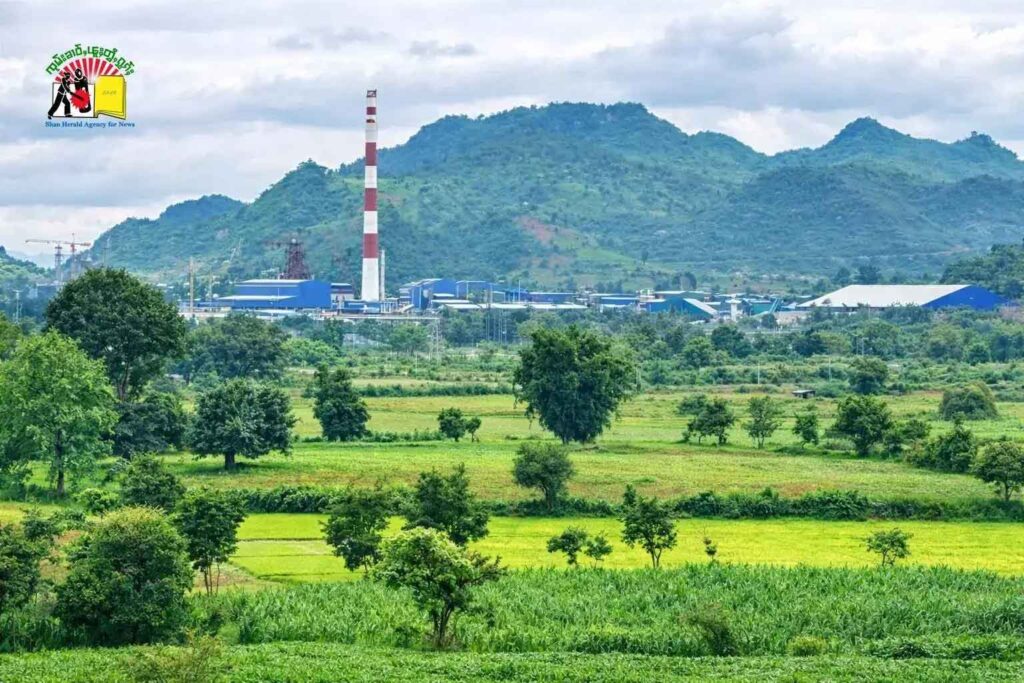
A 2023 report by the Pa-O Youth Organization (PYO) similarly warned that more than 100 villages downstream have been affected by waste flowing into the waterway.
The Pang Pet project was originally launched in 2004 under a contract between the military-owned Myanmar Economic Corporation (MEC) and Russia’s TPE.
The project was suspended by the National League for Democracy (NLD) government in 2017 due to significant financial losses. However, the military regime revived the project in 2021 with renewed Russian assistance.
According to PYO, the Russian partner VO Tyazhpromexport involved in the project is a subsidiary of Rostec, a company known for exporting weapons to the Myanmar military.
To supply energy for the plant, the project plans to use approximately 1,500 tons of coal per day sourced from Kyethi Township.
The pig iron produced at the Pang Pet plant is expected to be transported via the recently opened Shwenyaung–Taunggyi–Naungkar–Pang Pet railway line to a steel mill in Myingyan.
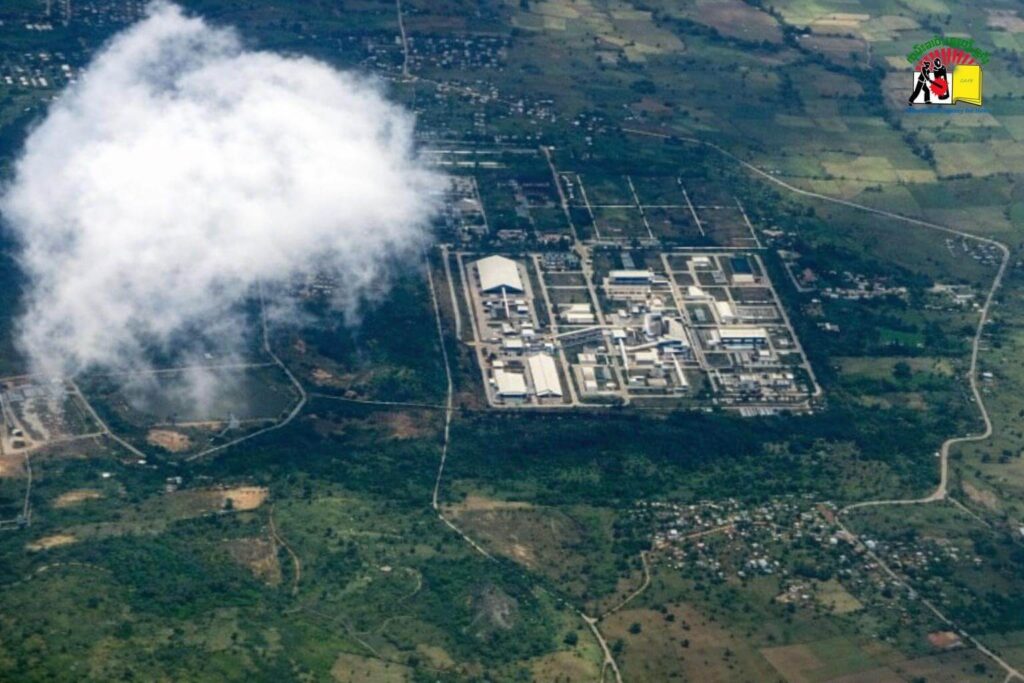
Local groups say the project has also displaced farming communities. According to PYO reports, much of the land used for the project was acquired through intimidation, with some farmers allegedly receiving compensation as low as 5,000 kyats per acre.
As a result, many families have reportedly lost their farmland and livelihoods, forcing some residents to migrate abroad in search of work.
While the regime expects the facility to produce up to 200,000 tons of pig iron annually, concerns remain over the lack of transparency surrounding the project, unresolved land disputes, and the long-term environmental impact on surrounding communities.






Leave a Comments