





Residents of Mong Hpyak Township in eastern Shan State report severe environmental damage and displacement linked to large-scale gold mining operations carried out by Chinese investors in partnership with local businessmen.
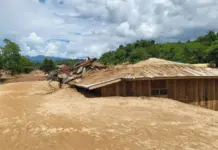
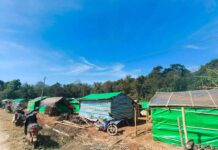
Since mid-2025, mining companies have been using heavy machinery to extract gold along the Nam Long Stream near Wan Pong and Mong Hai villages. Locals say the operations have polluted water sources and forced farmers to sell their land under pressure from authorities.
“It’s a joint venture between Chinese investors and businessmen from Tachileik,” a Mong Hpyak resident told SHAN. “They pay off the township administrator and relevant departments. Then officials pressure villagers to sell their land. Because crop yields have been declining, many farmers feel they have no choice but to accept.”
According to residents, agricultural land in Wan Pong and Mong Hai—located about 10 miles from Mong Hpyak—has been purchased for between 500,000 and 1,000,000 Thai baht per acre (approximately 62.5–125 million kyats), prices that many local farmers feel unable to refuse amid economic hardship.
Although the identities of the companies involved remain unclear, locals say the mining activities are being carried out with approval from township-level authorities under the military regime.
The Nam Long Stream, which flows through Kengtung and Mong Hpyak before joining the Nam Lin River, has become heavily polluted as a result of the mining.
“They say the gold yield isn’t as high as expected, but the damage is enormous,” the resident added. “The water is no longer clean. People downstream can’t use it for daily needs anymore, and irrigation has become impossible.”
According to the 2014 census, Wan Pong village has more than 800 residents, while Mong He has over 2,000. Most depend entirely on farming for their livelihoods.
Since the 2021 military coup, mining activities across eastern Shan State have expanded rapidly. Many residents say the situation has become so severe that they now fear discovering gold on their land.
“Nowadays, people pray that there is no gold beneath their fields,” said another resident in his 30s. “If gold is found, they dig everything up. The land is destroyed in one season, and afterward nothing can grow. People lose their farms and their future.”
He added that mining operations often last only briefly, but the environmental damage is permanent, leaving soil degraded and water sources contaminated.
According to data from the Shan Human Rights Foundation (SHRF), the military has officially issued 303 mining licenses across Shan State since the coup. However, SHRF notes that these figures reflect only officially registered operations and that many more illegal or unregulated mining sites are likely operating beyond government oversight.




Leave a Comments