



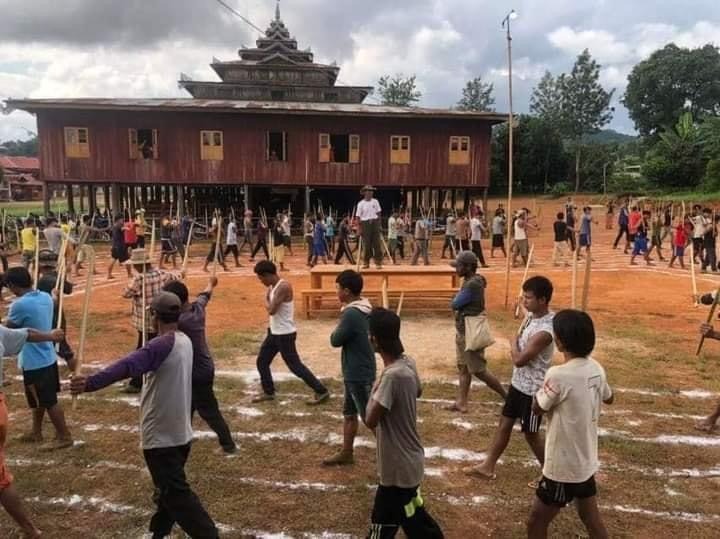
In Nawng Lai Village Tract, Hopong Township, southern Shan State, individuals living abroad who are listed in the Pa-O National Organization/Army (PNO/PNA) military service roster are now required to pay 400,000 kyat (approximately USD 95) every three months, according to local sources.
On September 2, the PNO/PNA held a meeting in Nawng Lai and ordered that five people per village must participate in military service on a rotational basis. Students are currently exempt, but those living abroad must pay the fee, sources confirmed.
A man in his 30s told SHAN that a roster of men aged 18 to 35 has already been compiled, with each person assigned a number. When their turn arrives, they must attend military training in Ho Nar village.
“Previously, only two people had to go. This time, five must go. They attend 15 days of training and then return. They teach only basic skills before releasing them. I don’t know if they will be called again later,” he said.
He added that men living abroad must pay 400,000 kyat when their turn comes up, and that villagers have also been paying 50,000 kyat monthly for PNA militia ammunition costs for nearly two years.
“Paying for the Military and the PNA’s ammunition costs has been going on for a long time. For the PNA, we also have to pay a separate military service fee. Even if we don’t have the money, we must find a way. There’s no way to avoid it,” he explained.
Residents in Sanphu and Sangaw village tracts also reported that on September 2, the PNO/PNA held meetings requiring two people per village to serve.
“They held a meeting last night. They are calling people again for military service. Students are not included, but after graduation, they will probably have to serve. It’s not enough to just pay money now; they are calling for two people per village again. It seems we will have no choice,” a man in his 40s said.
Earlier in January, villagers near the military training ground in Ho Nar were alarmed when nighttime weapons drills by Military Council troops and the PNA militia were mistaken for actual combat, sparking fear in nearby communities.







Leave a Comments