




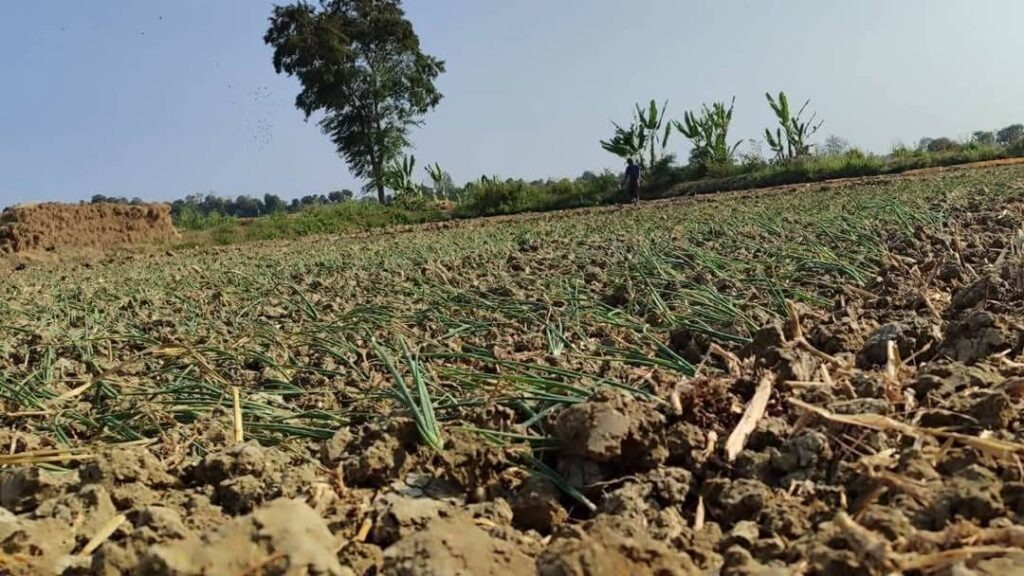
Farmers in Myanmar’s eastern Shan State are facing severe hardship following Thailand’s abrupt decision to ban fuel exports. The move has triggered a fuel shortage, disrupting agricultural activities in border townships such as Tachileik, Kengtung, Mong Hsat, and Mong Ton.
“In eastern Shan State, we rely entirely on gasoline from Thailand. Now, with onion season underway, the situation is critical. Without fuel for irrigation, our crops will be ruined,” said a farmer from Mong Ton.
The shortage is particularly devastating for onion farmers, who depend on a steady water supply. Without sufficient irrigation, vast portions of their crops are at risk of failure, threatening their livelihoods.
Residents of Kengtung report that, due to the ban, they now have to source fuel from Yangon and Mandalay—an alternative that is both more expensive and less accessible.
“The price of gasoline used to be between 3,000 and 3,500 kyats per liter. Now, it has nearly doubled. Fertilizer costs are also unstable. Farmers are struggling to survive,” said another local farmer.
Even if onion farmers sell their produce at 30 baht per kilo, they say the revenue won’t be enough to cover their rising expenses, leading to significant financial losses.
Adding to the crisis, Thai authorities have also restricted imports of essential consumer goods into Tachileik, further squeezing local residents. Meanwhile, electricity supplied from Thailand to Tachileik has been cut off, forcing the town to rely on alternative power sources from Laos.
On February 11, Thailand’s Department of Special Investigation (DSI) issued arrest warrants for three key figures, including Karen Border Guard Commander Saw Chit Thu. The trio is accused of running an online money laundering scheme in Myawaddy Township and is also under investigation for suspected human trafficking, according to Thai media reports.
With mounting economic and political instability, farmers in Myanmar’s border regions are left grappling with an uncertain future, struggling to sustain their crops and livelihoods amid increasing adversity.





Leave a Comments