


As the coup approaches its fifth anniversary, the Spring Revolution Alliance (SRA), a coalition of rebel groups from across the region, has taken shape.
Officially announced on 15 December, the SRA brings together 19 member groups, including independent regional forces from various parts of the country. Alongside newer rebel factions formed after the coup, it also includes some of the powerful forces that fought with the Three Brotherhood Alliances (3BHA) during Operation 1027, which started in October 27, 2023.
The 3BHA is made up of Arakan Army (AA), Kokang or Myanmar National Democratic Alliance Army (MNDAA) and Ta’ang National Liberation Army (TNLA).
Notably, the alliance excludes battalions under the Ministry of Defense (MOD) of the National Unity Government (NUG) and ethnic armed groups, known as ethnic armed organizations (EAOs) or ethnic resistance organizations (EROs). Analysts suggest the absence of northern Shan State based EROs may be aimed at countering China’s influence over forces along the China-Myanmar border.
Despite this, the SRA has become a formidable fielding force of 10,000 to 15,000 troops, since the start of the Spring Revolution, according to its own leaders’ statement to various media.
The alliance includes the Bamar People’s Liberation Army (BPLA), the Karenni National Defense Force (KNDF), and other regionally based forces. Talks to form the SRA began in May among seven revolutionary groups, expanding to discussions with 14 groups by November 2025, leading to common agreements.
A three-day conference in a liberated area in November officially established the 19-member alliance. A steering committee, with representatives from each branch, has been set up to lead and implement the alliance’s processes, according to SRA spokesman Min Han Htet, reported by the BBC on December 16.
The SRA complete member list is as follows:
- 96 Soldiers PDF
- Burma Army (BA)
- Burma Liberation Front (BLDF)
- Bamar People’s Liberation Army (BPLA)
- Chin Nyi Naung / Chin Brotherhood (CB)
- Danu People’s Liberation Army (DPLF)
- Force for Federal Democracy (FFD), also known as the drone force operating on the Thai-Myanmar border
- Generation Z Army (GZA)
- Karenni National Defense Force (KNDF)
- Kale Region Revolutionary Army (KRF)
- Magway People’s Defense Force (MAGWAY PDF)
- Mon State Revolutionary Army (MSRF)
- National Liberation Army (NLA)
- People’s Independence Army (PIA)
- Pao National Defense Force-Kham Kong/Pao People’s Defense Force (Kham Dong) (PNDF-KK)/ (PPDF-KD)
- Sagaing People’s Defense Force (SAGAING PDF)
- Student Armed Forces (SAF)
- Yaw Army (YA)
Another separate alliance with similarly name, the Nationwide Revolutionary Alliance (NRA) was announced in August 2025, led by former Communist Party Burma (CPB) member Than Soe Naing, though it faced criticism for lacking substance at its launch.
Comparison of SRA & NRA
Spring Revolution Alliance (SRA)
The SRA is currently an active military united front that has moved beyond the planning stage into formal establishment and operational coordination.
- Status: Formally established on December 15, 2025, following a constitutional conference in late November.
- Military Integration: It functions as a “collective command structure” designed to unify 19 resistance groups that operate outside the direct control of the National Unity Government (NUG) or major Ethnic Revolutionary Organizations (EROs).
- Operations: Its goals include standardizing military planning, intelligence sharing, and medical support across member groups like the KNDF, BPLA, and Chin Brotherhood. Analysts describe it as a “significant turning point” that puts the military junta in a tighter position by consolidating previously scattered forces.
Nationwide Revolutionary Alliance (NRA)
The NRA is newer and appears to be in an earlier stage of development, primarily focused on organizational outreach rather than integrated field command.
- Status: Formed on August 13, 2025, with the goal of uniting “scattered” local defense forces in Myanmar’s heartland regions (Sagaing, Magway, and Mandalay).
- Current Focus: Its primary activities involve finding solutions for resource gaps—such as finance, weapons, food, and medicine—and reaching out to regional groups to coordinate future strategies.
- Comparison: While the SRA has a solidified list of 19 member groups and a formal command structure, the NRA’s public profile remains centered on its Foreign Affairs Commission and its efforts to bring independent local groups under a more cohesive political and military umbrella.
The summary comparison as of late 2025 between the two alliances: The SRA structure is formal military front / unified command, while NRA is a strategic coordinating body. SRA has 19 solidified armed groups, but NRA only has “scattered” heartland (or Anyar) forces. Concerning the present recent stage, SRA is operational and implementing of joint command, while NRA is at a planning and outreach stage, gearing to consolidate resources.
The Three Brotherhood Alliance (3BHA)
The oldest of the three alliances is the 3BHA. It was officially formed in June 2019 made up of AA, MNDAA and TNLA with 30,000, 6,000 and 8,000 respectively. Thus, it has a combined force of roughly 45,000 to 50,000 troops, well-equipped with modern weapons and possessing strategic knowledge of the terrain where they operate. Now the 3BHA military strength might have grown many folds, especially the AA troop strength is estimated to be between 50,000 to 100,000.
In the aftermath of Operation 1027, MNDAA & TNLA gave up the fight with the junta, due to China’s pressures and so-called five-cuts, which is cutting electricity, water, internet, supply chains and restriction of personnel movement.
Additionally, China closed key border crossings and pressured allied ethnic armed groups, such as the United Wa State Army (UWSA), to stop providing support and arms to the MNDAA and TNLA. This economic and logistical blockade created severe humanitarian and operational difficulties, ultimately forcing the groups to engage in China-brokered peace talks and cede territory to the junta to alleviate the pressure.
Thus only AA is left fighting, which however has been expanding its outreach into Ayeyawaddy, Bago and Magway, including Chin and Kachin states with the presence in northern Shan State and Karen State, as well. It looks like Gen. Tun Myat Naing and his AA is now poised to work with other anti-junta and like-minded groups more to heighten the revolution.
What SRA leadership say about the formation
The SRA group aims to prevent the military council’s propaganda and division of the anti-junta groups and to strengthen the revolution, said Khun Bedu, chairman of the Karen National Defense Force (KNDF), a leader of the SRA, according to People’s Spring report of December 21.
Khun Bedu explained this during a discussion program on the Yadanar Arman program aimed at rallying the revolutionary people to the KNDF.
The main purpose of the SRA group is to continue to fight against the military dictatorship and to fight together.
“Under this objective, the number one is how to defend ourselves in a situation where the energy of all (seems) to be declining. And how do we cooperate and exchange our expertise and technical know-how. Some have a little money, some have connections, some have manpower. If we share (among ourselves) and really use this (in combination), this revolution will be even stronger. That’s why drawing resources, with combination and construction are all involved,” Khun Bedu said.
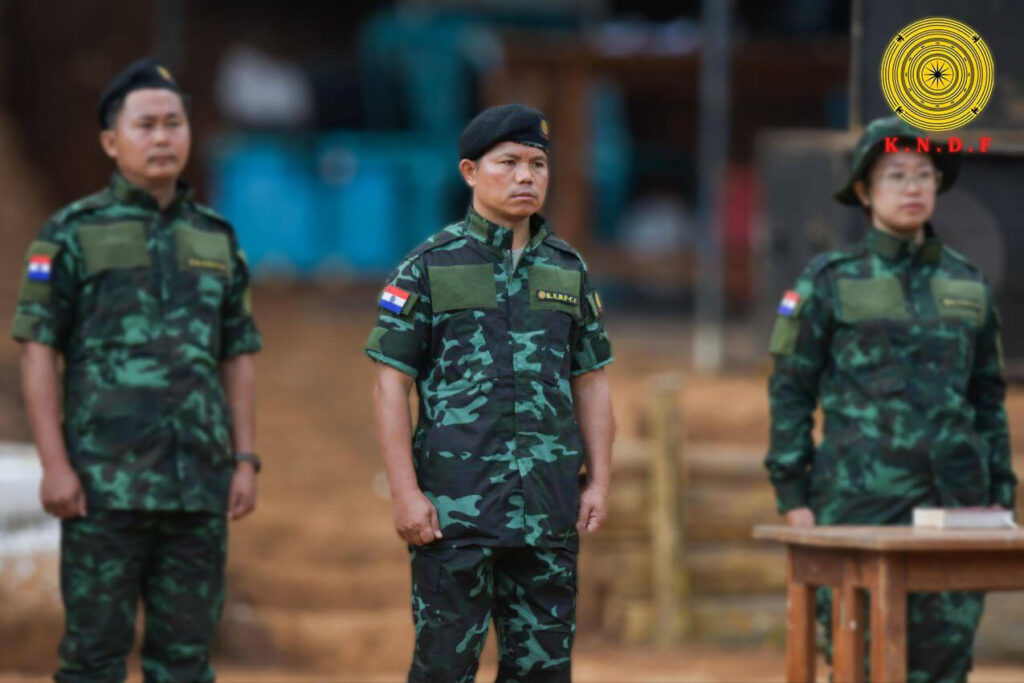
He also informed that he would confront the propaganda and driving a wedge (between anti-junta groups) of the military council.
“Military council’s propaganda of driving a wedge will come and need to protect this especially. Because of different views among us, some groups may say that they will listen (to stop fighting), then they will bow to the military council. Different groups among us may have various outlook. Some might say other groups are resting (not fighting) and we may also do the same which would lead to kneeling down to the military council,” said Khun Bedu.
He also said that he would strengthen the effective communication mechanism with the National Unity Government (NUG) forces and the ethnic revolutionary forces.
“These are our brothers, our troops. We need to travel and receive military training. When we say help us, everything can be done all at once (because of the alliance formed). We can build our alliance only after overcoming these complicated mechanisms. This is the main purpose for which we formed the SRA Spring Revolution Alliance,” said Khun Bedu.
Khun Bedu also said that the SRA was formed to benefit everyone.
The NUG, the National Unity Consultative Council (NUCC), and other revolutionary forces have also expressed their support for the emergence of the SRA, and have announced that they will cooperate more effectively in the revolutionary struggle against the military council.
Maung Saungkha’s message to SRA
Maung Saungkha, leader of the BPLA and party to recently formed Spring Revolutionary Alliance in his Facebook wrote, not to give false hope to the people that the Alliance will be able to deliver easily, and be ready to learn from failure and have guts to admit to failures, correct them and caution one another to be on the right track. It is a suggestion full of wisdom, coming from a young leader.
On December 16, BPLA leader Maung Saungkha concerning the SRA formation wrote: “ If we have a vision of broad-mindedness the military alliance will truly be victorious. Don’t give false hope, and don’t think that immediate success is at hand. Our principle is to unite and fight to win. We must not just shout about fighting to win the war and ignoring other values, but also to maintain mutual discipline and correct each other as a military alliance. We must be able to withstand criticism. We must admit when we are wrong and bravely correct ourselves as soon as possible. In our generation there is no reason (not to believe) that we cannot be victorious against this military group.”
Chin Brotherhood (CB) stance
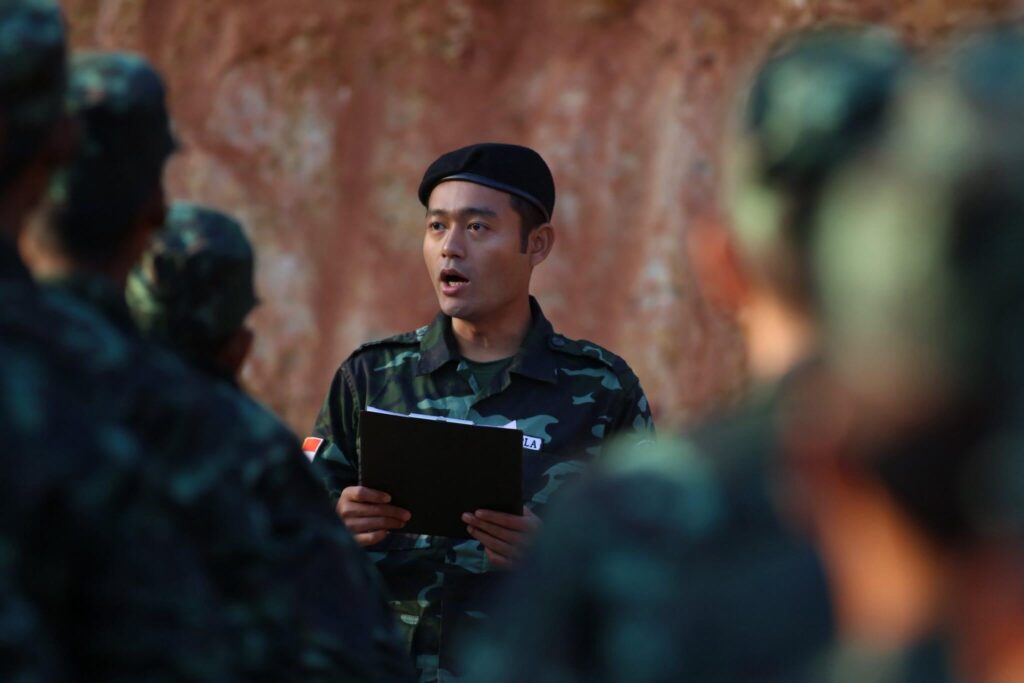
Chin Nyi Naung or Chin Brotherhood says joining SRA is not just for Chin State, but for the whole country, according to Western News of December 20.
The Chin Nyi Naung CB group, which controls most of the territory in Chin State, said its joining the SRA not just for Chin State, but for the whole country, said CB spokesman Salai Yawmarn.
He said this during a question and answer session on cooperation between CB and SRA held by the Chin Liberation Fund.
“The Chin Nyi Naung joining SRA is not just for Chin State. It is for the whole country. We have designated areas for that. We have discussed and consulted with them. We will continue to implement it there,” he said.
Salai Yawmarn continued that the SRA did not come about easily, and that all Chin Brotherhood groups were actively involved in joining the SRA.
“In Chin State, we, the Chin Brotherhood, are currently in northern Chin State. There are also battles in Falam Township and Tedim Township. At the same time, we, the Chin Brotherhood, have things to prepare for the battle to capture Tedim. So, this battle to capture the town is also part of it. At the same time, this is not only in Chin State, but also in places outside Chin State. We will also cooperate with the SRA there. The idea of carrying out joint military operations will gradually appear in the future,” he said.
Salai Yawmarn also said that the people’s doubts of whether the SRA will prevail or not will be proven with work that is going to unfold.
On the other hand, Salai Yawmarn said that the SRA is not a parallel (rival) group with the NUG and other EROs, but rather a group that will work together with all to fight against the military dictatorship.

Analysis
To sum up, there is now three united front sort of alliances, from which the SRA is the only one that is practically boosting the moral of somewhat drawback revolutionary situation, due to the present military situation, which seems that the junta is gaining momentum.
The junta has been on the counteroffensive against anti-junta ethnic-democratic forces, heavily backed by China with economic, military, and diplomatic support aimed at legitimizing its rule, along with lesser assistance from Russia, Belarus, and Iran, particularly in the form of military hardware like drones and advanced expertise.
As a result it has been been able to recapture back a few strategic towns in northern Shan State, Karenni State, Sagaing and Mandalay regions, largely through airstrikes, attack drones and human waves offensives made possible by its forced conscription of the country’s youth into its army
But it’s a long way to recapture some 60 percent of the country’s areas back from anti-junta ethnic-democratic forces. It’s more of waging a psychological warfare onslaught with propaganda narrative rather than actually turning the revolutionary tide to its advantage.
In other words, it is evident the junta is unable to beat the AA in Rakhein State, and even at a defensive in Bago, Ayeyawaddy and Magway regions. The same goes for Chin and Karenni states. But to be fair, the anti-junta groups are alarmed and they can ill-afford to let the junta gain momentum militarily. This is where SRA comes in as the trend stopper, or shall we say an attempt to regenerate the spirit of Operation 1027 mentality to fight to win.
Thus the SRA is seen as an instrumental bulwark for China’s pressure on EAOs in Shan State, where it has been to able to pressure the MNDAA and TNLA into acceptance of ceasefire with the junta and even have to give back some captured territories without a fight according to China’s demand.
In short AA is doing the fighting alone from the 3BHA together with a variety of resistance groups in various areas outside the Rakhein State.
The NRA is largely at a planning stage rather than a united front that is ready to confront the military junta. But it has made overtures to SRA and probing venue to be able to work together, according to its leader Than Soe Naing in a recent interview with the Freelance Journalist Thet Htwe Naing, on December 19.
Now all eyes are on SRA whether it will be able to stop the interference of China directing the 3BHA to act according to its national interest program mold, which is having a psychological effect on anti-junta forces.
Moreover, whether it will be able to pull the resources together, cooperate, coordinate with the NUG/PDF and other EROs under one CoC or joint-command to fight the junta in unison, is something that we all have to wait and see.
It is definitely a tall order and given the past united front alliances were unable to deliver and in due course had disintegrated one after another, all eyes are on SRA, especially the suffering people at large, anti-junta stakeholders, observers and experts alike.

Leave a Comments