

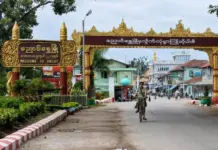
Residents of Taunggyi are grappling with growing hardship as junta-affiliated traffic police intensify a campaign to seize unlicensed vehicles, confiscating cars and motorcycles not only from public roads but also from private homes and monasteries.
Beginning June 1, traffic officers aligned with Myanmar’s military council established roadblocks throughout the city, targeting unregistered vehicles at major intersections and within residential neighborhoods. According to multiple local sources, once vehicles are taken, owners are left in the dark about recovery procedures.
“The car I worked so hard to buy is gone,” said a Taunggyi resident whose vehicle was confiscated. “They didn’t tell me where I could retrieve it. Some people hid their cars in monasteries thinking the police wouldn’t enter, but they did, and took them anyway. If someone tips them off, they’ll even search your home.”
He added that only those with personal connections to junta-aligned officers have any chance of recovering their vehicles. For others, there is no clear recourse.
Residents say exorbitant licensing fees are a major obstacle.
“To register a car worth 10 million kyats [~$2,285], you might need to pay up to 20 million Kyats just to get it licensed,” he explained. “Most people can’t afford that, so they opt to pay small roadside bribes, usually around 5,000 to 10,000 Kyats to avoid arrest.”
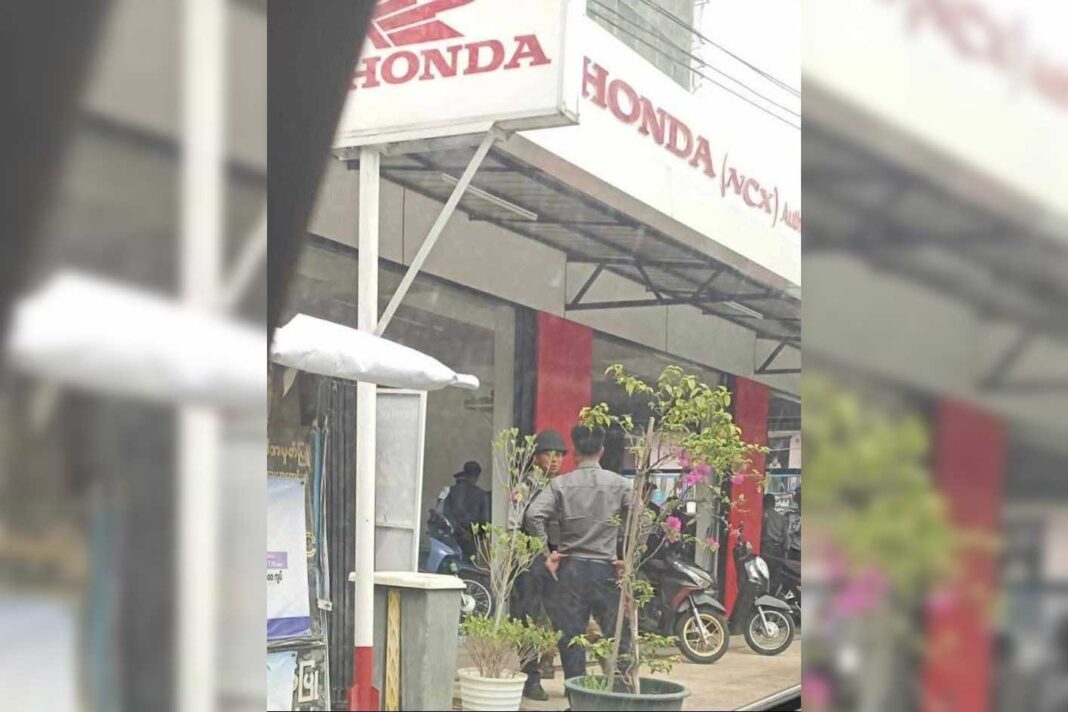
The crackdown is not limited to the streets. On June 1, authorities reportedly raided a motorcycle showroom in Taunggyi, confiscating multiple unlicensed bikes. The escalating pressure has prompted residents to take extra precautions.
“We have to be very careful when going out,” said a local woman. “It’s safer to park your vehicle in a secure spot. The number of seizures has risen sharply.”
In response to the growing repression, a quiet act of defiance emerged. On May 31, anonymous activists began circulating banknotes and lottery tickets marked with the phrase “Honk and protest”, urging civil resistance to the junta’s heavy-handed measures.
The campaign in Taunggyi is part of a wider pattern of enforcement spreading across southern Shan State. Similar operations have been reported in Aung Ban, Lawk Sawk, Pinlaung, HeHo, and Nyaung Shwe, as well as in Tachileik near the Thai border, where junta-aligned officers continue to target unlicensed vehicles.
As economic hardship deepens and mobility becomes increasingly restricted, residents in Shan State are left to navigate daily life under the shadow of military control, with little certainty and even less protection.

Leave a Comments