




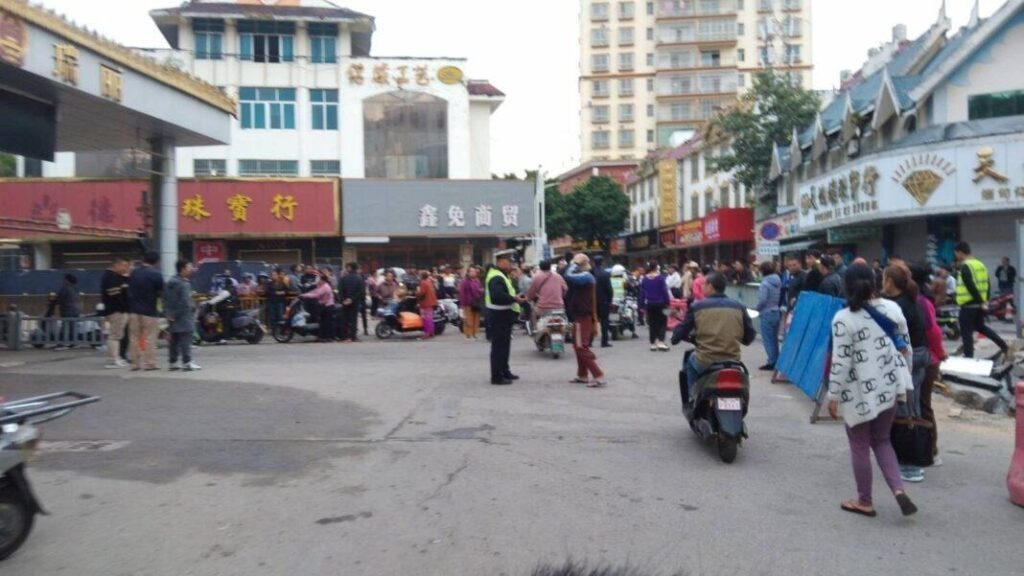
Traders crossing the Myanmar-China border at Sin Phyu gate in Muse Township are facing mounting costs and corruption as Myanmar’s military authorities tighten control over food transport through the region.
Following a five-day closure from May 1 to 5 due to a change in customs personnel, the Sin Phyu gate reopened to private vehicles on May 6. However, traders report that transporting goods, particularly food items such as meat, fish, and vegetables, now requires purchasing unofficial permits or “tokens” issued by the Military Council’s Municipal Department and the Road Transport Administration (RTA).
“Private cars were allowed again today, but fuel permit books were strictly inspected,” a local trader told SHAN. “RTA and Transport and Communication officials take turns selling the tokens. Of the 20 trucks allowed to pass each day, half the slots are already pre-sold. We’re forced to pay 200 yuan each to both the township council and the transport department.”
Under the previous system, up to 50 food trucks could pass through the border daily. The new quota, limiting it to just 20 trucks per side, has made the process significantly more restrictive. Traders allege that permits are sold to the highest bidders, with bribes commonly expected.
The total cost of transporting food has risen sharply, now ranging from 1,200 to 1,600 yuan per vehicle. Of that amount, approximately 400 yuan (roughly 250,000 kyats) is reportedly paid as informal fees to military council personnel.
“Customs regulations change every month, making it nearly impossible to plan,” the trader added. “Just last week, private cars weren’t allowed to cross at all. Now, only 200 motorcycles and 40 trucks can pass through daily.”
Despite these challenges, food items, excluding high-value goods like machinery and electronics, are still being transported through the Sin Phyu and nearby Palace gates, according to local sources.
Meanwhile, across the border, Chinese authorities have begun pilot testing operations at the Manhero border gate since late March. So far, only 19 households near the Shweli River in Manhero town are eligible for temporary green permits to cross.
The ever-shifting rules, rising costs, and entrenched corruption underscore the ongoing difficulties faced by border traders in northern Shan State, where military authorities continue to profit from trade under the guise of regulation.







Leave a Comments