

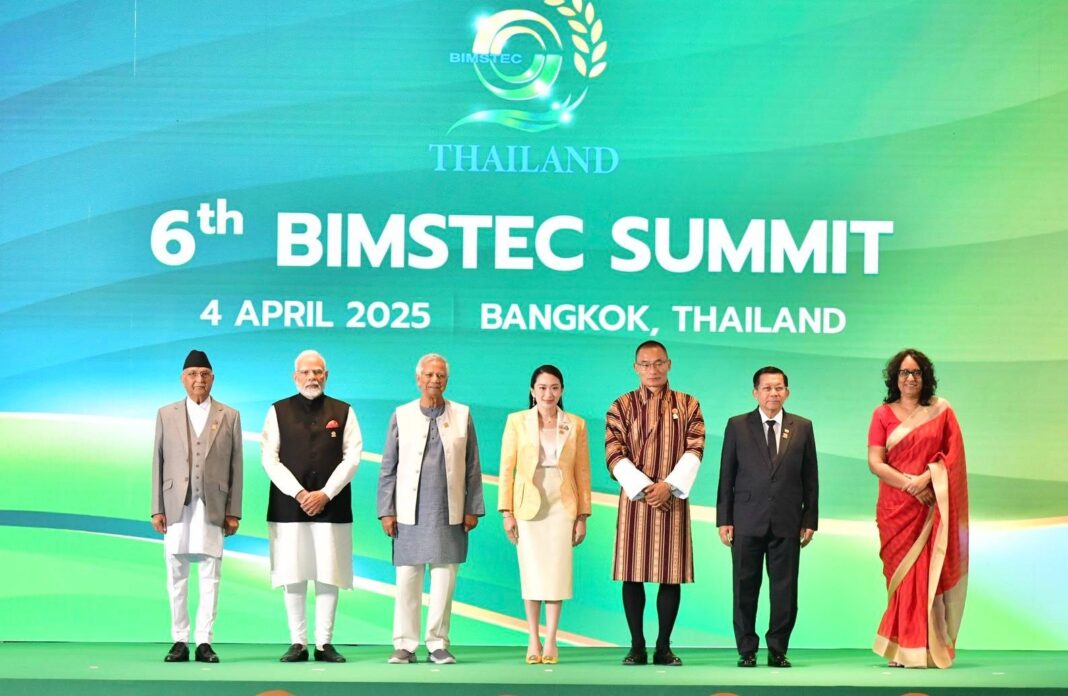
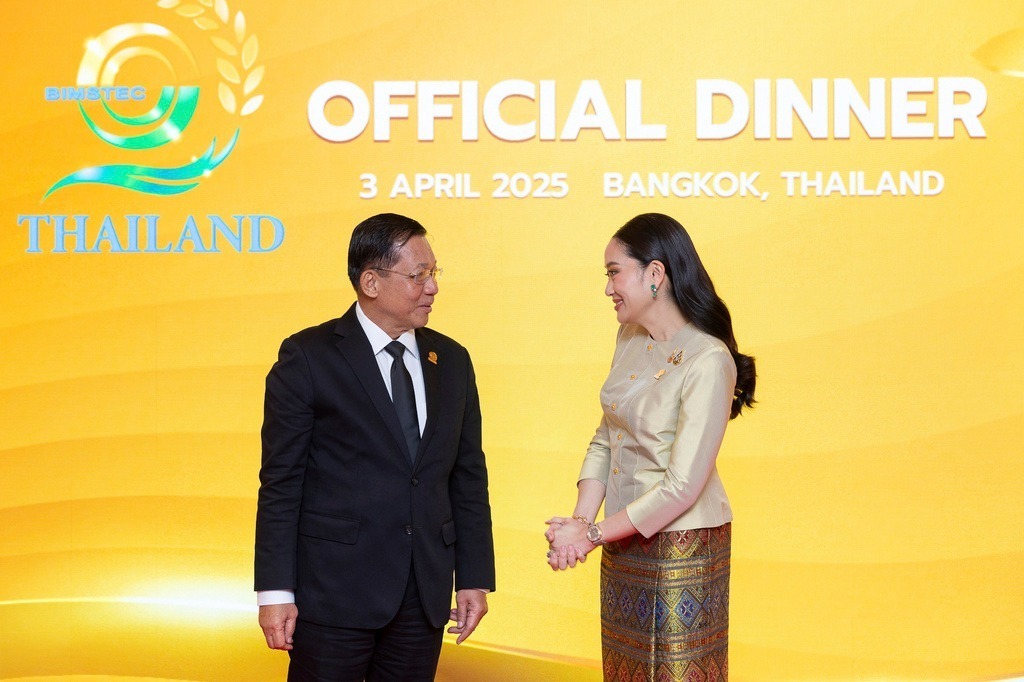
Min Aung Hlaing was in Thailand to attend Bay of Bengal Initiative for Multi-Sectoral Technical and Economic Cooperation (BIMSTEC) meeting from April 3 to 4 at the invitation of Thai PM Paetongtarn Shinawatra in the midst of earthquake catastrophe on March 28 in Burma or Myanmar, which has devastated the country. He left on the night of March 4 hastily which originally was planned to depart on April 5, maybe due to the Thai students’ and public protest, parliamentary MPs questioning of the Thai PM invitation of a notorious individual much wanted by the international community.
Why the Thai PM has committed such a political blunder given Min Aung Hlaing’s notorious characteristics due to its crimes against humanity and war crimes, with Argentina making use of Universal Jurisdiction issuing international arrest warrant and the International Criminal Court (ICC) about to do the same, isn’t quite clear, Min Aung Hlaing was determined to shore up its legitimacy image and show off his self-confidence as evident by his presence in Bangkok. His spokesman Zaw Min Tun wrapped up the junta’s leader visit as a success, whatever it is meant by that.
Reportedly, he met the BIMSTEC member-leaders of Bangladesh, Bhutan, India, Nepal, Sri Lanka, Thailand and made known his intention to hold election in early 2026, besides briefing Thailand on the aftermath situation of earthquake catastrophe. Myanmar is a member of BIMSTEC since December 1997.
It is not known, if he also briefed the BIMSTEC attending leaders of the ongoing situation, that it hasn’t kept its ceasefire announcement as promised and the civil war rages on because of its irrational policy and aggressiveness.
SAC unleashed airstrikes and bombardment
Right after the April 28 earthquake catastrophe hit the country, the junta or State Administration Council (SAC) conducted numerous airstrikes and artillery attacks on anti-junta controlled territories arguing that it wasn’t matching the anti-junta unilateral ceasefire gestures and instead justified its actions by pointing out its opponents’ military exercises and recruitment as preparation for war and must therefore be dealt with accordingly.
“(D)ozens of junta air and artillery attacks have been reported in earthquake-affected areas, including Magway, Bago and Sagaing Regions and Kachin, Karen, Karenni and Shan States, since the earthquake. The National Unity Government (NUG) and its People’s Defense Forces and ethnic armies, including the Three Brotherhood Alliance, declared a unilateral ceasefire almost immediately after the earthquake to facilitate an emergency response. However, junta leader Min Aung Hlaing declared that junta military operations would continue and intensified the bombing and shelling. Four days later the junta announced its own 20-day ceasefire, starting on 2 April, but it violated the ceasefire just hours later by carrying out airstrikes in Sagaing and Kachin,” according to the Special Advisory Council for Myanmar’s (SAC-Myanmar) statement of April 4.
Reportedly, on March 28 the NUG announced a two-week unilateral ceasefire beginning March 30. On April 1, the Three Brotherhood Alliance (3 BHA), made up of the Arakan Army (AA), Ta’ang National Liberation Army (TNLA) and Myanmar National Democratic Alliance Army (MNDAA), released a joint statement announcing the ceasefire and military offensive in their areas until the end of April. On April 2, the SAC follow suit with a declaration of ceasefire until April 22.
The KIA also follow suit the same day announcing ceasefire until April 22. But pointed out that that the junta’s paragraph 4 of April 2 announcement must also be adhered by the junta itself, which includes prohibition of disruption of public infrastructure; harming public lives and properties; attacking its security forces and military positions; refrain from military recruitment; territorial expansion and so on.
Despite the National Unity Government (NUG), a key opposition group, announcing a two-week unilateral ceasefire on 29 March, armed clashes still erupted in several locations, accompanied by continued junta airstrikes.
“The National Unity Consultative Council, which advises NUG, reported that in the five days since the quake, the regime launched 32 airstrikes on 11 locations, including quake-hit Sagaing and Mandalay regions, killing at least 50 civilians and injuring 49 others,” according to The Irrawaddy report of April 3.
International humanitarian aids rendered
Key countries contributing to relief efforts are China, India, Russia, Thailand, Bangladesh, Vietnam, Turkey, Singapore, Malaysia and ASEAN countries, ranging from search and rescue operations as well as delivering humanitarian aids, urgent supplies to assist those affected by the disaster, to providing medical assistance and support in affected areas.
Immediate financial assistance pledged includes United State with $2 million; Canada announced up to $9.75 million; China with $15 million; European Union with €2.5 million (approximately $2.7 million); Australia with A$2 million (around US$1.3 million); UK committed up to £25 million (around $32.2 million); UN allocated $15 million for immediate relief efforts; and other nations such as India, Malaysia, Russia, Thailand, and Singapore have also sent financial contributions or personnel to assist with urban search-and-rescue operations and provide medical support.
“We, the Quad partners, have so far committed humanitarian assistance estimated at a combined value of over USD 20 million. Through our funding and bilateral efforts, we are delivering relief supplies and deploying emergency medical teams and supporting humanitarian partners working in Myanmar to provide care for those affected by the earthquake,” writes the joint statement of the Quad on April 3, 2025.
“The Quad, composed of the United States, Australia, India, and Japan, is not a formal alliance. Still, the group has intensified its security and economic ties as tensions with China rise,” according to Council on Foreign Relations, a nonpartisan, independent national membership organization, think tank, educator, and publisher, including of Foreign Affairs. It generates policy-relevant ideas and analysis, convenes experts and policymakers, and promotes informed public discussion—all to have impact on the most consequential issues facing the United States and the world.
In addition, several international organizations such as the United Nations (UN) has been coordinating humanitarian efforts through its agencies like UNICEF and WHO; Non-governmental organizations (NGOs) such as the International Rescue Committee (IRC) are on the ground providing essential services including food, water, sanitation, and medical care, among others are also involved.
Challenges faced by humanitarian aid organizations
While there are numerous obstacles for the humanitarian aid organizations in discharging their duty, it can be summed up as challenges in delivering assistance to earthquake victims due to infrastructure damage, overwhelmed healthcare facilities, ongoing conflict and security concerns, communication barriers, funding shortfalls, and increased risks of gender-based violence among vulnerable populations. These factors collectively hinder effective response efforts during this critical time.
But the most critical part is the ongoing conflict and security concerns due to the ongoing civil war with no sign of ending, even if the adversaries, the junta and anti-junta forces, were said to have announced unilateral ceasefires, it didn’t worked out. As such, aid organizations often face security risks when trying to deliver assistance in regions controlled by resistance groups or where military operations are ongoing. With the junta’s airstrikes and artillery bombardment being the order of the day, it is almost impossible and unsafe for both aid workers and civilian to implement meaningful assistance.
Analysis
To sum up, Min Aung Hlaing might have achieve partial legitimacy goal acknowledgment by visiting Thailand and attending BIMSTEC, thanks to the Thai PM for her invitation.
While he was able to rub shoulders with BIMSTEC attending head of states and received their blessing and endorsement as a leader of Myanmar, he also was able to convey his message that his planned election in early next year will be carried out without fail.
This in fact has done away with the ASEAN agreement of not to engage with the junta at high level unless it starts to toe the line of ASEAN 5-Point Consensus (5PC). This means Min Aung Hlaing doesn’t need to care about ASEAN restriction any more as the legitimacy he craves is now rendered by BIMSTEC already.
In the meantime, the NUG and anti-junta forces are left out as non-state actors with no legitimacy to claim, even though its UN Ambassador U Kyaw Moe Tun is in place in the UN although with limited function. The UN Credentials Committee renewed the mandate of Ambassador Kyaw Moe Tun as Burma’s Permanent Representative for another one year, until the end of 2025.
However, UNGA hasn’t decided on either the NUG or SAC regime since the military coup in February 2021. Thus the legitimacy contest is still open, even though BIMSTEC may have tacitly endorsed the SAC.
Still it has undoubtedly bolstered the SAC position diplomatically. It’s unknown how the anti-junta forces and NGOs will counter this diplomatic onslaught endorsed by BIMSTEC, and particularly the ASEAN countries of the south will be at odds and against Thailand’s stance of endorsing Myanmar’s military regime, without reservation.
How such situation will impact on Myanmar’s political landscape and peace process in the long run in general is unknown. But militarily both the junta and anti-junta stakeholders aren’t thinking of negotiated settlement anytime soon.
NUG spokesman Nay Phone Latt said on April 1, in his press briefing to the people said that NUG thanked all humanitarian aid agencies and urged them to go beyond the allowed junta controlled areas and help those affected people under the anti-junta forces controlled areas.
For now, it is a bit too early to speculate if the junta will accommodate aid workers with freedom of movement into resistance controlled areas, and whether international projection of cross-border humanitarian aid interventions may take place from India, Bangladesh, China and Thailand to circumvent the sole rigid control of the junta in the process of aid distributions and other necessary assistance to the public.



Leave a Comments