



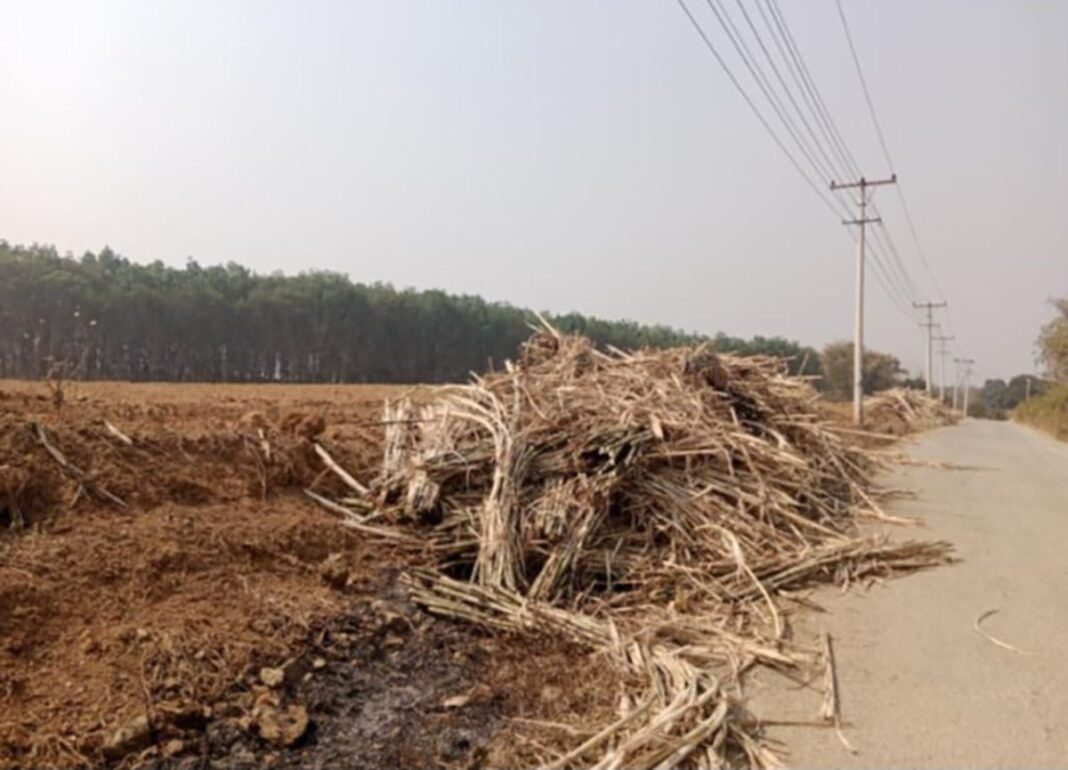
The Myanmar National Democratic Alliance Army (MNDAA), also known as the Kokang Army, is forcibly leasing public land in Hsenwi Township, Shan State, for large-scale Tissue-Cultured Banana (TCB) plantations, ignoring the objections and rights of local residents.
Since March 2024, the armed group has been seizing land across Hsenwi and neighboring villages, offering leases at 200,000 kyats per acre for hilly terrain and 500,000 kyats per acre for flat land.
However, residents report that payments are delayed for up to two years, and those who refuse to lease their land face outright confiscation.
“The MNDAA doesn’t ask for consent—they just take the land. Even if they don’t pay, they’ll still plant bananas. They’ve set the lease at 200,000 kyats per acre for hilly land and 500,000 kyats for flat land, with a five-year contract,” a Hsenwi resident told SHAN.
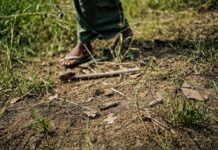
MNDAA troops have already begun plowing the land using heavy machinery, leaving locals uncertain whether the project will bring any benefits or plunge them into a long-term economic crisis.
Hsenwi residents primarily rely on rice and paddy farming for their livelihoods. Many fear that losing their farmland to banana plantations will devastate their income and food security.
“The MNDAA is using big tractors to plow the land, and people are too afraid to oppose them because they’re armed. If this continues, we’ll have no land left to farm, and our local economy will collapse,” one resident warned.
The problem isn’t limited to Hsenwi. In Nampaung village, Lashio Township, the MNDAA is forcing landowners into 15-year contracts for banana plantations.
“This is happening across all areas under MNDAA control. In Nampaung, they’re forcing people into long-term contracts. Once they take the land, no one dares to resist,” a local witness said.
Banana farming, a major export industry to China, relies heavily on pesticides, herbicides, and chemical sprays. Farmers worry that excessive chemical use will degrade the soil, rendering it unfit for future farming and posing risks to livestock and public health.
“Hsenwi’s soil is incredibly fertile, but if the MNDAA dumps too many chemicals, the land will be ruined in five years. It won’t support other crops, and the chemicals could poison our livestock and even make people sick,” explained a Hsenwi farmer.
Similar environmental damage has already been documented in Kachin State, where improper pesticide disposal contaminated water sources and created public health hazards.
The MNDAA fully captured Hsenwi in January 2024. After seven rounds of talks in Kunming, China mediated a ceasefire agreement between the MNDAA and the Myanmar military, which took effect on January 18, 2025, as confirmed by Chinese Foreign Ministry spokesperson Ms. Moa Ning.
“We don’t know what to do. If this continues, we’ll lose everything—our land, our crops, and our way of life,” a Hsenwi farmer lamented.
Despite the ceasefire, land seizures and forced agricultural projects persist, raising serious concerns about human rights violations and economic exploitation in Shan State.
As the MNDAA expands its banana plantation projects, the people of Hsenwi and surrounding areas face an uncertain future. With their land, livelihoods, and environment under threat, residents are calling for urgent intervention to address the growing crisis.





Leave a Comments