



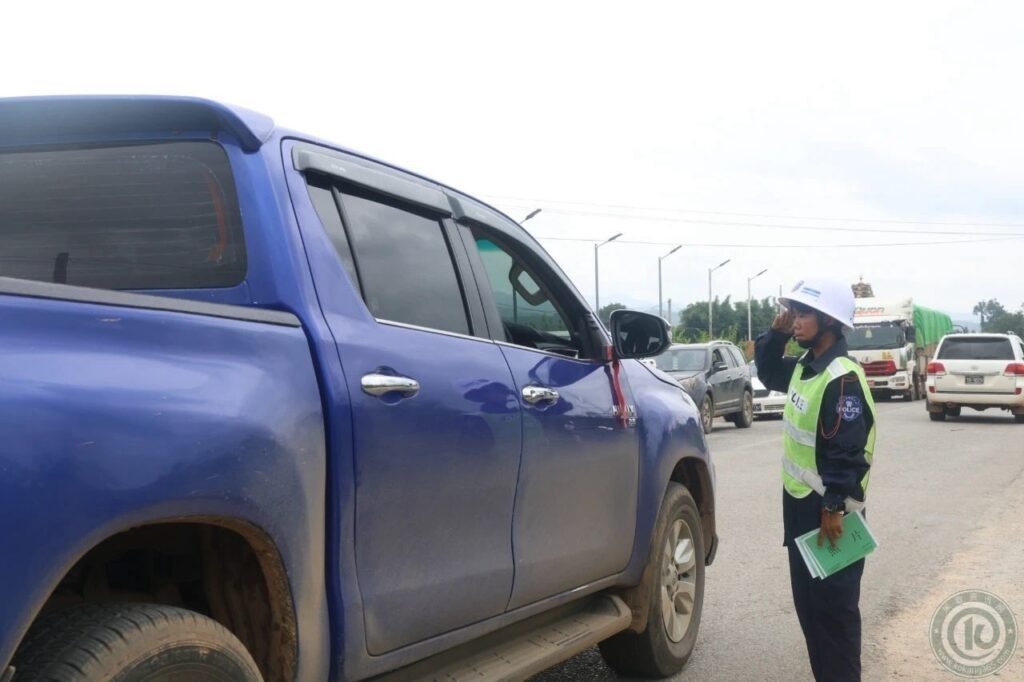
The Myanmar National Democratic Alliance Army (MNDAA), also known as the Kokang Army, has tightened movement controls along the Hsenwi–Kunlong–Chinshwehaw highway in Northern Shan State, turning back travelers and vehicles that lack MNDAA-issued identification cards or Special Region (1) vehicle licenses.
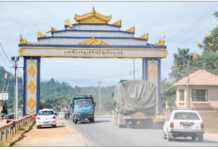
Since the second week of January, MNDAA forces have intensified inspections at Kunlong Bridge, which drivers say has effectively become a hard checkpoint. Vehicles traveling between Lashio and Laukkai are now subject to strict documentation requirements.
“They say you’re not allowed to cross Kunlong Bridge without a Kokang ID. If you are carrying Bamar passengers, you must obtain a recommendation letter from Hsenwi; otherwise, they turn you back. They also won’t allow vehicles through without an SR-1 license plate. To get that license, you have to pay more than 1,000 yuan. If you don’t have the card or the plate, you have to turn around,” a male driver told SHAN.
Passenger transport lines operating toward Laukkai are required to undergo inspections and obtain MNDAA-issued SR-1 vehicle licenses. Drivers said the combined costs—including license fees and related charges—range from 1,200 to 1,500 Chinese yuan, or approximately 700,000 to more than 850,000 kyats at current market rates.
For routes heading toward Hopang or Pangsang, areas controlled by the United Wa State Army (UWSA), drivers reported that either an MNDAA SR-1 license or a UWSA-issued vehicle license is required. UWSA license plates reportedly cost at least 800 yuan.
Some drivers said they are reluctant to display the new license plates, fearing problems at checkpoints outside armed-group-controlled territories. As a result, they keep their original plates and attempt to pass inspections without switching them.
In addition to documentation requirements, the MNDAA has imposed new restrictions on passenger numbers and cargo. Small vehicles are no longer allowed to carry more than four passengers, and strict limits have been placed on luggage transported on car roofs. Drivers said the measures have made trips financially unsustainable.
“With these limits, we can’t even break even anymore,” one driver said.
Border traders said residents holding MNDAA-issued Special Region (1) local ID cards and household registration documents are eligible to apply for border crossing booklets at the Mong Koe (Monekoe) and Chinshwehaw gates. With approval from Chinese authorities, holders of these documents can travel as far as Mangshi inside China.
However, residents expressed concern that identification cards, household lists, and vehicle licenses issued by the MNDAA and the Ta’ang National Liberation Army (TNLA) are recognized only within their respective controlled territories. If inspected by military commission authorities elsewhere, travelers fear they could be arrested for carrying documents deemed “illegal” by the regime.
As armed groups consolidate administrative control in Northern Shan State, locals warn that overlapping systems of authority are increasingly trapping civilians between rival checkpoints—restricting movement, raising costs, and exposing travelers to legal and security risks on all sides.

Leave a Comments