




As the Myanmar military junta, now known as State Security and Peace Commission (SSPC) started its much hyped general elections on December 28, 2025 to be carried out in three phases one in December and two in January 2026, the stage is set that the status quo would continue well into 2026. if not worsening the situation which is already very dire.
The situation in Myanmar throughout 2025 has been marked by escalating violence, widespread human rights abuses, and a humanitarian crisis amid ongoing civil conflict. The military junta, having seized power in February 2021, continues to face robust resistance from various ethnic armed groups and civilian uprisings.
Human Rights Violations and Civilian Casualties
The military’s response to growing insurgency has included relentless airstrikes and ground offensives, resulting in severe civilian casualties. Reports indicate that over 5,350 civilians have been killed since the coup, with approximately 2,414 deaths occurring between April 2023 and June 2024 alone. The junta has been accused of war crimes, including extrajudicial killings, arbitrary detentions, and torture. Specific instances include:
Widespread airstrikes on civilian targets, particularly affecting areas controlled by ethnic armed groups. The documented usage of cluster munitions and landmines, contributing to civilian casualties, particularly among children. And an alarming increase in sexual violence and torture against detainees were the order of the day in 2025.
In addition, a new form of human rights violations which is “forced conscription or recruitment” into the junta’s Burma Army or Tatmadaw has devastated the social fabric of the whole country.
The military’s forced conscription policy has further strained families and local economies. Young people are often recruited against their will, leading to labor shortages, with a significant portion of the workforce conscripted into the military, local businesses and farms face labor shortages, worsening agricultural productivity and economic output.
Moreover, family financial strain exacerbated as families lose primary earners, leading to increased poverty and economic hardship.
Territorial Control and Conflict Dynamics
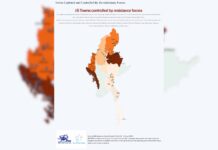
As of late 2025, the junta only controls about 21% of Myanmar, while 42% is held by ethnic and insurgent forces. The balance of power has shifted significantly due to the Three Brotherhood Alliance (3BHA), which includes major ethnic armies that launched Operation 1027 in late 2023. Their early successes against the military indicated a rising tide of dissent.
The junta has made attempts to regain lost territories through increased airstrikes and Chinese support for military hardware. However, control remains fragmented, and resistance from citizen defense forces is persistent.
Humanitarian Crisis
The ongoing conflict has precipitated a humanitarian crisis, with nearly 22 million people in need of aid and 16.7 million suffering from acute food insecurity. The destruction from both military actions and natural disasters, such as earthquakes, has severely impacted infrastructure. Key issues include:
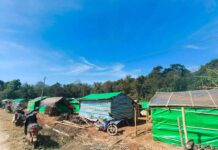
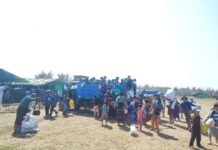
Internally displaced persons (IDPs): Over 3.5 million individuals are displaced, facing dire conditions in makeshift camps.
Food shortages: A significant portion of the population is unable to meet basic needs due to blockades and military hindrances to aid delivery.
Healthcare impacts: The junta has targeted medical facilities, contributing to a broken healthcare system.
And as a result on humanitarian crisis facet of “food scarcity” for the population issue has been thrust to the forefront that would probably carry on into the 2026.
Food scarcity is at an alarming level, affecting millions of people across the country. Key contributing factors include, Conflict Disruptions, Natural Disasters, and Economic Instability.
Conflict Disruptions: Ongoing military actions and displacement have led to significant loss of crops and livestock. Many regions are inaccessible to aid workers.
Natural Disasters: Flooding from seasonal rains has destroyed farmland, exacerbating food insecurity—approximately 16.7 million people are currently facing acute food insecurity.
Economic Instability: Hyperinflation and currency devaluation have made basic necessities, including food staples like rice and vegetables, unaffordable for many households. As a result, the price of essential items has soared, making them beyond the reach of the average citizen.
Political Landscape and Junta’s Held Elections
Junta’s planned first elections in five years scheduled for December 2025, which at this writing has already begun. Accordingly this would be a three-phase elections, first in December, followed by second and third elections respectively in January 2026.
But these have been criticized as illegitimate due to severe restrictions on opposition groups, particularly the National League for Democracy (NLD), Shan Nationalities League for Democracy(SNLD) and Arakan National Party (ANP). NLD won the elections with landslides, and the two ethnic parties achieve votes comparable to the junta backed Union Solidarity and Development Party (USDP). The international community has largely condemned the election plans, warning that they could exacerbate violence and instability. Also the anti-junta groups such as the National Unity Government (NUG) and various ethnic armed organizations (EAOs) have vowed to reject and disrupt the junta’s elections.
The military’s aim is seen as an attempt to legitimize its rule while maintaining its grip on power, even as much of the country remains embroiled in conflict.
Outlook for Myanmar in 2026
The outlook for Myanmar in 2026 remains uncertain, and current indicators suggest that conditions may worsen compared to 2025. Key factors contributing to this outlook include ongoing conflict, humanitarian issues, political instability, and economic challenges.
Concerning the ongoing conflict, the civil war shows no signs of abating, with various ethnic armed groups and civil resistance movements maintaining strong opposition to the military junta. The likelihood of intensified fighting, especially around election times, may lead to increased civilian casualties. The prolonged conflict could result in more violence and a higher death toll. Moreover, worsening displacement may be forced more people to flee their homes, affecting stability in urban and rural areas alike.
Humanitarian crisis because of food insecurity and healthcare access are projected to decline further, as rising food scarcity, with ongoing disruptions to agriculture and supply chains, humanitarian organizations anticipate that 22 million people may remain in need of assistance.
Healthcare collapse due to continuation of violence targeting medical facilities could worsen health outcomes, hindering its capacity to manage public health crises.
The political landscape is likely to remain unstable, with elections planned for December 2025 being viewed as illegitimate. Anti-junta NUG and EAOs will continue to resist and civil disobedience and protest may expand as citizens reject the junta’s authority and electoral process.
Continued sanctions and condemnation from the global community may further isolate the military regime internationally, limiting any potential for economic assistance.
Economic conditions are unlikely to improve as continued cessation of investment may drag on. foreign companies and investors are expected to remain cautious, leading to sustained economic stagnation.
Hyperinflation may persist, deepening poverty and making basic needs increasingly unaffordable for citizens.
Based on current trends and the multiplicity of challenges facing Myanmar, the outlook for 2026 appears to be worse than that of 2025. A worsening humanitarian crisis, deepening conflict, and entrenched political instability suggest that conditions could deteriorate, requiring urgent international intervention and support for the millions affected. If the status quo remains, the situation may lead toward further chaos and devastation for the people of Myanmar.



Leave a Comments