




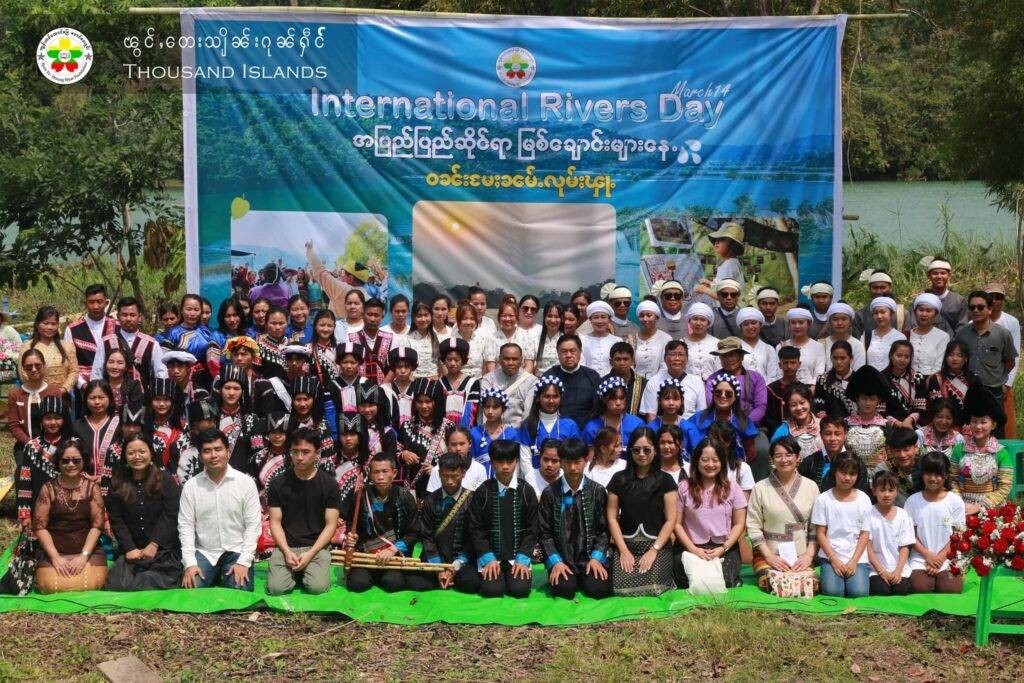
“The Salween River’s currents are fierce and powerful… in the heart of our Shan State… we do not think one could cross it easily.”
Once, the voice of singer Sai De Moine carried this image of the Salween—majestic, untamed, and deeply woven into the identity of Shan State. Today, that same sentiment resonates with a different meaning.
What was once a symbol of life has become a source of growing alarm.
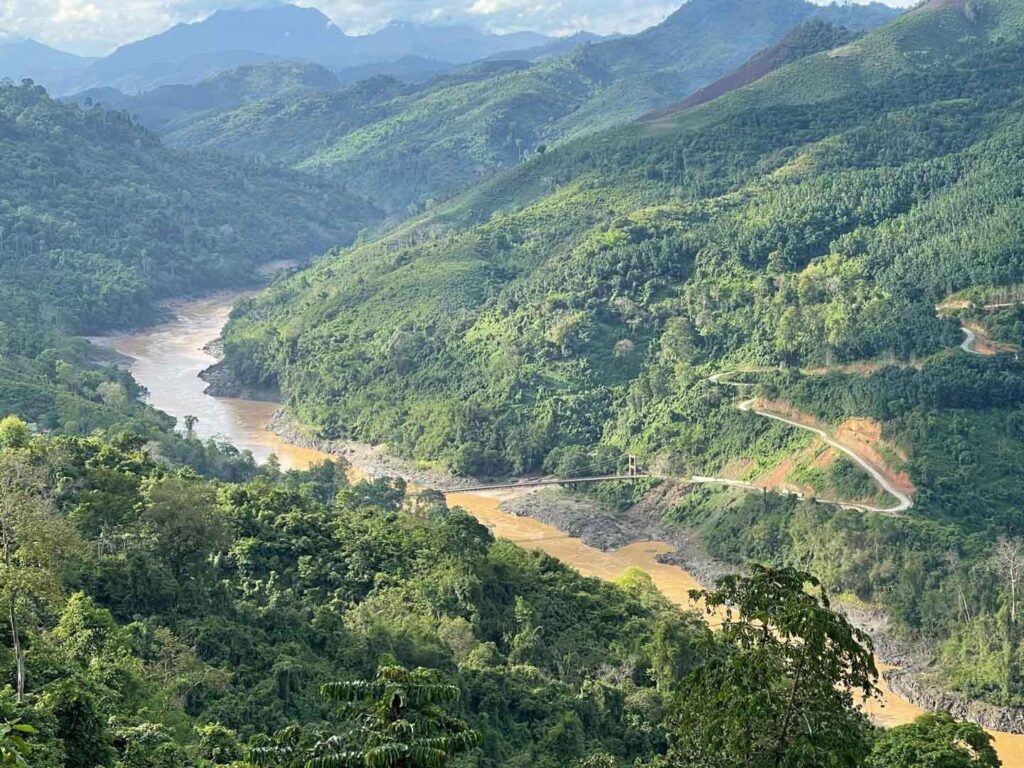
Stretching more than 2,800 kilometers from the Tibetan Plateau through Shan, Karenni, Karen, and Mon states before reaching the Gulf of Martaban, the Salween remains one of Southeast Asia’s last free-flowing rivers.
“The Salween is truly a river of great pride and spirit,” said Sai Murng, Editor-in-Chief of the SHAN. “The elders always said, ‘Without gold, the Salween won’t flow.’ True to those words, there is still gold in the Salween today, and people continue to pan for it.”
But that same gold has become part of the problem. What once symbolized prosperity is now driving a wave of extraction that is poisoning the very river it once sustained.
For generations, the Salween has supported ecosystems, livelihoods, and cultures across multiple regions. Now, that lifeline is under threat.
A River Turning Toxic
Recent findings have revealed dangerous levels of arsenic in the Salween River—more than five times above safe limits. The contamination was identified in December 2025 through joint testing conducted by the Karenni State Interim Executive Council (IEC) and Chiang Mai University.
On February 25, 2026, authorities issued warnings advising residents not to drink water from the river or consume aquatic life. Similar alerts have been issued across the border in Thailand’s Mae Hong Son province.
Environmental researchers say the source of the contamination is clear: unregulated mining activities upstream.
Rare earth and gold mining operations, particularly in eastern and northern Shan State, are releasing toxic chemicals into the river system. These pollutants are carried downstream through tributaries such as the Nam Pang, Nam Sim, Nam Teng, and Nam Tein.
A veteran Shan environmental researcher explained how the river’s natural characteristics worsen the problem.
“Cyanide tends to persist in colder environments,” the researcher told SHAN. “Because the Salween’s water is cold, these toxins can linger for long periods.”
Unlike slower rivers, the Salween’s strong currents and rocky bed can trap contaminants in sediment, allowing toxins to accumulate rather than disperse.
Mining Expansion After the Coup
Since the 2021 military coup, environmental oversight has weakened significantly, creating conditions for rapid and largely unregulated resource extraction.
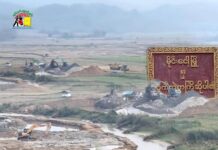
In Mong Pawk Township, an area controlled by the United Wa State Army (UWSA), rare earth mining has expanded dramatically. According to the Shan Human Rights Foundation (SHRF), the number of mining sites increased from just three in 2015 to at least 26 by 2025.
Some of these operations are located within three kilometers of residential areas.
Sai Hor Hseng, a spokesperson for SHRF, pointed to cross-border economic dynamics driving the expansion.
“There is likely an agreement between the UWSA and China. That is why Chinese companies can operate without needing permission from Naypyidaw,” he said.
Myanmar has since become a major supplier of rare earth elements to China, with exports exceeding $4 billion since the coup. These materials are essential for technologies such as electric vehicle batteries and smartphones.
However, the extraction process—particularly in situ leaching—introduces large amounts of toxic chemicals directly into soil and groundwater.
Rivers Across Shan State Under Threat
The Salween is not the only river affected.
Environmental monitors report that the Namtu (Myitnge) and Shweli rivers are also experiencing severe pollution as mining expands across the region.
“I think almost every river is becoming toxic because mining is happening everywhere,” said Ying Leng Harn from SHRF. “They are mining in the Salween, the Namtu, and the Shweli. I don’t think any river or stream is being spared.”
Heavy metals such as mercury and cyanide are entering waterways, threatening both ecosystems and human health.
While communities in the upper reaches of the Salween are less dependent on the river for drinking water, downstream populations in Karen and Mon states face far greater risks, as contaminated water flows directly into farmland and household supplies.
A Collapsing Ecosystem
The Salween basin is home to more than 200 fish species, with around a quarter found nowhere else in the world.
That biodiversity is now in rapid decline.
“When I traveled along the Salween in the past, fish were abundant. I even posted photos of different species online. Now, many of those fish can no longer be found,” the researcher said.
Mass fish die-offs and the smell of decay along the riverbanks have become increasingly common—clear signs of ecological collapse.
“Not all species will disappear. But if there were 5,000 species, perhaps around 3,000 could vanish,” he added.
Hydropower and the Politics of Control
At the same time, the Salween faces another major threat: large-scale hydropower development.
A total of 20 dams have been proposed along the river—13 in China and seven in Myanmar. In Shan State, projects such as the Kunlong, Nong Pha, and Mong Ton dams are located near areas controlled by the UWSA.
The Mong Ton project alone has already displaced nearly 300,000 people.
Reports indicate that armed groups are increasingly positioning themselves as security providers for foreign-backed infrastructure projects.
After taking control of Tangyan Township in 2024, the UWSA reportedly facilitated access for Chinese investors to survey dam sites, providing security during visits.
These developments highlight a growing “resource economy,” in which armed actors compete to control natural assets and investment flows.
The Resource Struggle Behind the Conflict
Analysts say that beyond ethnic and political narratives, control over natural resources has become a central driver of conflict in Myanmar.
Environmental expert U Win Myo Thu described the situation as part of a broader “resource curse.”
“Because of private interests, they cannot restrain resource extraction, and in the end, it is the public that suffers the most,” he said.
Following Operation 1027, shifts in territorial control have accelerated access to resource-rich areas, further intensifying extraction.
This dynamic—often described as a “ceasefire economy”—allows armed groups and business actors to benefit from instability rather than resolve it.
A Future at Risk
Environmental scientists warn that the consequences extend beyond pollution.
The Salween basin is increasingly vulnerable to climate change, landslides, flooding, and long-term ecological degradation.
A veteran researcher warned of worsening natural disasters in the coming years.
“We warned even before Cyclone Nargis that conditions would worsen. Now we are seeing earthquakes, floods, landslides, and rivers drying up one after another.”
He predicts that by 2030, the cumulative effects of environmental damage and climate pressures could lead to major disasters.
“If we mark 2024–2025 as a starting point, we will begin to see the impacts by 2030. This is a natural catastrophe that may be difficult to avoid.”
A River at a Crossroads
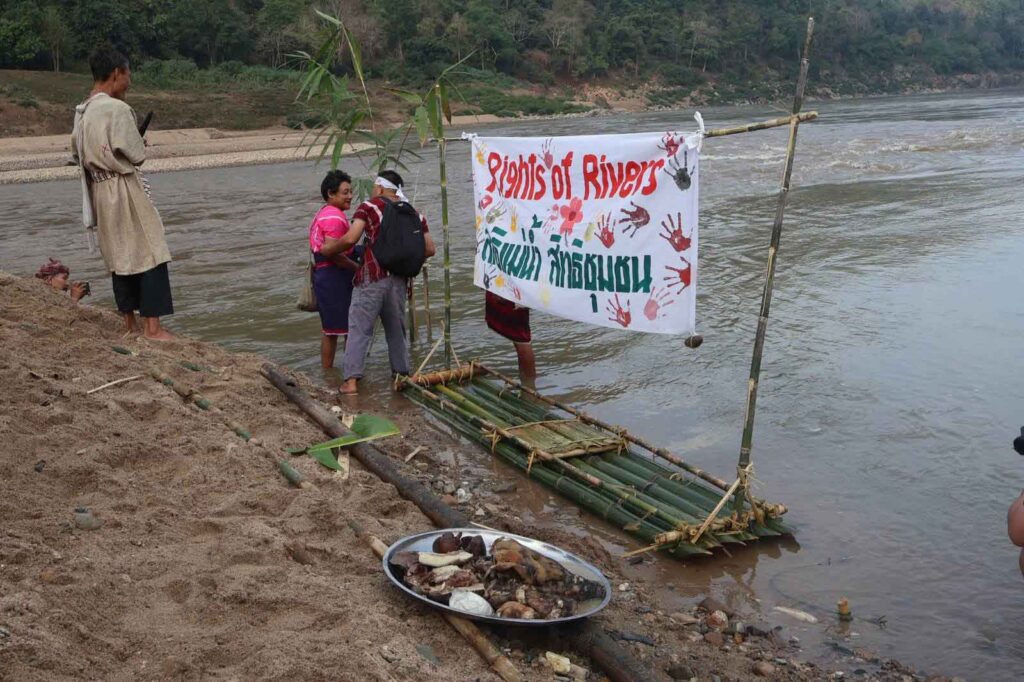
For generations, the Salween has been more than a river—it is a source of food, culture, and connection for communities across borders.
Today, it stands at a critical turning point.
“The road where our blood meets is facing more hardships than ever; it should not be painted over with the colors of exploitation…”
Without intervention, researchers warn, one of Asia’s last great free-flowing rivers may be permanently transformed—not by nature, but by human ambition and neglect.
This article was originally written by Sai Harn Lin for the Burmese Section and translated into English by Eugene.





Leave a Comments