




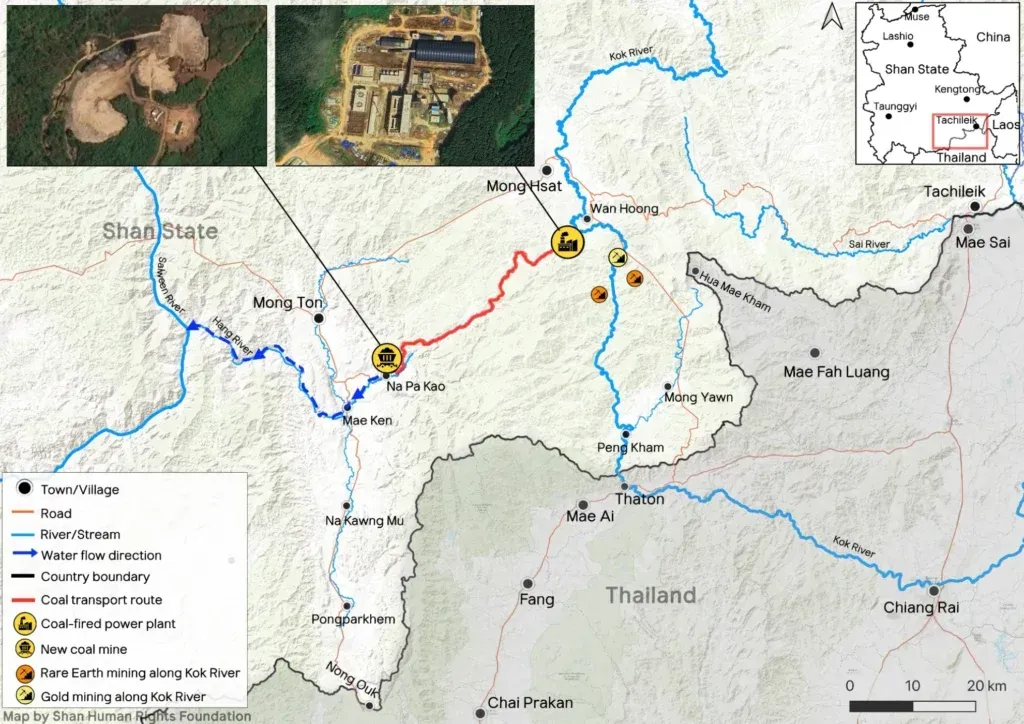
The Shan Human Rights Foundation (SHRF) has raised alarm over a newly operational coal-fired power plant operated by Wan Hong Natural Energy Co. Ltd in southern Mong Hsat Township, warning that it is polluting the Nam Kok River and posing serious risks to the health and livelihoods of local communities.
In a report released on March 22, 2026, SHRF said the plant—owned by the United Wa State Army (UWSA)—began operations in November 2025 and is located just 19 kilometers from Thailand’s Chiang Rai Province. The facility is reportedly supplying electricity to UWSA military bases, weapons production sites, and rubber processing plants.
“Since the coal plant has only recently begun operating, the full extent of the damage may not yet be apparent. However, coal mining has been active in this area for a long time,” said Ying Leng Harn, spokesperson for SHRF.
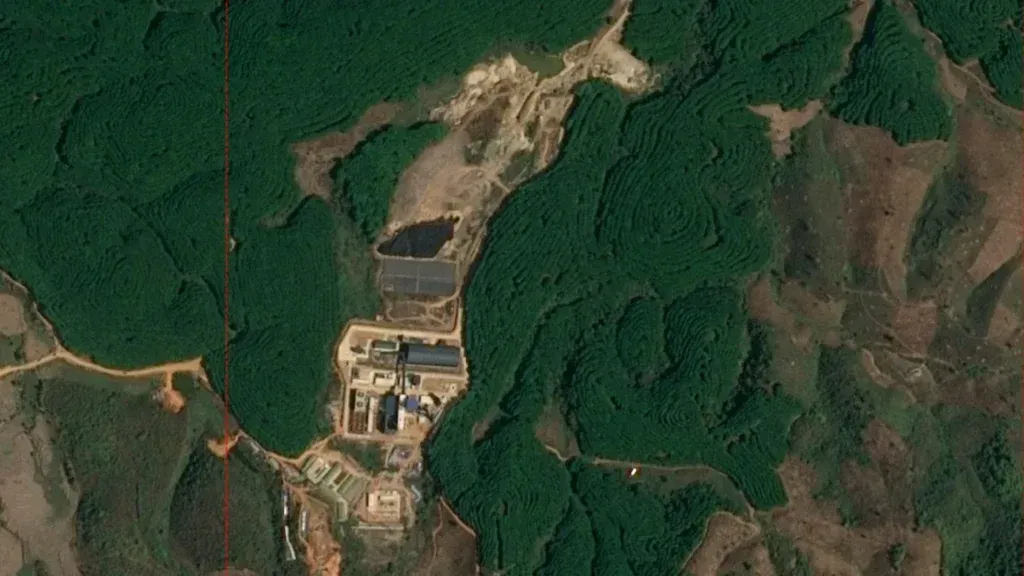
The report warns that toxic runoff containing heavy metals—including mercury, lead, and arsenic—is likely seeping into the Nam Kok River, raising concerns about long-term environmental contamination.
Residents living near the site report persistent air pollution, describing a constant smell of coal and a rise in respiratory problems. Communities also fear the potential for acid rain and long-term ecological damage.
Early signs of impact have already been observed in the Mae Ken stream, which flows below the mining site. Villagers using the water have reported skin rashes, and fish die-offs have also been documented.

“Villages along the Mae Ken stream are already experiencing skin diseases and fish deaths. While the full extent of the damage on the Myanmar side is still being assessed, authorities and activists on the Thai side say pollution in the Nam Kok River has already reached critical levels. This is a very serious situation,” Ying Leng Harn added.
Satellite imagery dated March 10, 2026, shows large coal stockpiles alongside arrays of solar panels within the facility, supporting local accounts that the plant operates as a hybrid coal-and-solar energy site. Residents also report continuous coal transport by heavy trucks operating day and night.
SHRF compared the situation to the Tigyit coal plant in southern Shan State, where environmental damage led to widespread health problems, including skin diseases affecting nearly half of the local population, as well as contamination of Inle Lake.
Although a previous coal power project in Tachileik was halted following protests by Thai civil society groups, the Wan Hong plant is already operational. Given its proximity to the Thai border, rights groups warn that pollution from the site could escalate into a cross-border environmental crisis, affecting communities in both Myanmar and northern Thailand.









Leave a Comments