



Insight Myanmar
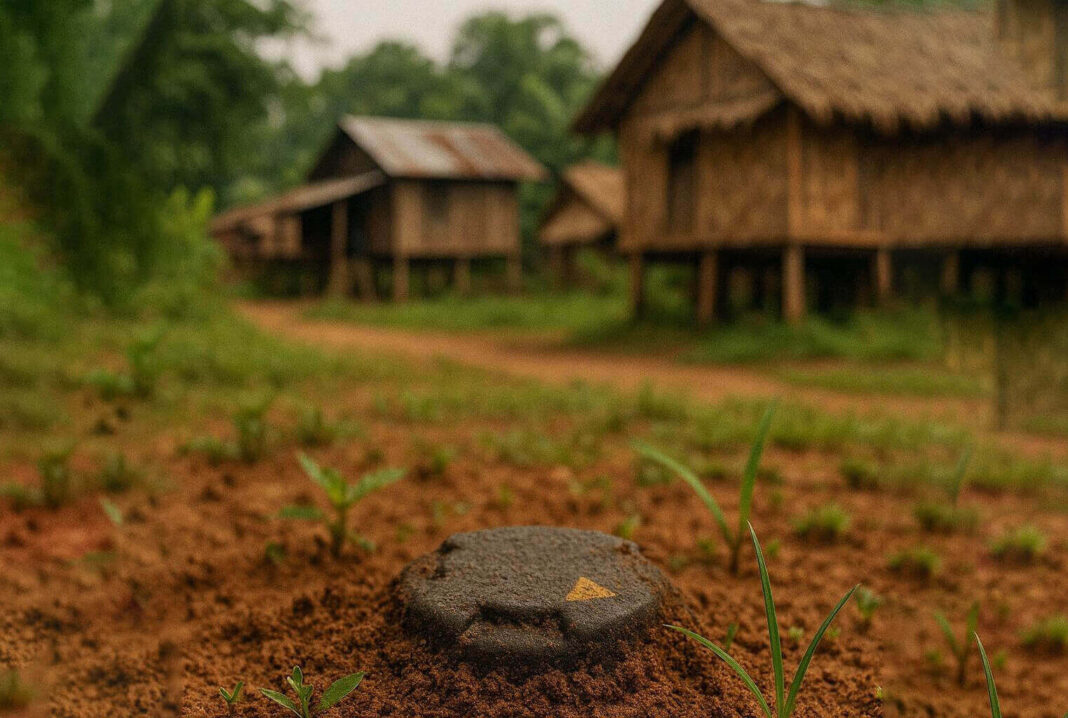
Haphazard landmine use and explosive ordnance failures by conflict actors in Myanmar are further endangering civilians, in some cases because of a lack of knowledge about professional military practices.
In addition to landmines, a major risk for civilians comes from unexploded ordnance such as artillery rounds and air-dropped munitions. These conventional weapons have a failure rate of between 5% and 10%, according to Rory McCann, who in September completed a two-year deployment as Weapons Contamination Coordinator for the International Committee of the Red Cross (ICRC). The duds pose a deadly explosive threat to civilians, with children disproportionately at risk.
As a humanitarian organization, the ICRC has operated in Myanmar for 40 years, claiming strict neutrality and confidentiality in engagements with all parties to the conflict. A former Ordnance Corps officer in the Irish Army, McCann spoke to Insight Myanmar for the “Navigating a Minefield” series in a personal capacity. His ICRC role would have entailed engagement with members of the Myanmar Armed Forces, Ethnic Armed Organizations and other armed groups, but he would not confirm specifics.
The pattern of landmine use in Myanmar fails to meet military objectives, McCann said, arguing that “sporadic” or “punitive” placement of landmines indiscriminately harmed civilians without serving any strategic military purpose. The military use of landmines is to deny access to an area, McCann said, adding that without clear marking of minefields, mines might kill or injure indiscriminately, but enemy forces would not know what areas to avoid.
Myanmar is not a signatory to the 1997 Mine Ban Treaty, or Ottawa Treaty, but customary international humanitarian law (IHL) holds conflict actors accountable for protection of civilians. International standards in line with IHL require military practices such as recording where landmines are deployed, clearly marking minefields, and removing landmines that do not serve military necessity.
“If the customary IHL rules are not being followed, it not only is very dangerous for the civilian population during that time, because they do not know where the minefields are, because they’re not marked,” McCann said. “Then, when you go to clear that area, it’ll make it extremely expensive, extremely slow and extremely dangerous, because you have no idea how many mines have been used in that area and where they have been placed.”
Unlike most mine-affected countries, Myanmar lacks national mine standards tailoring mine action to the context and particular risks. With landmine contamination covering massive areas of the country, national standards might include, for example, when an area could be considered clear, what depth clearance was required, which markers would signify landmine hazards, and how land surveys would be qualified.
For the past two years, Myanmar has recorded the worst annual landmine and explosive remnants of war casualties of any country in the world. In November, the Landmine Monitor reported there were 2,029 confirmed casualties in 2024, more than double the number from the previous year, with the extent of contamination across the country unknown. Data on landmine incidents are limited, usually depending on local reporting by independent Myanmar news outlets and other credible sources.
In the absence of a National Mine Authority, both local and international humanitarian mine actors focus on explosive ordnance risk education, which ICRC conducts as “risk assessment and safer behaviors” (RASB), with more than 1,800 sessions delivered in 2024, reaching more than 69,000 people, according to its website. The work relies heavily on partnerships with local leaders and influencers, both as trusted community liaisons and sources of local knowledge and expertise.
Local de-mining efforts are underway in Myanmar, including by EAOs clearing land at great risk as displaced civilians return to their homes. But the conflict prevents addressing many root causes of the landmine risk, including regular de-mining according to established standards, the destruction of dangerous explosive remnants of war, and the continued haphazard use by conflict actors. In addition to RASB training, ICRC’s current humanitarian strategy is based on victim assistance and advocacy with conflict actors.
“Simply spreading landmines in an uncontrolled manner doesn’t benefit kind of any side because you’re unsure who you’re actually going to be able to target,” McCann said. “You want [people] to be able to work with you in rebuilding that community, which is not going to happen if you have used essentially landmines sporadically to injure and harm people. You’re simply just going to sow a greater seed of doubt and mistrust within that local population.”





Leave a Comments