

Residents in Pang Laung (Pinlaung), Hopong, and Hsihseng townships in Southern Shan State say they are being forced to plant “show” opium fields that armed groups later destroy in staged operations.
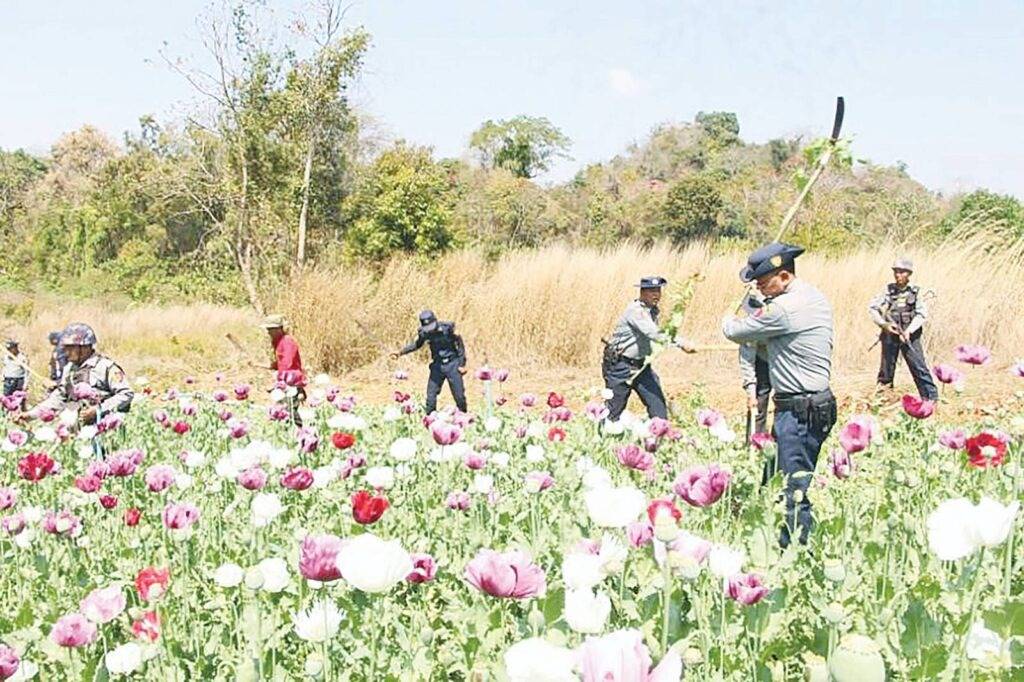
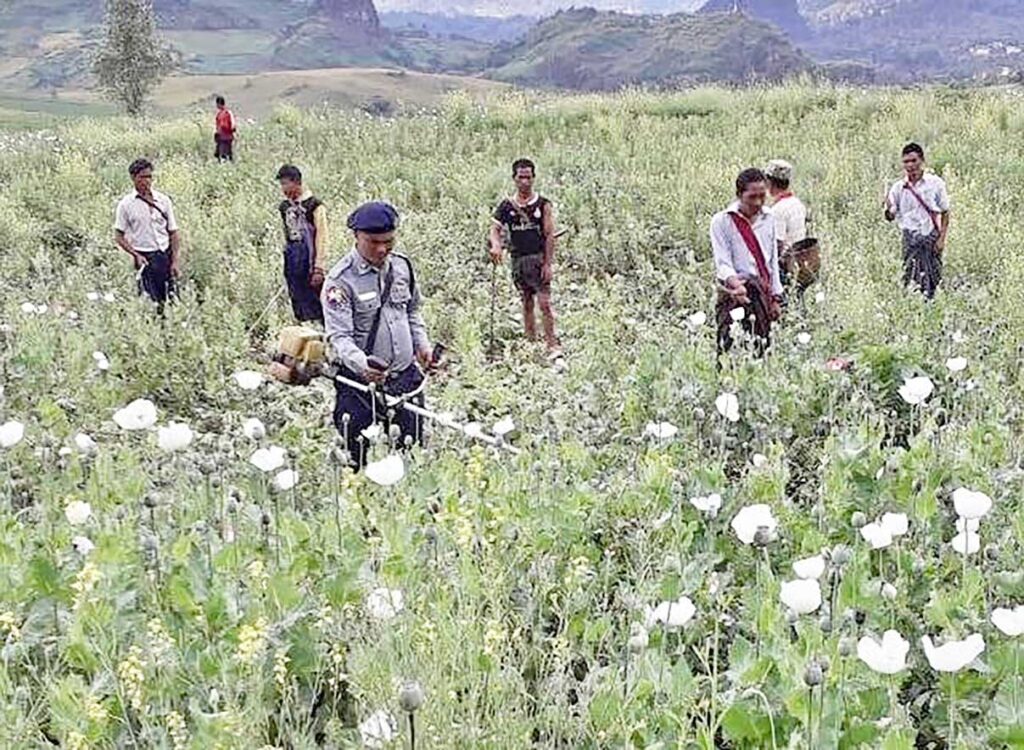
In the first week of December, junta police destroyed opium plots southeast of Htar Ngo Village in Hti Phaung Village Tract, Pang Laung Township. Locals, however, say the operation was purely symbolic and caused little real damage.
“The destruction is just for show. They don’t destroy the real fields. When farmers grow opium, they prepare separate, designated plots for the military to destroy. They only destroy those areas,” a woman from Pang Laung told SHAN. “We have to pay nearly 500,000 kyats per household to both the military and the PNO. If we don’t pay, they will destroy everything.”
She added that one viss of raw opium sells for just 600,000 kyats (USD 154). After paying taxes to armed groups and covering rising fertilizer and labor costs, farmers are left with barely enough to survive.
Opium is usually planted twice a year, mostly on remote hillsides. Farmers avoid plots near villages, as these are more likely to be targeted for staged destruction by junta police or PNO militia forces.
“Since the coup, almost everyone has started growing opium. With the rising cost of goods, it’s the only way many families can survive,” said a Hopong resident. “But those who plant on the hills often lose their entire crop to flooding during the rainy season. Even when we plant more, we still don’t earn enough to live on.”
On December 4, the United Nations Office on Drugs and Crime (UNODC) reported that Myanmar has become the world’s largest opium producer, with cultivation expanding significantly in Southern Shan State.
The Myanmar Police Force announced that between November 29 and December 5, it destroyed more than 140 acres of opium fields in Hti Day and Na Khite village tracts in Hsihseng Township; Nawng Laing Mu Phake and Pan Kala areas in Hopong Township; and parts of Pang Laung Township.



Leave a Comments