



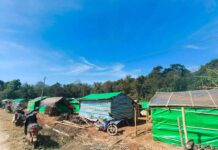
Ongoing clashes between junta troops and the Brotherhood Alliance in northern Shan State, as well as fighting between the regime and Karenni revolutionary forces in Karenni (Kayah) State, have displaced tens of thousands of civilians into southern Shan State.
Internally Displaced Persons (IDPs) report that, in these conflict-affected regions, the military regime is attempting to project an image of stability ahead of the upcoming election by forcing IDPs to return to unsafe villages, cutting off humanitarian supplies, and conducting compulsory population registration.
“The military is ordering IDPs in some camps to return home. In some areas, the fighting hasn’t even stopped. In other villages, people are being sent back even though landmines have not been cleared. They want to show the situation is stable for the election, and they are even summoning people for forced registration,” said IDP aid worker Nang Hla Khin.
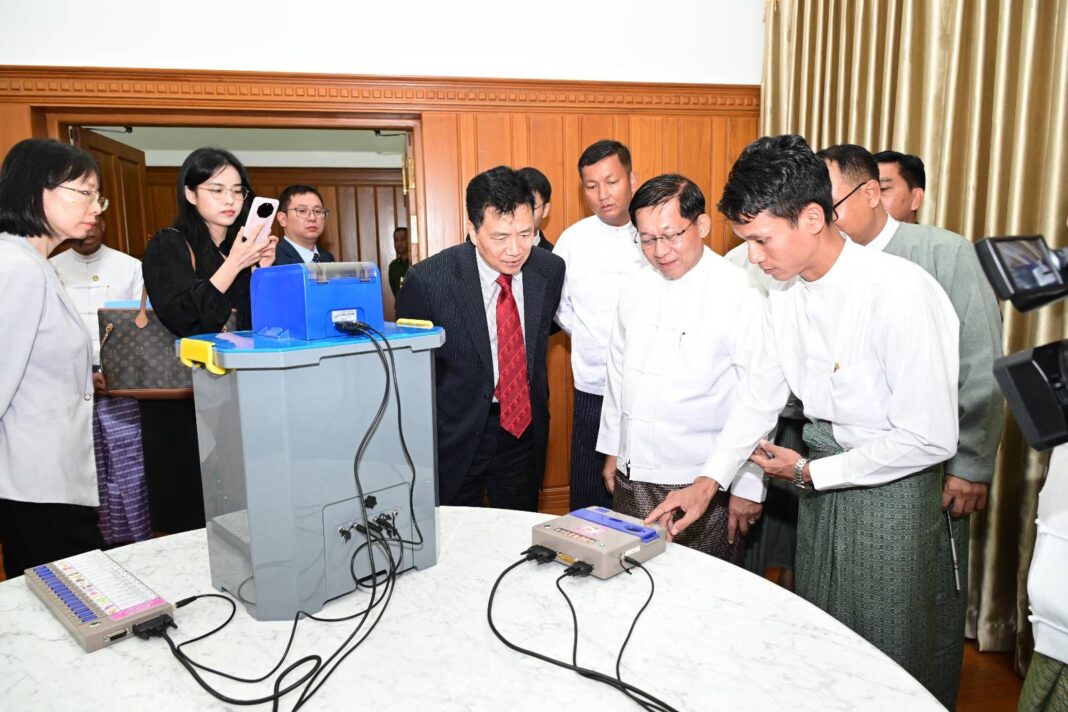
Residents of Muse, one of the townships included in the first phase of the junta’s planned election, also report that the Immigration Department began issuing new household registration lists in early May to prepare voter rolls for those who had relocated.
Since the junta activated the People’s Military Service Law (Conscription Law) in February 2024, many people—including youths and older adults—have fled abroad or sought refuge in liberated areas. These individuals are unable to vote and fear being traced.
“They collect household lists, create voter rolls, and check NRC cards at polling stations. All our personal information is handed to them. If they later review the list of those who voted, everything will be exposed to the military. People fear arrest or forced conscription,” said a young Shan resident from Lashio.
On the night of November 26, the military announced an amnesty for 2,361 people imprisoned under Penal Code Section 505-A, claiming the releases were intended to allow them to “freely vote.”
Additionally, 724 detainees serving sentences under the same charge were released on bond, and 5,580 cases filed under Section 512 of the Criminal Procedure Code—related to evading arrest under Section 505-A—were dropped.
Election observers note that despite the release of more than 8,600 individuals, public participation in the election is expected to remain extremely low due to widespread security fears.
“People worry that their voting information—who they voted for, when they voted, or even whether they voted—could be traced. If the military can identify which party was selected at each station, that is a major security threat. That fear alone will keep many from going to the polls,” the young Shan resident from Lashio dded.



Leave a Comments