




The Myanmar military’s Immigration Department (locally known as La Wa Ka) has been issuing new household registrations in Muse, a town on the Myanmar–China border, sparking concerns that the move is intended to secure votes for the December 28 election.
According to Muse residents, since early May the combined Immigration Office in Muse Township has been issuing household registrations to displaced persons, migrant workers, and others who have recently relocated to the town.
“Now, La Wa Ka is providing Muse household registrations for people from central Myanmar who are staying here, including those renting rooms and even people without fixed addresses. Once household registration is completed, national ID cards can also be obtained,” said a Muse resident.
They added that Chinese nationals who have moved into Muse are also being given new household registrations.
On July 21, during a meeting in Nam Kham, Vice-Senior General Soe Win stated that anyone eligible to vote in the December election who had lost their citizenship card or household registration documents would have them reissued.
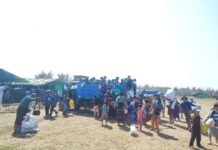
Following the “1027 Operation,” thousands of displaced people have sought refuge in Muse, while tens of thousands of migrant workers remain stranded at the border, waiting to enter China for work.
Immigration offices from Mongkoe, Pang Hsai, Manhero, Nam Kham, and Kutkai have also been relocated to Muse Township, drawing locals from surrounding towns to register their documents.
A Muse resident in his 30s voiced concern about the demographic impact: “When household registrations are issued to people from other townships and states, eventually there will be more outsiders than locals in Muse. To put it plainly, it feels like our ethnic group is being swallowed up by others,” he said.
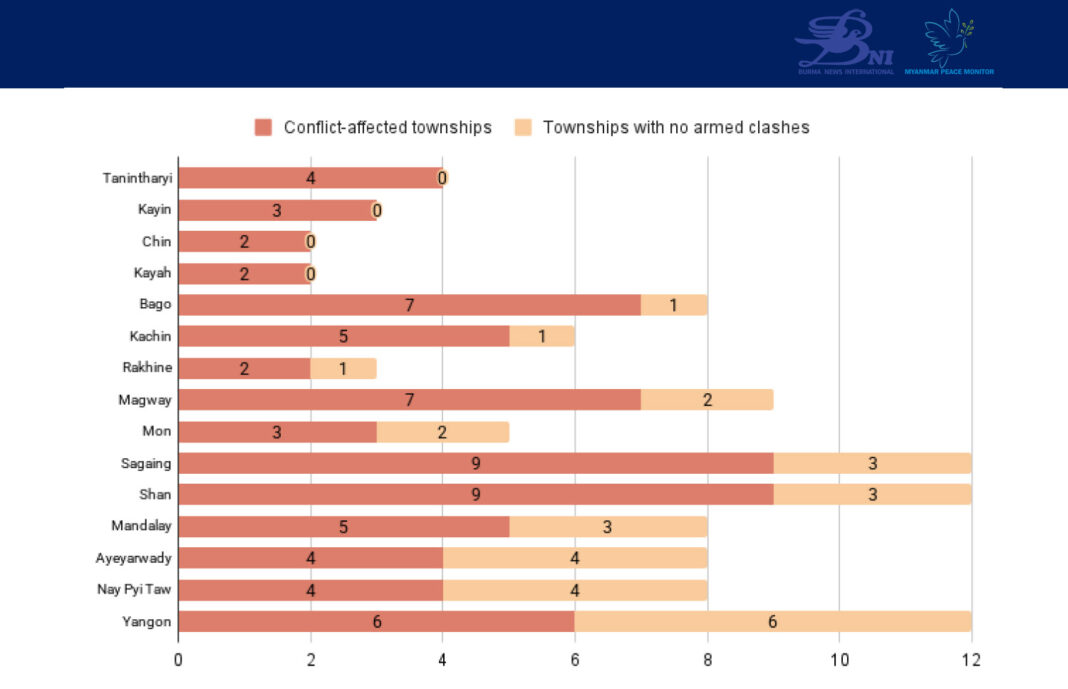
On August 20, the junta’s Union Election Commission (UEC), operating under the so-called State Security and Peace Commission, announced the list of 102 townships included in the first phase of elections on December 28.
Among them are 12 townships in Shan State: Pangtara (Pindaya), Hopong, Nawnghkio, Kengtung, Tachileik, Taunggyi, Namhsan, Muse, Mong Hsat, Lashio, Lang Khur, and Loilen.
The UEC said the Pyithu Hluttaw (House of Representatives/Lower House) will be elected under the First-Past-the-Post (FPTP) system, while the Amyotha Hluttaw (House of Nationalities/Upper House) and State/Region parliaments will use a combination of FPTP and Proportional Representation (PR).
For the Amyotha Hluttaw, each state and region will elect 12 representatives—six through FPTP and six through PR. For State/Region Hluttaws, two representatives will be elected per township, one via FPTP and the other via PR.
The UEC also announced that overseas voters must complete Form 15, providing both their domestic and overseas addresses, and submit it to Myanmar embassies between August 21 and September 8 to apply for advance voting.

Leave a Comments