



Myanmar’s military-appointed Union Election Commission (UEC) has announced plans to hold a nationwide multi-party general election starting on December 28, despite escalating armed conflict and widespread displacement across the country.
The polls will be conducted in phases, with the first phase covering 102 townships — including 12 in northern Shan State, where fighting between the army and ethnic armed groups has forced thousands to flee their homes.
The announcement comes amid ongoing clashes in Shan and Kachin states, and growing skepticism from both domestic political parties and the international community over whether elections organized by the military can genuinely reflect the will of the people.
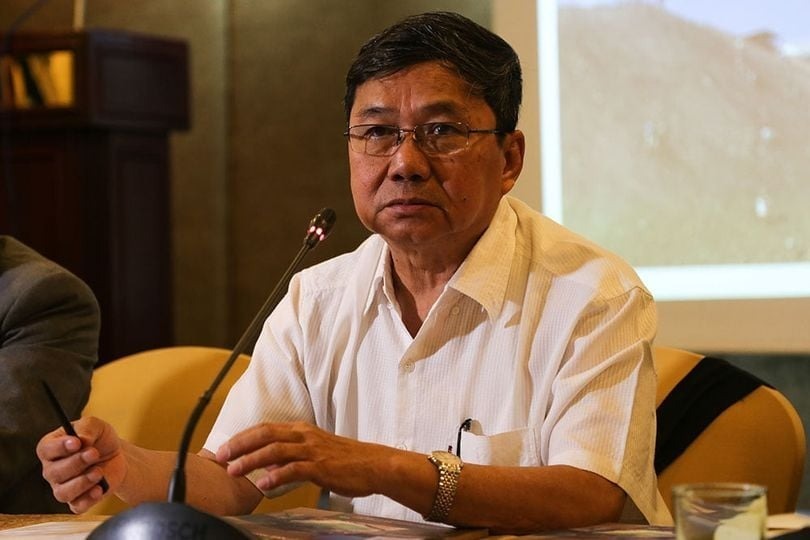
The Shan Nationalities League for Democracy (SNLD), one of Myanmar’s largest ethnic political parties, has announced it will not participate. SNLD Chairperson Sai Nyunt Lwin spoke to SHAN about the election’s feasibility, its potential impact, and the party’s plans.
Q&A with SNLD Chairperson Sai Nyunt Lwin
Q: Many towns in northern Shan State controlled by ethnic armed groups are included in the constituencies announced by the commission. How feasible is it to hold an election while people are displaced due to conflict?
A: Many towns in northern Shan State are under the control of the TNLA and MNDAA. Including them in the election list suggests that the military either assumes it can retake those areas before December or has other arrangements, possibly involving Chinese mediation.
Holding an election while people are fleeing conflict makes it impossible to reflect the genuine will of the people. According to the current election law, voting could technically proceed with just one ballot cast, but such a process would not represent the choice of the people.
Q: Since Senior General Min Aung Hlaing has vowed to hold the election “at all costs,” what impact could this have on Shan State’s political and military landscape?
A: Shan State has many armed revolutionary groups. An election could be conducted legally, but any new civilian government formed here will struggle to interact with armed groups without military backing.
Peace, stability, and the rule of law are crucial. Without them, a civilian administration will face enormous difficulties. The consequences for Shan State could be significant.
Q: How much influence could this election have nationwide?
A: Very limited. Across Myanmar, the rule of law is weak. Any civilian government emerging from this election will have to focus on rebuilding institutions. They will face urgent challenges in health, education, and rising commodity prices.
If people seeking office for personal gain dominate, conditions will worsen for ordinary citizens. Only those who genuinely aim to serve the public interest can improve the situation. But if opportunists capture positions, they will exploit the weak rule of law for personal gain, worsening the suffering of the population, particularly in Shan State.
Q: Since the SNLD is not participating, what are your plans going forward?
A: We want to engage in politics correctly and serve the people genuinely. Elections are one way, but not the only way, to represent public interests.
The danger is that those who gain power often focus solely on themselves. The important thing is not to lose the desire to serve. At the right time, we will step in to contribute. For now, while people are suffering, we must find ways to help.
Q: Myanmar is home to diverse ethnic groups. With tensions rising in Shan State, how should ethnic issues be resolved?
A: Focusing only on one’s own ethnic group will not bring lasting prosperity. If other groups in the union suffer, any gains will be temporary.
Our SNLD once joined the Committee for Shan State Unity (CSSU), where we emphasized “peaceful coexistence.” Only if all ethnic groups live together in harmony can Myanmar as a whole prosper. If groups turn against each other, no one will benefit.
Thank you very much for your time and insights.



Leave a Comments