



The junta has intensified its crackdown on Chinese-made goods entering Myanmar via the China–Myanmar border, seizing shipments and tightening inspections in an effort to prevent tax revenue from flowing to ethnic armed groups.
The measures, in place since August 2025, have continued to disrupt border trade and place mounting pressure on traders and consumers.
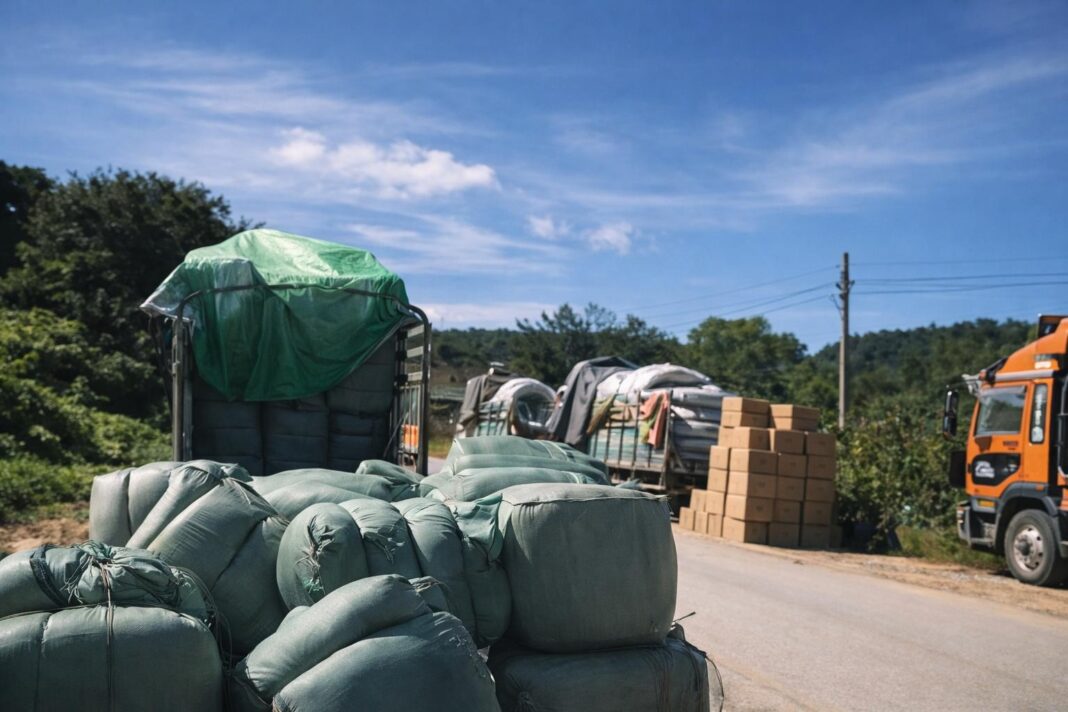
Goods imported from China are taxed at border crossings controlled by ethnic armed groups, including the Kyin San Kyawt gate under the Brotherhood Alliance and the Chinshwehaw gate controlled by the Kokang Army (MNDAA). From there, goods are transported toward Lashio, Mandalay Region, and southern Shan State. However, traders say that once shipments move beyond Lashio Township, they are treated as illegal by the regime and become vulnerable to seizure.
“In reality, these border goods have to pass through gates controlled by the Brotherhood Alliance, so we have to pay taxes to them. However, that tax only covers transport up to Lashio Township,” a trader from Muse told SHAN. “The goods cannot be legally transported to Mandalay or other regions. Once they cross that boundary, they are considered illegal, and the military commission seizes them.”
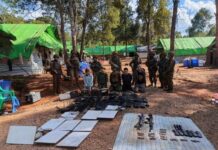
Since November 2025, junta checkpoints in Mong Pawn, Loilem Township, have stepped up inspections and confiscations of foreign goods not taxed by the military commission. In the first week of January 2026, Tactical Command-1 of the Northeast Command, based at the Tar Long ferry crossing in Hsipaw Township, reportedly seized 77 vehicles and detained 68 drivers transporting what authorities described as illegal Chinese imports.
Meanwhile, the MNDAA announced on January 4 that more than 200 cargo trucks per day are passing through the Chinshwehaw border gate under its control, carrying agricultural products such as sugarcane and corn, as well as consumer goods.
Following that announcement, the Muse District and Township Illegal Trade Prevention Task Force, formed by the military commission, summoned traders to a meeting on January 13. At the meeting, officials ordered that tax revenue must not flow to armed groups and warned that all goods not taxed by the commission would be seized.
The current trade crisis is rooted in territorial fragmentation following Operation 1027, launched by the Brotherhood Alliance—comprising the MNDAA, TNLA, and AA—against the military on October 27, 2023. Although large-scale fighting has subsided under Chinese mediation after the military commission suffered significant losses, traders say the Union Highway, a vital artery for border commerce, remains effectively closed due to unresolved control disputes.
“We thought the trade situation would improve once the fighting quieted down, but now there are problems with taxation,” said a long-time border trader. “Traders now have to pay taxes to both armed groups and regime troops, which creates hardship for both traders and the public. Commodity prices are only going to rise.”
A female trader in Lashio echoed the concern, warning that the regime’s seizure policy is accelerating inflation.
“This unfair division between the armed groups and the junta, combined with the commission seizing goods because it is not receiving tax revenue, means the public ultimately suffers,” she said. “As goods pass through multiple checkpoints, traders face higher costs and losses, so prices inevitably increase.”
She added that since mid-2025, transportation costs from northern Shan State to southern Shan State and Mandalay have risen sharply due to restrictions on foreign goods.
While some residents hope commodity prices may fall if the military commission forms a new government after the election, traders say prices are unlikely to decline as long as border routes remain closed and seizures continue.

Leave a Comments