



Recently, while the Myanmar military junta is busy with its second phase general elections, General Saw Nerdah Mya dropped a bombshell that rocked not only the Karen people and community, but also the general public nationwide.
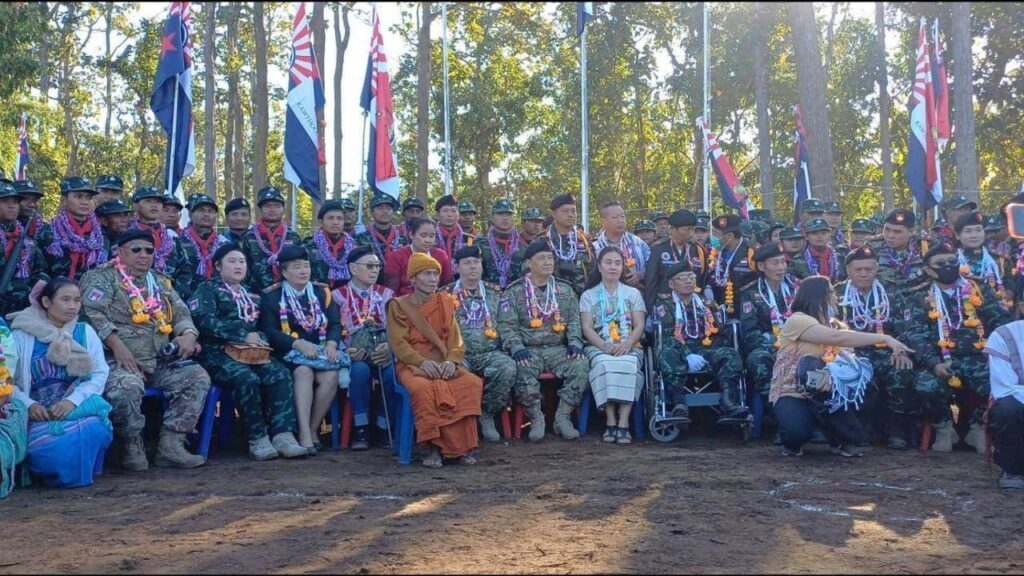
According to Khit Thit media report of January 7, General Saw Nerdah Mya, a member of the Kawthoolei Army, a splinter group from the Karen National Union (KNU), has declared the formation of a Kawthoolei government and state, reappointing himself as president.
His January 5 announcement has drawn widespread criticism across the country. A young Karen university student in Yangon expressed confusion over the move, saying it reflects a “one man, one king” mentality among Karen groups and questioning whether the declaration includes the necessary governance or military capacity to protect the people.
He added that such unilateral actions make it seem like Karen organizations act independently without unity, stressing they should all stand under the main KNU. The creation of the Kawthoolei state has caused confusion not only among Karen communities but also more broadly.
The Kawthoolei Army (KTLA) was founded on July 16, 2022, after General Saw Nerdah Mya, formerly commander-in-chief of the Karen National Defense Organization (KNDO), was dismissed by the KNU for killing 25 civilians. Following the KTLA’s formation, he established the Kawthoolei Government (GOK) in November 2023. On January 5, 2026, the GOK declared the Republic of Kawthoolei, citing Myanmar’s or Burma’s disintegration, fragmentation and a desire for self-rule as the reasons for creating a new independent, sovereign state.
KNU Response
On January 8, 2026 KNU released a six-point statement concerning the issue. In its first three points the statement writes:
- We, the Karen National Union (KNU), hereby clarify that there is no connection whatsoever between us and Kawthoolei Government and the declaration of independence for Kawthoolei Republic announced by the KawThooLei Army (KTLA) led by Saw Ner Dah Mya on January 5, 2026.
- On account of that Saw Ner Dah Mya has allegedly committed war crimes and has also repeatedly violated the rules and regulations set by the Karen National Union (KNU), the KNU made an official announcement in January 2022 to dismiss him from his position as Commander-in-Chief of Karen National Defense Organization (KNDO) and expel him from the KNU. Then, when Saw Ner Dah Mya announced the establishment of a splinter group called Kawthoolei Army (KTLA) in July 2022, we issued public statement that the KNU has nothing to do with the activities of KTLA.
- KTLA’s actions do not reflect the aspirations of the Karen revolution nor the realities on the ground. They are not in line with the values and principles of nation building that we envision either. Their actions are nothing but a misuse of the name “Kawthoolei” and a discredit to Karen revolution and Karen people.
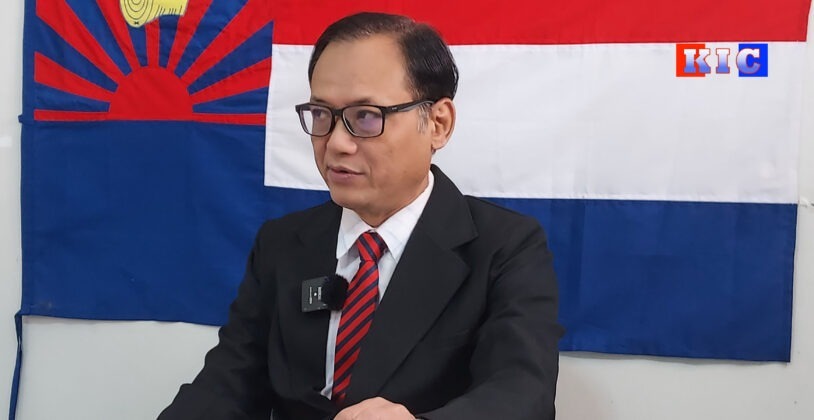
According to Karen Information Center (KIC), the KNU has stated that a government cannot exist without territorial control, an administrative system, and a governed population. Meanwhile, the KTLA has declared the formation of a new Republic of Kawthoolei, based on democratic governance, aiming for self-determination after the disintegration and fragmentation of the country caused by the Myanmar military junta’s coup in February 2021.
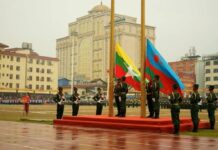
KTLA leader General Saw Nerdah Mya announced this on January 5 during the Karen National Independence Day ceremony. However, the mother organization of all Karen movement, the KNU, which expelled Saw Nerdah Mya for war criminal offenses, emphasized that this new republic does not represent them and lacks legitimacy without land, governance systems, and citizens.
KNU spokesperson Padoh Saw Tawnee warned that KTLA’s actions could cause confusion, especially while the Karen National Liberation Army and the people are striving for true democracy in the wake of the military takeover. Saw Nerdah Mya, expelled in July 2022 for the killing of 25 civilians, founded KTLA later that month. In November 2023, the Government of National Accord was formed under KTLA, eventually expanding into the Republic of Kawthoolei, led by Saw Nerdah Mya.
KTLA’s emergence and the Karen movement’s long history of divisions
Thwut Boonyawongwiwat from Chiang Mai University’s Faculty of Political Science and Public Administration explained that the KTLA was officially formed on July 17, 2022, by General Nerdah Mya, a former commander of the KNDO.
He noted that KTLA’s position should be seen in the broader historical context of the Karen nationalist movement, rather than as an isolated event. Its formation stems from a break with the long-standing Karen National Union (KNU), established in 1947 and for decades the central organization of Karen nationalism.
The KNU created its armed wing, the Karen National Liberation Army (KNLA), in the late 1940s. But history shows the Karen struggle has often been marked by splits, shifting alliances, and fragmentation rather than lasting unity.
This pattern is clear in the rise of various Karen armed groups, such as the Democratic Buddhist Army (DKBA), which broke away in the mid-1990s—shaping the balance of power along the Thai-Myanmar border. Another example is the Karen National Liberation Army-Peace Council (KNLA-PC), which split after a ceasefire deal with the Myanmar government in the late 2000s, taking a more pragmatic approach focused on territory and local interests over ideology.
Some Karen groups have even joined Myanmar’s security structure as Border Guard Forces (BGF), a hybrid military-local system used to bring certain ethnic armed groups under state control.
Given this history, Thitiwut said KTLA’s declaration—especially its call for an independent state—should be seen as the stance of one faction within a long and complex story of divisions in the Karen movement.
No comprehensive consensus among Karen organizations
Another point Thitiwut raised is the structural backdrop of Myanmar’s conflict is political positioning as it drags further into a lengthy war. This comes amid the authorities’ push for an election process widely seen as incapable of ending a civil war that has raged for years.
In this environment, armed groups are increasingly shaping clearer strategies and political stances—defining their goals, governance models, and visions for future power. In KTLA’s case, Thitiwut noted that declaring an independent state can be seen as setting a high political “ceiling” for future talks and negotiations, rather than signaling the final outcome of the political process at this stage.
In a recent KIC report on the issue, political analyst Dr. Sai Kyi Zin Soe said, “Their formation is not a declaration of consent after consultation among all the Karen groups that exist. The declaration by one group may also be aimed at achieving a political advantage (in relation to the other).”
Analysis
Given recent developments, questions arise over whether Nerdah Mya’s move stems from necessity, defiance, or a bid for political survival.
At the Karen revolutionary level, the need for declaring independence is debatable. For those seeking clear separation and a confederation-style solution within the context of a federal union, it may be essential. However, for those favoring a federalist framework, it could be seen as excessive.
As for defiance, the answer is likely “yes,” since Mya rejects the KNU’s labeling him a war criminal, believing they disregarded his explanation that the victims were Myanmar military spies and that his subordinates acted under wartime conditions. His refusal to appear before KNU authorities reflects his distrust of them.
In this light, declaring independence and forming the Government of Kawthoolei serves both to protect his personal and political survival, making necessity and defiance part of the same package. Still, the Karen must find ways to work together for the greater good of their national cause.


Leave a Comments