



Ethnic minorities living in the Shan State highlands still do not receive adequate healthcare because they live in remote areas without proper transport links and there is insufficient healthcare funding.
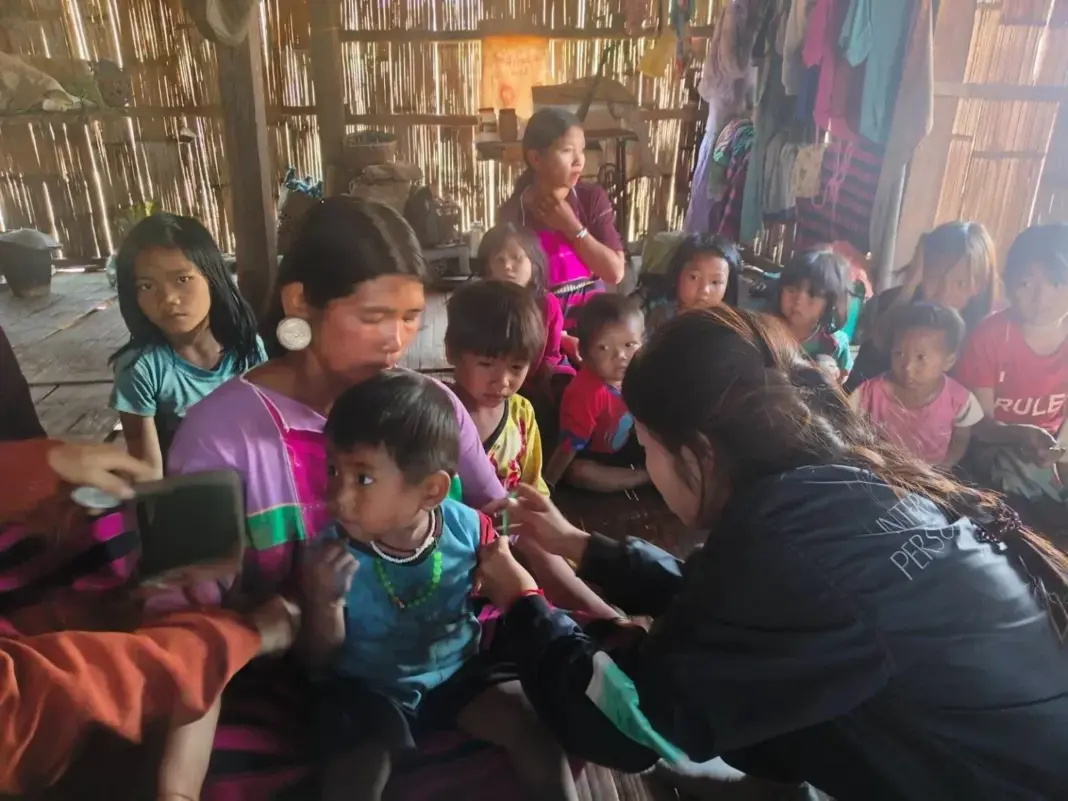
Nang Mway, a nurse who has treated people in the Shan highlands for over 10 years, is all too aware of the healthcare failings in those areas.
The worst time of year for her is the rainy season when the rains can turn the unmade roads to remote highland villages into impassable seas of mud. She said: “Every rainy season, I pray even more than usual for people to stay healthy and for there to be no emergency labour cases at night.”
Nang Mway lives in a village in Kunhing Township, in an area of southern Shan State where ethnic armed organisations (EAOs) are active.
She provides healthcare to villages in the area around where she lives. Some of the difficulties she faces are being in remote areas far from Kunhing Town and a lack of health awareness amongst the rural population in those areas.
Explaining the difficulties she faces getting to see her patients Nang Mway said: “The villages around here are really far from the town, and transportation is tough. Traveling during the rainy season is dangerous. Sometimes, I have to walk for 2 to 5 hours on muddy rural roads just to reach certain villages. During these times, I’m always worried that I might not be able to reach a patient on time.”
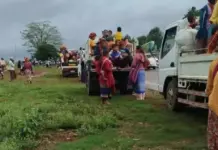
Normally, during the rainy season people living in such remote villages have to use tractors with chains attached to their wheels to travel along the muddy unmade roads. Nang Mway explained that in such conditions walking is usually faster than travelling on the tractors and that, despite the risk, she will walk to visit her patients no matter the conditions. Even if it is dark and there is torrential rain she will continue because caring for her patients and reaching them in time to administer that care is so important to her.
“During the rainy season, villagers have to attach chains to the wheels of tractors and motorbikes to use them in the thick mud. At night, when there are patients about to give birth, I need to get to them. I usually choose to walk to reach the patients,” said Nang Mway.
“I’ll go any distance to save a patient’s life, no matter how far it is,” she added.
Although the political landscape of Myanmar has changed in many ways over the decades, the healthcare situation in the highland regions of Shan State has remained unchanged.
Even during the brief period of civilian rule from 2010 to 2020 the highland healthcare sector was overlooked.
Since the 1 February 2021 military coup, there has been a steady decline in the standard of Myanmar’s political, social, and healthcare sectors. This has led to increased challenges for those working in the healthcare sector, especially those such as Nang Mway who work in remote and hard to access areas.
There are rural healthcare centres in Kar Li Town in Kunhing Township, Mongnawng Town in Kyethi Township, and nearby villages in southern Shan State but they lie unused because there are insufficient staff to man the centres, even on a temporary basis. Previously healthcare staff from the township health department used to visit the centres once a month, but no longer and the centres are now nearly always closed.
A woman from a village outside Kar Li Town said to Shan Herald: “We have a village clinic in our village, but it never opens, and there are no staff. Patients who need to give birth here have to rely on local midwives.”
This prolonged closure of village clinics and the shortage of healthcare staff have resulted in unnecessary deaths in remote areas.
Nurses delivering healthcare to remote areas under EAO control can also face other problems.
Another nurse also working in Kunhing Township, Nang Khaung, explained how some conservative EAOs occasionally prohibit health education lectures in remote highland areas.
She recalled that in 2019 she was obstructed and threatened by EAO members when she tried to provide information about contraception in a highland village.
Talking of the incident, she said: “That village is in an area where a local EAO is active. I was explaining to the women there about contraceptive implants, the ones that go in the arm and the ones that go in the uterus. I was showing them how to use them, but the EAO stopped me and threatened to punish me if I tried to do it again.”
Some EAOs believe that contraception hinders population growth, resulting in the extinction of ethnic groups, and they often impose strict restrictions on the sale of contraceptives and condoms.
“Contraception has nothing to do with extinction. It’s about giving families the means to plan and manage their finances and education more effectively,” was Nang Khaung’s response to such ideas.
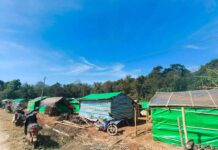
Another external cause of worsening health amongst remote highland villages in and around Kunhing Township in Shan State is the increased extraction of natural resources by opportunists since the coup, particularly unchecked coal mining.
As well as leading to a surge in severe environmental damage and pollution the increase in mining activities has also led to a rise in health problems, especially skin disease. Specifically, there has been an increase in the number of people suffering from skin problems in the towns of Kar Li and Mongnawng where, as already mentioned, there are health clinics that never open due to staff shortages.
Despite these ongoing and increasing health crises no organisation has stepped forward to help, take responsibility for the situation or treat people.
Nang Khaung said that due to the complex political situation and expanding military conflict in Myanmar the health sector has to be as self-reliant as possible and people need to look after their health.
She said: “Who really governs the country now? The EAOs are only interested in collecting taxes, and the public gains no benefit. The entire healthcare system is failing to operate efficiently, leaving everyone to rely on themselves for their health.”
Nang Mway expressed disappointment with the situation and said that the quality of healthcare in different parts of the country was far from equal. She pointed out that healthcare was far worse for people living in areas far from urban centres that are hard to reach because of poor transport infrastructure, such as the Shan State highlands.
Nang Mway urged the relevant EAOs and authorities in the Shan highland regions to not turn a blind eye to the health problems of the people living there and to take action to safeguard the health of communities in such areas.


Leave a Comments