




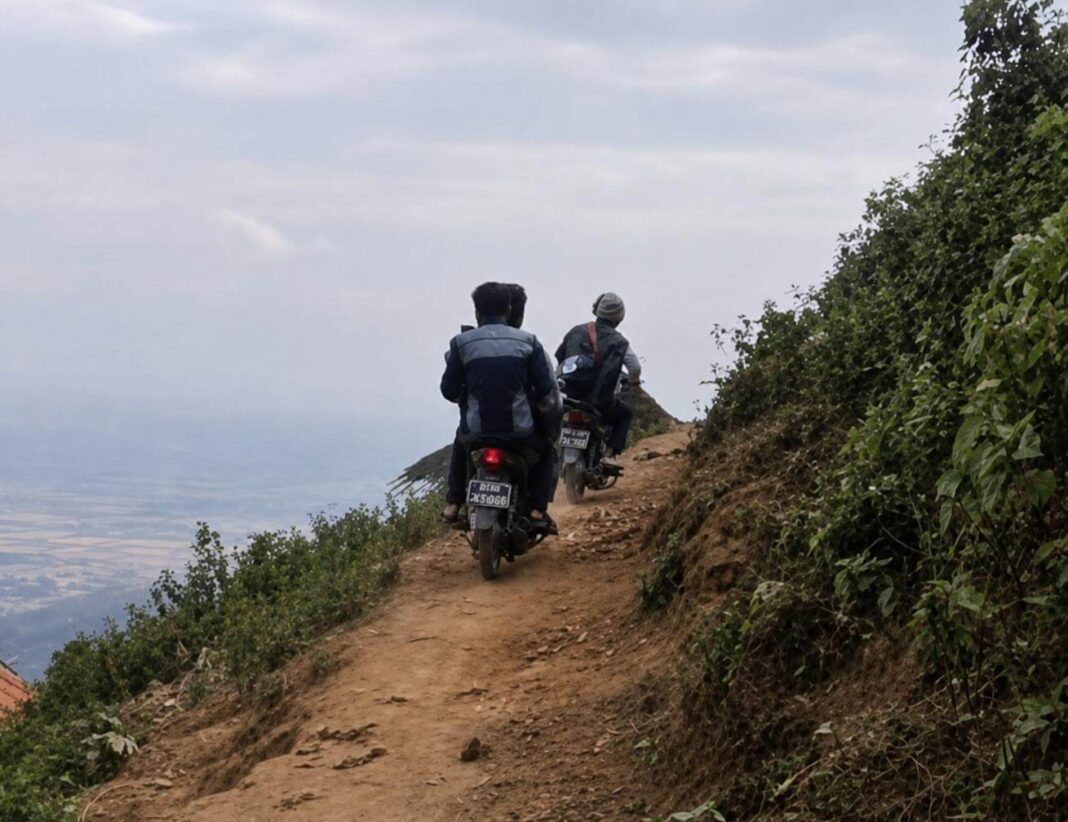
Residents in the highland areas of Kengtung Township in eastern Shan State say poor road access is preventing patients—especially pregnant women—from reaching medical care, contributing to avoidable deaths.
At least 30 remote villages face daily transportation challenges despite being located only about 25 miles from Kengtung town. During the rainy season, dirt roads become slippery and, in some cases, impassable, cutting off access to hospitals and clinics.
“Travel is already difficult under normal conditions. After two or three days of rain, the roads become so slippery that motorbikes cannot move at all,” said Dr. Nang Mar Lar Wan, who provides volunteer medical services in the area.
According to Dr. Nang Mar Lar Wan, patients often fail to reach healthcare facilities in time, with some dying en route. Pregnant women are among the most vulnerable.
“Some women have to give birth in the mountains. In some cases, complications arise, putting both the mother and baby at risk,” she said.
Residents say reaching Kengtung town typically requires at least two hours by motorbike—a journey that becomes dangerous or impossible in bad weather. For women in late pregnancy or emergency situations, the trip is often not feasible.
Local communities say they have long hoped for road improvements, but successive governments have failed to deliver meaningful infrastructure in these areas.
“Because transport is so poor, it affects everything—healthcare, education, and livelihoods,” Dr. Nang Mar Lar Wan said. “These are services only the government can provide, so people have always had expectations.”
The lack of reliable transport also limits access to schools, markets, and basic services, reinforcing isolation in already vulnerable communities.
The highland region is home to several ethnic groups, including Shan, Akha, En (Ann), and Ta’ang (Palaung) communities. Residents say improved road access would not only reduce health risks but also support broader development in the region.
Local sources emphasize that without investment in roads and rural healthcare access, residents—particularly mothers and children—will continue to face life-threatening barriers to essential services.




Leave a Comments