



The State Administration Council (SAC) has officially declared that general elections will be conducted throughout the nation in 2025, with a particular emphasis on regions with stable conditions. In the process, the SAC, certain political parties, and nationwide ceasefire agreement signatory groups are preparing.
Nevertheless, the scheduled elections are opposed by opposition groups including the Karen National Union (KNU), Kachin Independence Army (KIA), Karenni National Progressive Party (KNPP), and Chin National Front (CNF), collectively referred to as K3C, National Union Government (NUG), and People’s Representatives Committee for Federal (PRCF). They stated that elections can only be conducted following a political dialogue that is approved by all parties. This scheduled election is meaningless in the absence of a political solution.
In fact, the root of Myanmar’s long-standing problems is the Constitution. For example, the controversy over Paikhun township arose from an ambiguity in the 1947 Constitution. Paikhun township is situated between the Shan and Karenni states. However, the Karenni people claim Paikhun and Mongpai townships as part of their land.
According to the military-drafted 2008 Constitution, Paikhun and Mongpai townships are located on the edge of the Pa-Oh self-administration zone, which comprises Panglaung, Hsihseng, and Hopong townships. Thus, in order to seize control of these two townships, the Pa-Oh National Organization (PNO) and the Myanmar military are battling the Karenni armed forces.
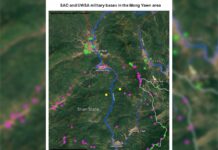
The designation of area for the United Wa State Army (UWSA) under the 2008 constitution caused another major issue. According to the 1947 Constitution, there is no such Wa State in Shan State. The townships now under Wa were part of Shan State. However, the military rule granted the Wa administrative territory in accordance with the 2008 constitution. In addition, the Kachin State exists as a result of the 1947 Constitution, and the Kachin people currently claim certain parts of the northern Shan State as their Kachin Substate.
Furthermore, the 2008 constitution designated controlled zones for several ethnic groups, including Pa-Oh, Palaung, Danu, and Kokang.
The military regime’s divide-and-rule policy is the problem of the country’s unity. As observed in lowland Myanmar, opposition organizations now seek to establish Burma State in the Sagaing, Mandalay, and Magwe divisions.
Thus, the military regime’s attempts to hold the 2025 election under the 2008 constitution would further exacerbate the problem. As previously said, the present issues stem from the Constitution, which was not written by or for the people. As a result, the situation will persist until the constitution is rewritten to reflect the will of the people.



Leave a Comments