



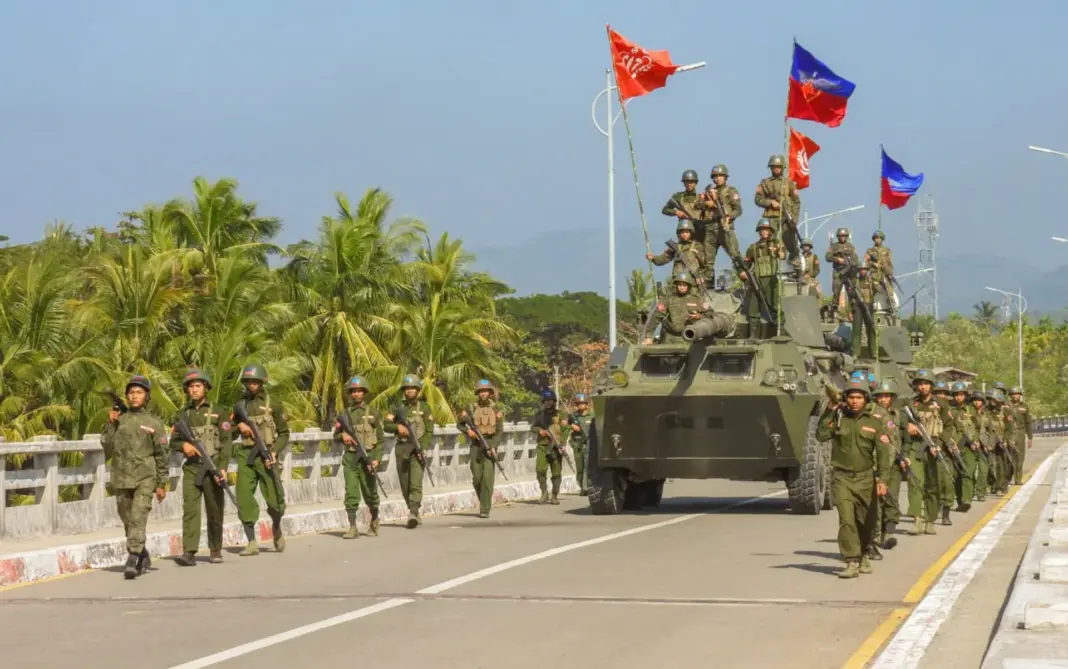
The Myanmar military junta’s Operation 4926, launched on September 4, 2026, represents its most aggressive attempt in years to retake territory from the Arakan Army (AA) in Rakhine State. However, by September 9, the offensive had largely stalled, with AA forces repelling junta columns on multiple fronts, inflicting heavy casualties, and forcing a retreat. The operation failed to achieve its core objective of breaking the AA’s control or reestablishing junta dominance in Rakhine.
Operation 4926: A Decisive Setback for the Junta
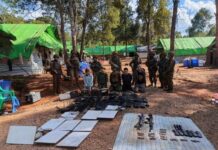
The junta’s assault was multi-pronged, targeting key areas in Rakhine. On the Sittwe front, three columns advanced from Min Chaung Bridge, Warbo Island, and the Shwe Min Gan naval base toward Ponnagyun. Despite heavy airstrikes, artillery, and drone use, two columns were repelled with significant losses. One column remains engaged near Warbo Island, but reports indicate 20 junta soldiers’ bodies were recovered by the AA. On the Kyaukphyu front, a column advancing from the Taung Maw Oo naval base toward Sane was ambushed and forced to retreat after AA artillery and drone attacks.
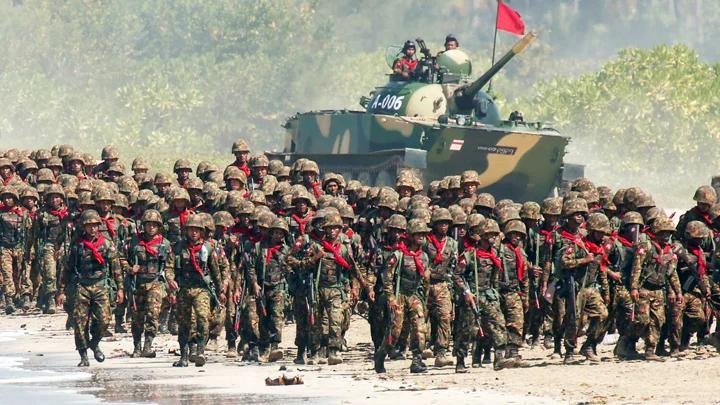
The junta has lost control of 14 townships in Rakhine and Paletwa in Chin State. Despite deploying massed forces from Magwe, Bago, and Ayeyarwady regions, and naval shelling off Gwa, the offensive has not only failed but appears to have been conducted in “disarray,” according to observers. The junta’s reliance on conscripts and inexperienced troops has been exposed. Reports indicate that some battalions are composed of up to 80% new recruits, leading to low morale, high desertion rates, and a collapse in command structure. The junta’s own pro-military channels claimed success, but ground reports contradict this, showing a regime in retreat.
The Strategy of Distraction and the Call for Coordinated Offensives
While the AA stands firm, the broader conflict landscape remains complex. Although fighting has largely ceased in most parts of the country, the northern Shan State remains a flashpoint where the Myanmar National Democratic Alliance Army (MNDAA) and the junta are competing for administrative control, often through political maneuvering rather than open combat.
The junta’s strategy appears to be a “center of gravity” approach, believing that if the AA is defeated, the resistance in Chin, Kachin, Karenni, Karen, and Mon states might lose momentum. However, this assumes a level of central coordination among the resistance that is currently being actively challenged by opposition leaders.
CDM Captain Zin Yaw has issued a stark warning to revolutionary forces across the country. He argues that observing undeclared ceasefires or truces in other regions while the AA faces a major offensive is a strategic error. His advice is clear: every resistance group should heighten military activities in their own areas to draw the junta’s attention and resources away from Rakhine. This strategy aims to prevent the junta from concentrating its forces in one region, thereby stretching its resources thin and preventing a focused, crushing blow like Operation 4926 from succeeding.
Financial Strangulation: The FATF Threat
Beyond the battlefield, the junta faces an existential economic threat. Sean Turnell and Dan Swift have highlighted that the Financial Action Task Force (FATF) is finally considering “countermeasures” against Myanmar. This is a significant escalation; such measures have previously been taken only against Iran and North Korea.
Unlike previous targeted sanctions, which the junta evaded by shifting operations between state banks, FATF countermeasures would apply to the entire country. They would require banks in FATF member states, including China, to move away from Myanmar-linked transactions. This would directly constrain the junta’s ability to use foreign currency to buy weapons, kill civilians, and prop up criminal enterprises.
The junta’s primary weakness is its desperate need for foreign currency to purchase weapons from Russia, China, and Iran. The junta has previously exploited the international financial system, using informal networks like the hundi system to bypass sanctions and launder money from illicit activities such as scam centers and drug trafficking. If the FATF imposes countermeasures, global banks would be forced to sever ties, making it exponentially more difficult and expensive for the junta to access the international financial system. This could collapse the regime’s financial backbone, as its ability to sustain the war effort relies heavily on these illicit financial flows.
Political Consolidation: SCEF Expands
As the military and economic pressure mounts, the political opposition is consolidating. The Strategic Coordination Committee Federal Consultative Council (SCEF) held its second meeting of 2026 on September 8, formally admitting three new members: the Sagaing Regional Federal Union, the Mandalay Regional Federal Union, and the Magway Regional Federal Union.
This expansion brings the total number of SCEF member organizations to nine, including the National Unity Government (NUG), the Committee Representing Pyidaungsu Hluttaw (CRPH), the Karen National Union (KNU), the Kachin Independence Organization (KIO), the Karenni National Progressive Party (KNPP), and the Chin National Front (CNF). The SCEF is structured around three pillars: federal unions, ethnic armed organizations, and people’s representative bodies. With KNU and KIO leading the military coordination under the supervision of the NUG’s Minister of Defence, the SCEF represents a more unified front capable of coordinating both military and political strategies against the junta.
International Isolation and Humanitarian Crisis
Min Aung Hlaing’s recent diplomatic tours to Vietnam, Laos, Thailand, Russia, Belarus, China and India have been designed to project an image of legitimacy following a sham election. However, these visits have not translated into tangible military or economic support that could turn the tide in his favor. The international community remains largely silent, with Western nations offering only verbal condemnations and minimal financial aid.
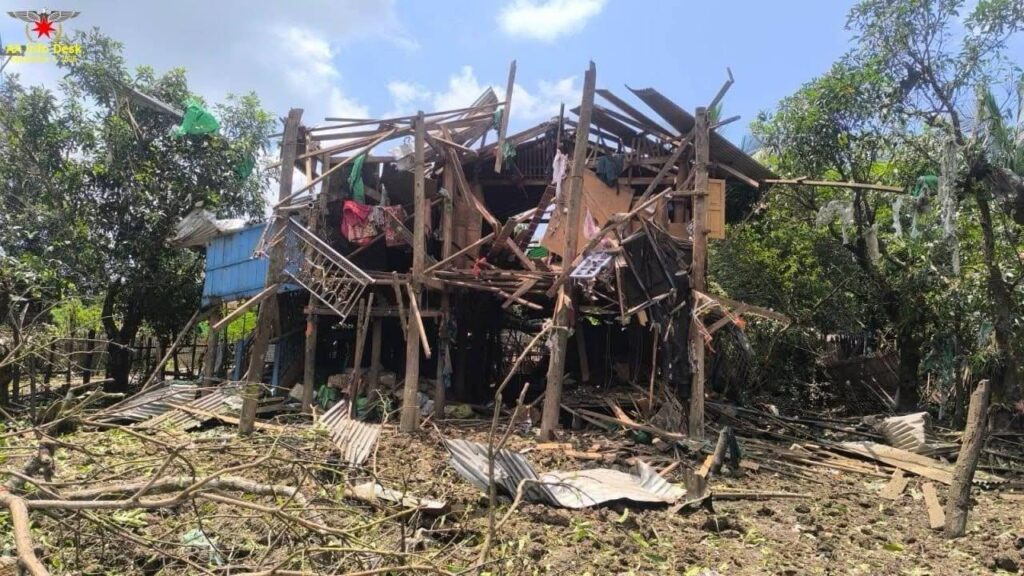
The junta’s economy continues to crumble. The World Bank reports a shrinking economy, with food prices rising 170% since the coup. The junta’s reliance on forced conscription and the export of illicit goods to fund its war effort has only deepened the country’s instability. Meanwhile, the regime continues to bomb civilian areas, including during severe flooding, killing civilians and destroying infrastructure, further highlighting the humanitarian catastrophe it has wrought.
Conclusion: A Regime on the Brink
The failure of Operation 4926, combined with the expansion of the SCEF and the looming threat of FATF countermeasures, suggests the Myanmar junta is approaching a critical juncture. The military is stretched thin, reliant on unwilling conscripts, and unable to achieve its strategic objectives. Politically, the opposition is more united than ever, coordinating both battlefield tactics and diplomatic efforts. Economically, the walls are closing in as the international community moves to cut off the junta’s financial lifelines. While the junta still possesses air power and a residual capacity for violence, its ability to sustain the war and maintain control is rapidly diminishing.





Leave a Comments