



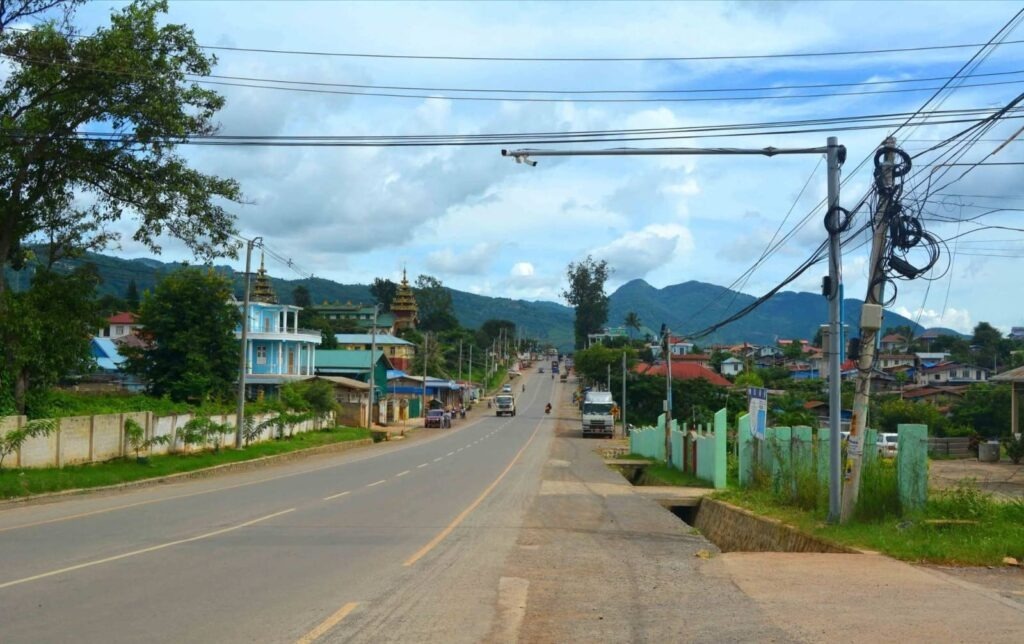
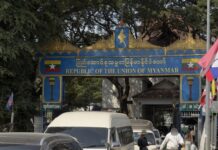
Military regime troops stationed at the Ayetharyar checkpoint in Taunggyi Township, southern Shan State, are reportedly detaining passengers and demanding money from those who have not updated their National Registration Cards (NRCs), according to local residents and drivers.
Since early March, junta forces have intensified inspections of both public buses and private vehicles, closely scrutinizing passengers’ identification documents. Travelers over the age of 18 who have not replaced their old ID cards with updated versions are reportedly being removed from vehicles, questioned, and forced to pay so-called “fines” ranging from 50,000 to 100,000 kyats before being allowed to continue their journeys.
A driver who frequently passes through the checkpoint described the situation to SHAN: “At the gate, we have to show the passenger list. If they are in a good mood, they let us pass. But when they want to be difficult, they demand to see everyone’s IDs. If someone hasn’t updated their ID, they are pulled off the vehicle immediately. The soldiers ask why it hasn’t been updated and demand a 50,000 kyat fine; some are forced to pay as much as 100,000 kyats.”
Drivers also report being required to provide cash payments and detailed passenger information to checkpoint authorities in order to proceed.
The enforcement has affected not only young adults but also elderly travelers. During the second week of March, an 80-year-old woman was reportedly removed from a vehicle at a military checkpoint along the Ywangan–Mandalay road because her ID had not been updated. She was forced to pay 80,000 kyats before being released.
“They inspect vehicles very closely and demand IDs. If a person’s current appearance does not match the photo on their old ID, they create problems. Even an 80-year-old grandmother had to pay 80,000 kyats because her card wasn’t updated. Inspections are so strict now that traveling has become very difficult,” a driver from Ywangan said.
Residents say similar practices are occurring at multiple checkpoints, including at least three along the Ywangan–Aungban road, where inspections have become increasingly strict amid a heightened military presence in the area.
In Myanmar, citizens typically receive their first NRC at around age 10, with mandatory updates required at ages 18, 30, and 45. However, due to bureaucratic delays, administrative inefficiencies, and widespread corruption within government offices, many people have been unable or unwilling to complete these renewals, leaving them vulnerable to penalties under current enforcement practices.
Local sources also report that authorities are now using electronic scanning devices at checkpoints, allowing troops to cross-check identification data against military conscription lists. This has raised fears among residents that the inspections are being used not only for administrative control but also to identify and detain individuals eligible for military service.
Amid tightening restrictions, residents say freedom of movement has been significantly curtailed, with many fearing arbitrary detention and extortion while traveling.





Leave a Comments