




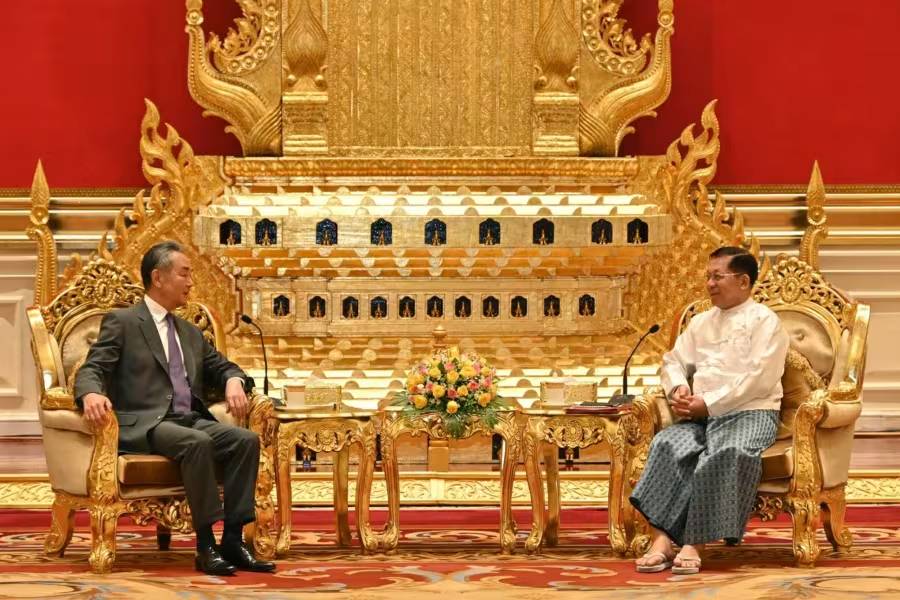
When China’s foreign minister meets Min Aung Hlaing in Naypyidaw on April 25-26, the visit will function as practical legitimization for a regime the UN and many states refuse to recognize. Beijing’s objective is clear: secure strategic access, protect investments, and demonstrate that it can shield partners from diplomatic isolation. In the near term, the visit delivers concrete advantages to the junta while deepening longer-term risks for Myanmar and the region.
Diplomatically, high-level engagement creates a public appearance of normal state relations, boosting the junta’s standing both domestically and regionally. Economically, accelerated approvals, new credit lines, and renewed Chinese infrastructure and resource deals are likely to follow, feeding regime coffers and sustaining patronage networks. Security ties will probably deepen through more robust military channels, intelligence sharing, and logistical cooperation — improving the junta’s operational capacity against armed opposition. Together, these effects blunt the practical force of sanctions and multilateral isolation, even without formal recognition.
China’s backing also weakens coordinated pressure from ASEAN and the UN. By filling economic and diplomatic gaps, Beijing fosters fragmentation among states and normalizes de-facto engagement, making sustained multilateral leverage harder to maintain. That fragmentation reduces incentives for other actors to risk confrontation with a powerful neighbour and limits the effectiveness of punitive measures.
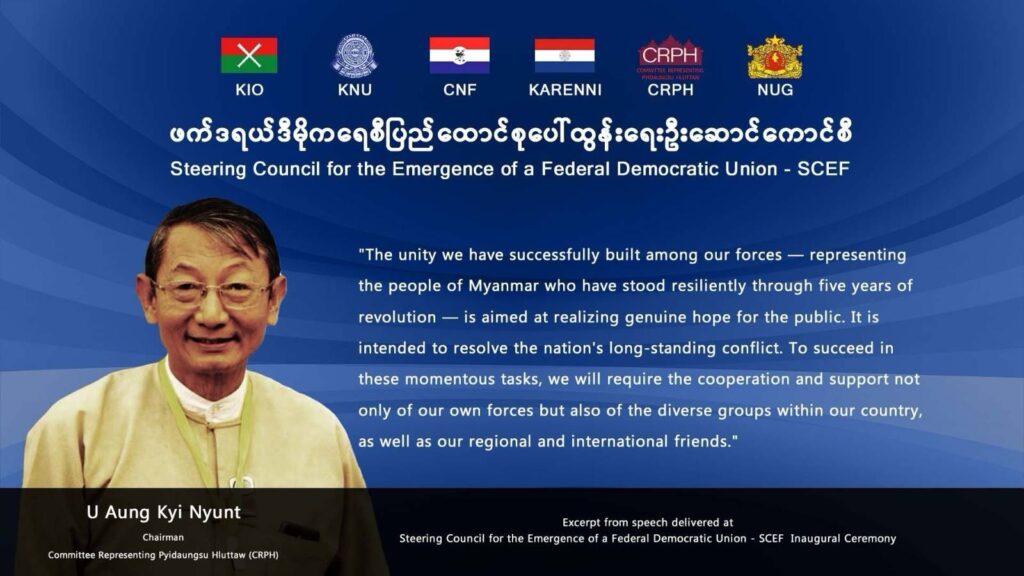
For anti-junta forces, the picture is mixed but ultimately sobering. Enhanced junta resources increase pressure on insurgent-held areas and raise the risk of intensified offensives. Yet outside support simultaneously incentivizes deeper resistance coordination. The Steering Council for Emergence of a Federal Democratic Union (SCEF) has worked to integrate political and military efforts across diverse anti-junta actors, and the Arakan Army (AA) — though not a formal SCEF member — is coordinating tactically with SCEF-aligned forces. The AA’s control of strategic borderlands and its operational linkages complicate junta counterinsurgency, stretching government forces across multiple fronts. As the junta hardens, resistance recruitment may rise and insurgent cooperation could strengthen, making a swift settlement unlikely and pushing the conflict toward protraction.
Strategically, China gains greater influence over trade routes, energy projects, and geopolitically valuable corridors, while sending a regional signal that it can protect partners from isolation. But Beijing also assumes liabilities: reputational costs with Western and some regional partners, heightened security risks to Chinese projects, and the prospect of recurring instability requiring sustained management. Attacks on infrastructure or rising local opposition to Chinese involvement could force Beijing into costly trade-offs between strategic retreat and deeper political entanglement.
The most likely overall outcome is asymmetric. The junta gains tangible short-term benefits; China secures strategic advantages; Myanmar inherits increased long-term fragility. ASEAN and UN non-recognition will be weakened in practice but not entirely erased, and formal multilateral legitimacy may remain contested even as de-facto engagement rises. Without an inclusive political settlement, Beijing’s tactical success risks entrenching a militarized, polarized, and protracted crisis — one that imposes political, security, and economic costs across Myanmar and well beyond its borders.






Leave a Comments