



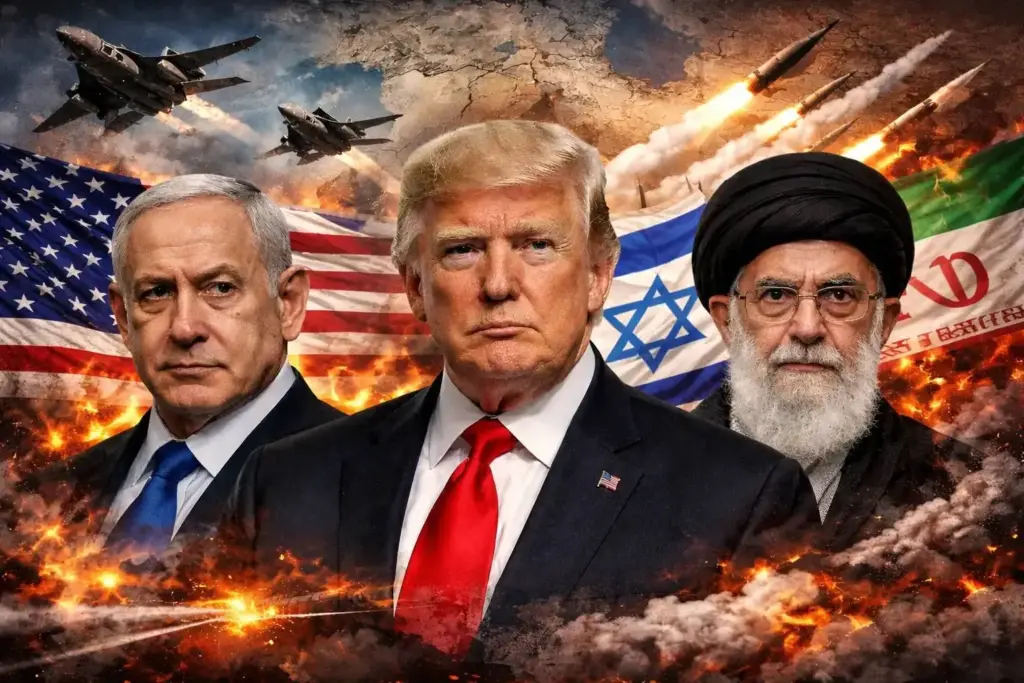
As the Iran and U.S.-Israel conflict enters its second week with no signs of de-escalation, countries worldwide are grappling with the implications of the situation, both directly and indirectly.
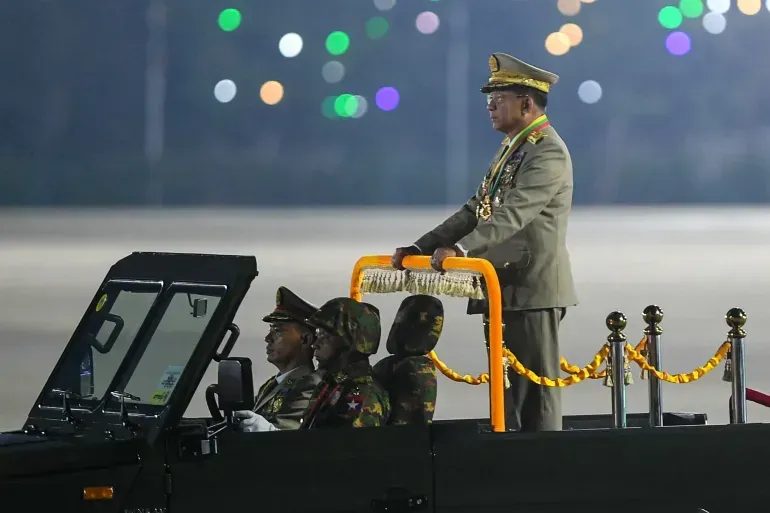
For Myanmar’s military junta, the dilemma of how to navigate these developments is particularly pressing. With key allies such as China and Russia openly supporting Iran by providing intelligence and military hardware, including technical expertise, the junta must tread carefully. So far, it has adopted a stance as a neutral observer, urging all parties to de-escalate the ongoing conflict.
The Myanmar Ministry of Foreign Affairs (MOFA) issued a statement on March 6, 2026, calling for de-escalation of the ongoing war in Iran and urging a peaceful resolution through negotiations.
Expressing deep concern over recent attacks in the Middle East, Myanmar emphasized that only constructive dialogue and diplomatic efforts, aligned with the Five Principles of Peaceful Coexistence, can solve the conflict.
The Ministry also urged all parties to respect state sovereignty and territorial integrity, reduce confrontations, and pursue a peaceful solution through negotiation.
Consequently, Reuters has revealed that Myanmar military junta has established relations with Iran, and has secretly purchased jet fuel from Iran.
In international affairs, the Myanmar military usually follows the stance of its allies Russia and China and criticizes them, but in this Iran–U.S.–Israel war issue, it has mainly expressed concern without mentioning any country by name.
But let us first look at briefly on the unfolding Iran and U.S.-Israel conflict.
Summary Timeline of Iran and U.S.-Israel Conflict
*February 28, 2026: The U.S. and Israel launch Operation Epic Fury, resulting in nearly 900 strikes against Iranian targets, including the assassination of Supreme Leader Ali Khamenei and other high-ranking officials. This marks a significant escalation in hostilities.
*March 1, 2026: Iranian missile strikes target U.S. embassies and military bases across the region in retaliation.
*March 2, 2026: Continuing exchanges lead to further escalation, with notable attacks on civilian infrastructure in Iran.
*March 3, 2026: Israeli forces carry out strikes targeting Iranian military leaders and installations, claiming significant damage to Iran’s military capabilities.
*March 4, 2026: Iran escalates its responses, launching attacks on Kuwait, Jordan, and targeting shipping in the Strait of Hormuz.
*March 6, 2026: Analysts report ongoing conflicts with multiple nations getting drawn into the struggle, indicating a broader regional war.
*March 8, 2026: Ongoing military confrontations continue, with civilian casualties rising and international tensions escalating, including disruptions to global travel and a spike in oil prices, alongside humanitarian crises stemming from the conflict.
*March 9, 2026: Multiple missile explosions reported near Israel. Iran launches drones targeting various countries, including Bahrain and Saudi Arabia. Civilian casualties increase, and tensions escalate further.
This conflict has escalated from historical tensions surrounding Iran’s nuclear program, military capabilities, and regional influence, which have consistently involved proxy wars, threats, and military posturing by both Iran and Israel.
Iran Military Support Myanmar Junta
Iran has been providing significant military support to Myanmar’s military junta since the coup in February 2021. The following details outline the types of military assistance being provided:
Jet Fuel Deliveries
Between October 2024 and December 2025, Iranian-linked tanker ships delivered approximately 175,000 tons of jet fuel to Myanmar’s military. This fuel is critical for supporting air operations, including bombings against civilians during the ongoing civil conflict.
The fuel is transported by vessels using “ghost ship” tactics, such as turning off location-tracking systems (AIS) and manipulating their positions to evade detection. These shipments are suspected to originate from the National Iranian Oil Refining and Distribution Company.
The provision of this fuel has coincided with a noticeable surge in aerial attacks by the Myanmar military, marking 2025 as the deadliest year for air strikes since the coup.
Urea Shipments
Iran has also supplied 400,000 to 600,000 tons of urea per year to Myanmar. While urea is commonly used as a fertilizer, it is also repurposed by the military junta for producing munitions and explosive devices.
The importation of urea involves similar clandestine practices as the fuel deliveries, including the use of vessels that alter their tracking systems to obscure their origins.
Broader Context
These supplies are circumventing Western sanctions aimed at both Iran and Myanmar. This collaboration enables both regimes to maintain operations despite international pressure.
By sourcing fuel and raw materials from Iran, Myanmar’s junta enhances its aerial capabilities, thereby intensifying its campaign against various ethnic groups and civilian populations.
Political Implications
Iran’s military support underscores its strategy of strengthening ties with isolated regimes. The collaboration with Myanmar comes at a time when Iran faces its own significant challenges due to international sanctions and military confrontations.
The military assistance from Iran not only fosters closer ties between these two nations but also escalates the humanitarian crisis in Myanmar by sustaining oppressive military actions against civilians.
Potential U.S. Actions Regarding Myanmar Amid Iran Conflict
Given the context of Iran rejecting the U.S. ceasefire proposal and the ongoing missile attacks, several factors will influence whether the U.S. might take action against Myanmar:
U.S. Focus on Iran conflict will outweigh resource allocation to address Myanmar crisis, and it will be viewed as not an immediate threat to U.S. interests, potentially overshadowing concerns about Myanmar, especially given that Myanmar is not perceived as a direct challenge to U.S. Security.
The current U.S. stance will probably be the condemnation of the Myanmar junta and has imposed sanctions on military leaders and entities linked to human rights abuses. This might continue even if the focus shifts predominantly to the conflict with Iran.
Rather than directly intervening, the U.S. may continue to support opposition groups within Myanmar, providing diplomatic backing or humanitarian aid, despite the resources being diverted to confront Iran.
U.S. risk assessment may calculate that escalating actions against Myanmar could complicate its already tense geopolitical landscape, particularly if Myanmar remains supportive of Iran.
Given Iran’s expanding military capability, the U.S. might be cautious about provoking reactions from Iran that could have repercussions in the broader Southeast Asian region, including Myanmar.
In summary, while it’s possible that the U.S. may continue or intensify its sanctions against Myanmar, substantial military intervention or actions seem unlikely as the U.S. focuses on the immediate threat posed by Iran. Myanmar may remain a secondary concern unless its actions directly affect U.S. interests or provoke wider regional instability.
The situation is fluid, and any significant developments related to either conflict could prompt a change in U.S. strategy.
Latest U.S. Move on Myanmar
On March 6, President Trump signed an executive order aimed at combating transnational cybercrime and scam operations that target American families, businesses, and critical infrastructure.
This order involves various measures, including sanctions against countries that harbor online scams. It serves as a significant wake-up call for governments in Myanmar, Cambodia, and Laos, where these criminal entities flourish.
President Trump has appointed the National Coordination Center (NCC) as the primary agency responsible for tackling organized crime. The NCC is tasked with formulating an action plan to disrupt, investigate, and dismantle these operations.
Additionally, the executive order instructs the Attorney General to prioritize the prosecution of cybercrime and fraud cases. A “Victims Restoration Program” has also been established to ensure that funds recovered from fraudsters are returned directly to the victims.
Under this directive, the Secretary of State will urge foreign governments to take decisive action against organized crime groups operating within their jurisdictions. This includes imposing sanctions, visa restrictions, and other measures designed to prevent and combat organized crime, along with limits on foreign assistance and the expulsion of officials implicated in these activities.
According to the White House, sophisticated transnational criminal organizations (TCOs) are responsible for various crimes, including ransomware, phishing, financial fraud, and sextortion. These operations are often indirectly supported by foreign governments and are linked to forced labor and human trafficking.
In 2024, Americans suffered over $12.5 billion in losses due to cybercrime. Reports from Thai news sources indicate that the US FBI is currently investigating the situation along the Thai-Myanmar border.
Analysis
Given the circumstances mentioned, the external forces energizing Myanmar’s democracy movement, aimed at establishing a Federal Democratic Union by displacing the military dictatorship, do not appear to be sustainable.
In other words, the aspirations of the oppressed people of Myanmar, along with all anti-junta alliance forces, to access external support for overthrowing the despised military regime seem quite distant, if not altogether impossible.
The main argument is the lack of genuine commitment particularly by the U.S. administration and West in general. Under Trump administration this is even more profoundly visible.
It is disinterested in the Myanmar crisis and appears to be insincere in its engagement with the crisis, prioritizing international optics over substantive action.
The administration was often more concerned with domestic matters, such as trade and immigration, which resulted in insufficient attention to international humanitarian crises.
The involvement in Myanmar seemed more a reaction to maintain a positive international image rather than a proactive approach to support democracy.
Unlike previous administrations that sought to engage in substantive diplomatic efforts to foster democratic movements, Trump’s administration favored transactional foreign relations, hindering real support for democracy in Myanmar.
The lack of robust U.S. support likely stifled the energy and momentum of Myanmar’s democratic movements, leaving activists feeling disillusioned and unsupported by the international community.
Another crucial point is that Trump isn’t in line with the accepted democratic principles.
For example his anti-democratic tendencies are plainly visible when his administration has been criticized for actions that undermine democratic norms, including attacks on the press, judiciary, and elections, suggesting authoritarian tendencies.
Its populist approach polarized public discourse, discouraging consensus-building, which is essential to democracy. This style contributed to a divisive political environment.
The administration’s questionable actions—such as dismissing officials who opposed its agenda—raised concerns about a commitment to the rule of law, crucial for maintaining democratic governance.
Ongoing misinformation and a disregard for established norms diminished public trust in institutions, complicating democratic engagement.
The U.S.’s perceived shift toward authoritarianism could undermine its credibility in advocating democracy abroad, potentially emboldening authoritarian regimes and discouraging grassroots movements.
While the situation in the U.S. may dishearten some activists, it can also inspire renewed energy among local movements advocating for democracy, reflecting a resilient activism grounded in shared ideals.
Viewing the Trump administration as leaning towards anti-democratic practices poses crucial questions about democratic governance standards. The erosion of norms affects not only domestic policy but also global perceptions of democracy, influencing movements for democratic change in nations like Myanmar.
In summary, the military junta aims to maintain a low profile to avoid antagonizing its supporters, such as China and Russia. At the same time, it seeks to evade the potential for U.S. humanitarian military intervention, similar to what Iran has experienced. The junta also wishes to maintain friendly relations with Iran. Thus, by projecting a neutral stance and emphasizing its commitment to territorial integrity and peaceful dialogue with adversaries, it attempts to navigate its recent constrained position strategically.
For the majority of the people in Myanmar and the anti-junta forces, the hope for external assistance—such as the Responsibility to Protect (R2P) through the U.N., the U.S., or the West—may not materialize if the aforementioned indicators are taken as guidelines. Consequently, after Iran, the focus on Myanmar appears to be wishful thinking. The anti-junta opposition forces will need to rely on their own efforts in the struggle for freedom and democracy.



Leave a Comments