



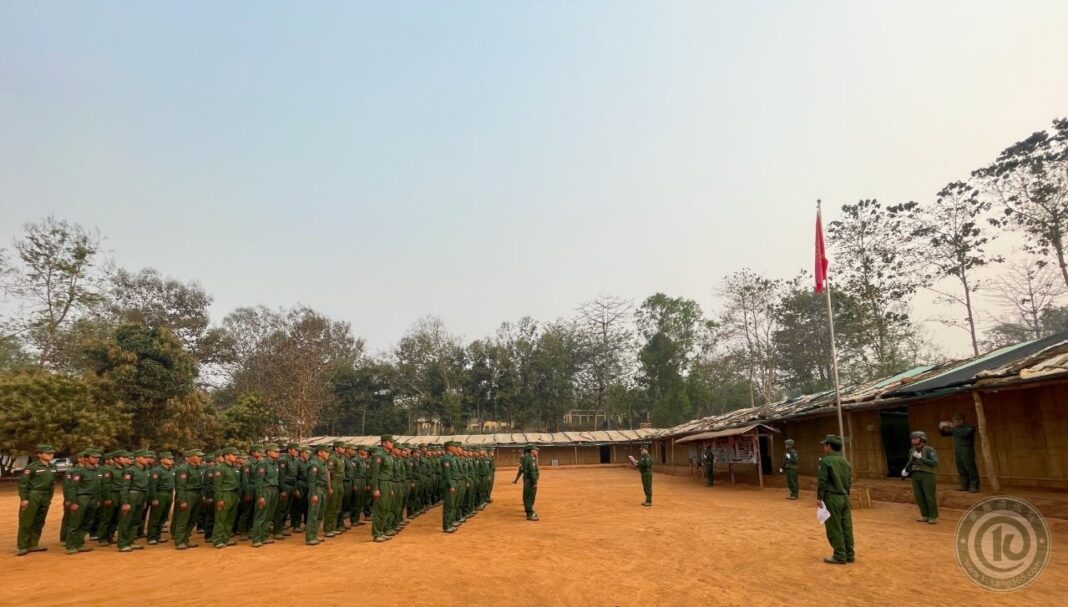
Rising tensions between the Myanmar National Democratic Alliance Army (MNDAA), also known as the Kokang Army, and the Ta’ang National Liberation Army (TNLA) have triggered fresh clashes in northern Shan State, leaving civilians facing severe shortages of food and fuel as fighting spreads across multiple townships.
For more than a month, military friction between the two members of the Three Brotherhood Alliance has disrupted daily life in parts of Kutkai and Hsenwi, according to residents and local sources.
Blockade Drives Food and Fuel Prices Higher
Residents say the MNDAA has blocked the Asia World Toll Gate in Hsenwi, preventing trucks carrying food, medicine, and fuel from reaching Kutkai. The disruption of supply routes has led to sharp price increases for basic commodities.
The price of a large bag of rice has reportedly jumped from around 150,000 kyats to about 260,000 kyats, while gasoline has surged to 8,000 kyats per liter after fuel shipments were halted.
“Food isn’t being allowed through at all, so prices have jumped. Even during the height of the war against the junta, the situation wasn’t this dire,” a local man told SHAN.
Residents described feeling trapped between rival armed groups, saying civilians are increasingly powerless as tensions escalate.
Drone and Artillery Attacks Reported
The conflict intensified on March 14, 2026, when the MNDAA launched coordinated attacks using drones and heavy artillery against TNLA positions in areas including Mong See, Nam Phat Kar, Loi Sam Sip, Man Pyane, and locations surrounding Kutkai town.
Local sources said the offensive appeared aimed at gaining full control of Kutkai.
Drone strikes reportedly hit parts of the town itself, with initial reports indicating civilian injuries and damage to residential buildings.
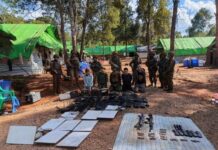
In a separate incident, sources said MNDAA forces detained TNLA members stationed at tax collection points in the Kyinsankyawt (Jin San Jiao) border trade zone near Muse, which had previously been jointly administered by members of the Brotherhood Alliance. Their weapons were reportedly confiscated.
The TNLA had earlier sought mediation through the Federal Political Negotiation and Consultative Committee (FPNCC), led by the United Wa State Army (UWSA). However, sources say the Wa leadership has remained largely uninvolved. Analysts suggest this may be linked to the TNLA’s direct attempts to seek China’s intervention, which could have created tensions within the alliance.
Curfew Imposed in Hsenwi
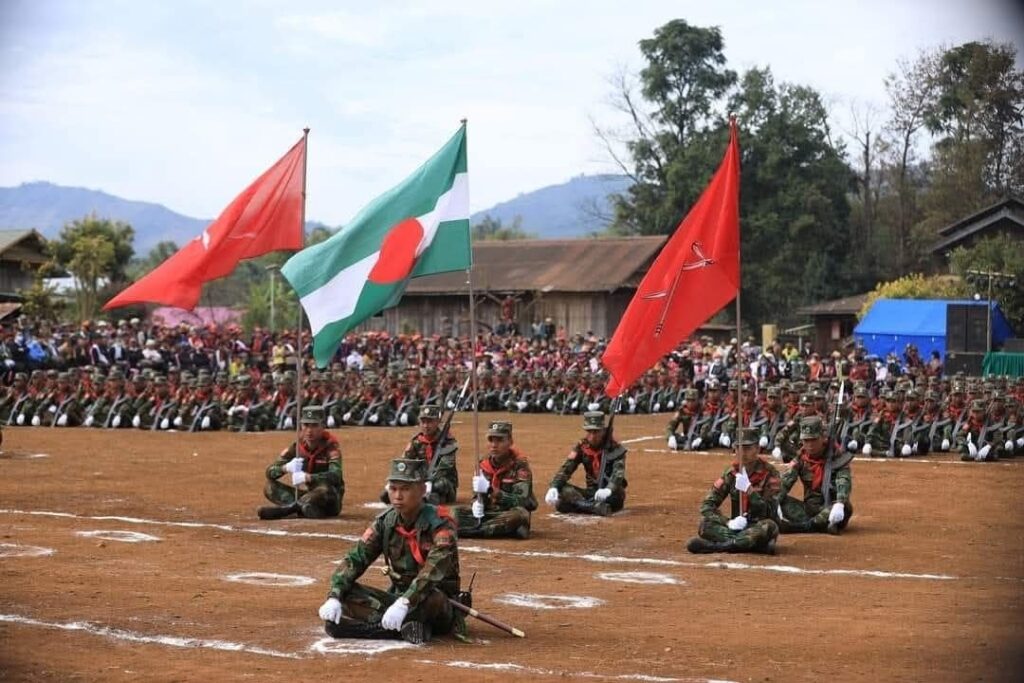
Following the outbreak of fighting, the MNDAA imposed an 8:00 p.m. curfew in Hsenwi on the evening of March 14.
Residents said the order was issued without warning, catching many locals by surprise as they were participating in village novitiation ceremonies.
Under the directive, anyone found on the main roads after the curfew would be detained and taken to a police station, according to residents.
The MNDAA also accused the TNLA of forced recruitment and attempting to provoke ethnic conflict, stating that although it values the alliance between the groups, it would “defend their dignity and survival to the utmost.”
Fighting Expands Toward Namkham
By the morning of March 15, clashes had intensified further, with the frontline shifting toward Namkham.
Sources reported that at around 9:00 a.m., MNDAA forces seized control of the Mong Yu (Mong Yu Lay) area and the 12-mile gate between Kutkai and Namkham, effectively disrupting TNLA supply routes.
Military observers estimate that the MNDAA deployed more than 1,000 troops for the offensive.
Attacks were also reported on Kutkai’s police station and former government administrative buildings, suggesting the fighting had moved deeper into urban areas.
Calls for Ceasefire
The TNLA stated that until 5:00 p.m. on March 14, its forces had not launched counterattacks, choosing instead to defend their positions in order to preserve the alliance between the groups. The organization said it hopes the dispute can still be resolved through dialogue.
Meanwhile, the National Unity Consultative Council (NUCC) issued a statement urging both sides to immediately halt hostilities. The council called on the groups to treat the dispute as a “partner conflict” and resolve it through political negotiation.
Civilians Fear Prolonged Crisis
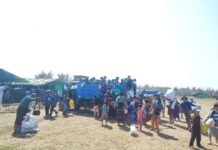
Residents say the combination of ongoing fighting and the blockade of supply routes is rapidly worsening humanitarian conditions.
Many fear that if transport restrictions continue while clashes intensify, food stocks in the region could be depleted within weeks, leaving thousands of civilians facing a deepening crisis.

Leave a Comments