

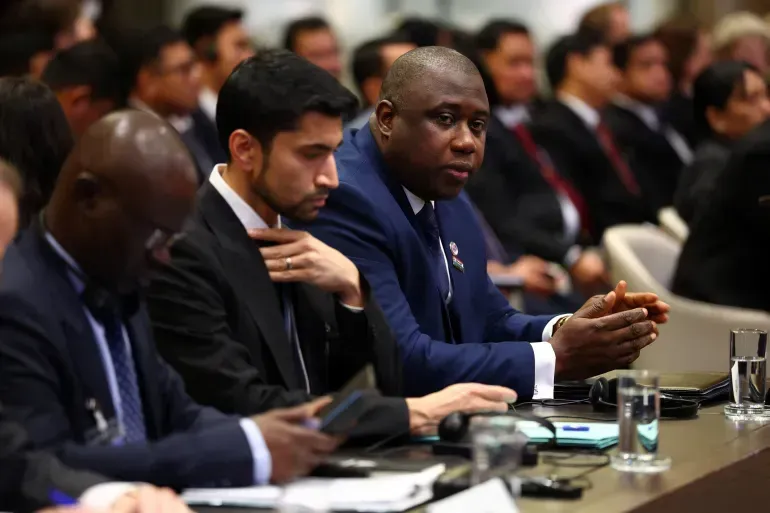
The ICJ hearings on the Rohingya genocide case, which began on January 12, will conclude on January 29. Judges will hear victim testimonies in a closed session before both sides deliver their final statements, according to ICJ sources. The central question is whether the Myanmar military’s 2017 crackdown on the so-called Rohingya uprising—armed with only rudimentary weapons and attacking military positions in Rakhine State—was a proportionate response to the situation or an excessive and disproportionate action that could be seen as carrying genocidal intent.
Summary of the ICJ Hearings on the Rohingya Genocide is as follows.
Gambia vs. Myanmar
The International Court of Justice (ICJ) has recently begun hearings in a landmark genocide case concerning Myanmar’s treatment of the Rohingya people, brought by The Gambia. This is the first full genocide case the ICJ has taken on in over a decade, aiming to address allegations against Myanmar’s military for its violent 2017 campaign against the Rohingya minority.
Background of the Case
The Gambia filed the case in 2019 after years of conflict that forced more than 730,000 Rohingya to flee to Bangladesh, following military actions described as genocidal.
Violations Reported: Human rights groups and a UN fact-finding mission have accused Myanmar’s forces of mass killings, sexual violence, and arson, calling these acts a systematic attempt to erase the Rohingya identity.
Key Hearings and Arguments
- Opening Statements:
Gambian Justice Minister Dawda Jallow claimed the Rohingya faced brutal violence and that Myanmar’s actions were a deliberate effort to destroy this vulnerable group. He shared personal stories of victims, focusing on the human side of the tragedy rather than just legal points. - Myanmar’s Position:
Myanmar has denied the allegations, asserting its military operations were legitimate counter-terrorism actions against armed Rohingya groups. It will formally respond after The Gambia concludes its presentation, expected to take several weeks. - Witness Testimonies:
For the first time in such a case, testimony from Rohingya survivors will be presented, giving victims a direct voice in an international court.
These hearings are part of a broader and ongoing crisis in Myanmar, especially as the country faces continued unrest and international scrutiny over its human rights record.
State or Individual Actors
When it comes to the debate over whether it’s fair to place blame or allegations on the State or on individual actors responsible for committing genocide, the ICJ’s intent is quite clear, as reflected in its stance on the matter.
Allegations are filed against the State of Myanmar, rather than individual actors like the military, because of how international law and the International Court of Justice (ICJ) work. Under international law, states can be held responsible for acts of genocide or other serious crimes committed within their territory, no matter who carried them out.
The 1948 Genocide Convention allows one state to bring another before the ICJ for violations.
Since only sovereign states have legal standing at the ICJ, accountability is framed at the state level. Going after individuals is often harder due to jurisdiction issues, extradition challenges, and political protection of leaders. Targeting the state addresses the broader policies and patterns behind such crimes, showing that the actions of individuals often reflect a coordinated state strategy.
Quite recently, TM Media presenter Ko Thein Myat explains that the Gambian people are not against the people of Myanmar, but are acting under the Genocide Convention agreement signed by various countries against state institutions like the police, army, and administrative bodies that represent the state.
In other words, their stance targets the functionaries of these institutions, never the general population of Burma or Myanmar. Therefore, if Myanmar were to lose at the ICJ proceedings, it should be seen as a victory of the international community over the military class and junta, not the people of Myanmar. The false idea that supporting the military junta is necessary to prevent the people of Burma or Myanmar from falling with it has no credibility whatsoever.
Gambia Position
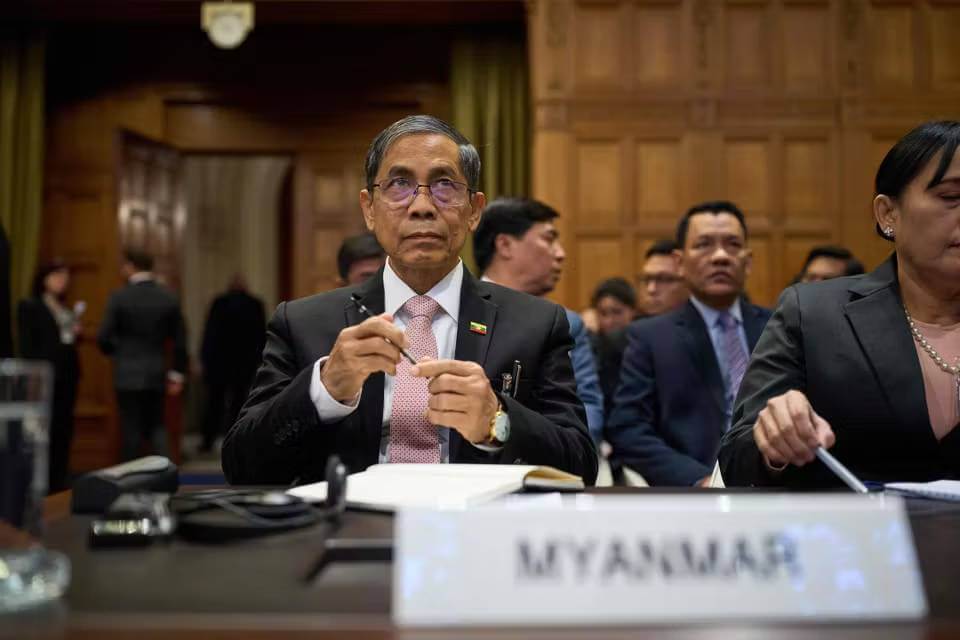
The International Court of Justice is hearing The Gambia’s landmark case accusing Myanmar of genocide against the Rohingya minority. The Gambia argues the military deliberately targeted the Rohingya for destruction through mass killings, sexual violence, and burning homes, showing clear genocidal intent under the Genocide Convention. Expert testimony highlights systematic attacks and dehumanizing rhetoric, and the case has garnered support from multiple countries, with eleven formally backing The Gambia’s stance. Myanmar denies committing genocide, framing its actions as counter-terrorism against armed groups and claiming the evidence is based on biased or unsubstantiated allegations. The ICJ’s eventual decision will carry major legal weight as a precedent-setting case.
Myanmar Position
The Myanmar military junta has defended itself in the International Court of Justice (ICJ) against genocide accusations brought by The Gambia over its treatment of the Rohingya minority. Their key arguments include denying any intent to commit genocide, framing military operations as legitimate counter-terrorism measures against the Arakan Rohingya Salvation Army (ARSA). They stress Myanmar’s sovereignty and the right to protect national security, challenge the credibility of evidence from The Gambia as biased, and point to ongoing ethnic conflicts as complicating factors. The junta also highlights its claimed efforts to provide humanitarian aid, portraying its actions as aimed at restoring peace. Overall, their stance blends national security concerns, rejection of genocidal intent, and criticism of the evidence, reflecting the complexity of the international legal dispute.
Myanmar’s military junta has been using a legal tactic of separating individual soldiers’ actions from official state policy in the face of genocide allegations. This move carries some nuanced implications. On the plus side, it could help avoid direct state liability by claiming there’s no systematic policy of committing genocide, shifting the focus to individual accountability and framing such actions as isolated incidents. It might also be aimed at shaping international perception by presenting the military as addressing internal challenges rather than engaging in organized violence, potentially appealing to nations cautious about outside interference. However, the strategy comes with risks—it could damage the junta’s credibility given the extensive evidence of systemic abuse, unintentionally reinforce the genocide narrative by highlighting patterns of violence, and create legal hurdles, as the ICJ’s interpretation of genocide relies heavily on assessing broader intent and coordinated action.
Humanitarian Facet
Mr. Christopher Staker, a prominent lawyer hired by the Military Commission in connection with the genocide case brought by Gambia at the International Court of Justice (ICJ), has faced criticism from political researchers and human rights activists, who argue that the applications are inhumane and merely attempt to obscure the truth with legal technicalities.
Staker stressed that this case is not a criminal investigation but a court matter to resolve disputes over nations’ shared responsibilities, emphasizing the burden of proof for labeling acts as genocide.
Human rights activists expressed outrage, accusing the lawyer of deliberately using misleading legal standards and technical jargon to distract from the reality of mass killings and human rights abuses.
Staker also claimed that Gambia is pursuing the case without direct harm or violation of the Genocide Convention, framing definitions according to political perspectives. A political researcher condemned this as a way to avoid international obligations and to conceal the suffering of victims behind legal language.
During the proceedings, incidents from 2016 and 2017 were portrayed as land clearance and anti-violence operations, with the lawyer insisting they were intended to protect sovereignty.
Activists countered that this characterization humiliated victims and ignored the undeniable fact that thousands of civilians suffered due to disproportionate use of force. The Military Commission’s lawyer also rejected UN Fact-Finding Mission reports as evidence, claiming they were based on one-sided and questionable facts. International analysts note that Myanmar has barred the group from entering the country.
Likely Outcome
Following the conclusion of hearings on January 29, 2026, several factors will shape the timeline and outcome of the International Court of Justice (ICJ) case over genocide allegations against Myanmar.
For the verdict, the court’s deliberation period could stretch from a few months to over a year, with the complexity of the case possibly delaying a decision until late 2026 or even 2027. Judges will review arguments from both The Gambia and Myanmar, and may request more details or clarifications, which could further extend the process.
Possible outcomes include a ruling in favor of The Gambia, leading to measures against Myanmar such as reparations, guarantees against repetition, and steps to prevent future genocide; dismissal of the case if Myanmar’s defense is successful, boosting its international standing but leaving humanitarian issues unresolved; or interim measures requiring Myanmar to immediately protect the Rohingya and prevent further violence.
The final decision may also be influenced by international pressure from governments and organizations, as well as legal precedents that could shape future cases.
General Min Aung Hlaing’s Factor
Possible outcomes for General Min Aung Hlaing in relation to the ICJ’s verdict and ICC actions involve a mix of legal and diplomatic factors.
If the ICJ finds Myanmar guilty of genocide against the Rohingya, it could strengthen the ICC’s case for prosecuting military leaders, including Min Aung Hlaing. On the other hand, if the ICJ dismisses the allegations, it could make the ICC’s job harder by weakening claims of genocidal intent and slowing momentum.
The ICC is already investigating alleged crimes in Myanmar, and could target Min Aung Hlaing regardless of the ICJ’s findings. If strong evidence emerges, the ICC might issue an arrest warrant independently, focusing on individual responsibility for serious crimes. Increased international pressure following the ICJ’s ruling could also push the ICC to act more decisively. While the ICJ can’t issue arrest warrants, its decisions could significantly shape how the ICC pursues accountability.

Gaza Palestinian and Rohingya
Comparing the Rohingya genocide case with the situation in Gaza reveals complex issues that may offer valuable insights into international human rights and accountability.
The Rohingya have endured accusations of genocide and ethnic cleansing, while Palestinians in Gaza face allegations of severe human rights violations amid ongoing conflict. Both cases have drawn global attention and condemnation, yet responses remain inconsistent, raising questions about state responsibility and the protection of minority rights.
The Rohingya case, currently before the ICJ, underscores the difficulty of holding states accountable, a challenge that parallels calls for similar mechanisms regarding Gaza. Legal frameworks such as the Genocide Convention and International Humanitarian Law are central to both contexts, with debates over potential war crimes or crimes against humanity.
Lessons from the Rohingya proceedings could help in strengthening international legal avenues to address such allegations in Gaza’s context.
Outlook
Aside from the arrest warrant issue involving Min Aung Hlaing and associates, and the comparison between the plight of the Gaza Palestinians and the Rohingya people, the foreseeable immediate, mid-term, and long-term outlook can be speculated as follows.
The International Court of Justice hearings on the Rohingya genocide allegations could have major impacts in different time-frames.
In the immediate term, once the hearings wrap up on January 29, 2026, attention will be on the verdict and any interim measures that might push Myanmar to take urgent steps to protect the Rohingya.
Diplomatically, there may be intensified discussions among nations and organizations, with supporters of the Rohingya ramping up advocacy, and humanitarian aid could see a boost from governments and NGOs.
Over the medium term, if the ICJ rules against Myanmar, the country could face stronger international pressure, possible sanctions, and policy shifts, while the case could set important legal precedents and energize global advocacy for Rohingya rights.
In the long term, the ruling might shape accountability and justice efforts, influencing how similar cases are addressed worldwide.





Leave a Comments