



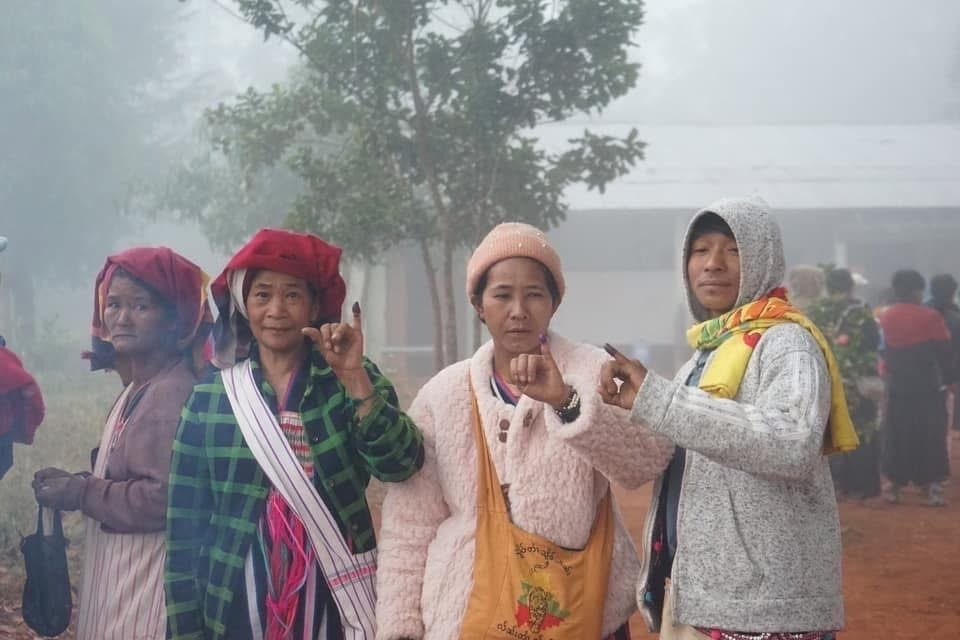
Residents in Southern Shan State reported extensive security deployments and alleged coercive practices at polling stations in Namsang and Langkho (Linkhay) townships on December 28, coinciding with the first day of the military authorities’ nationwide election.
According to local residents, voting in 12 townships across Shan State, including Namsang and Lang Kho, took place under heavy military supervision. Residents described a tense environment in which participation appeared to be influenced by security concerns rather than voluntary political choice.
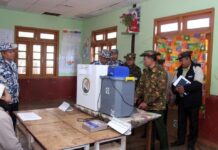
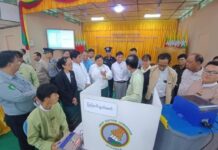
In Namsang Township, which hosts the Eastern Central Command headquarters in Kho Lam, 78 polling stations were opened. Residents reported that all polling stations were subject to heightened security measures.
A resident stated that military vehicles were deployed to villages in advance of voting to provide security for polling activities. The resident further reported that while some individuals participated in the vote, public engagement and enthusiasm were notably limited. According to the same account, some residents believed voting to be mandatory and later discovered that their names were not included on voter lists.

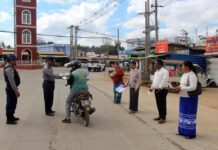
In Lang Kho Township, 38 polling stations were reportedly established across urban wards and village tracts. Security was provided by a combination of military personnel, police, and fire brigade members. Residents reported continuous patrols by military and police vehicles since the advance voting period.
Several political parties are contesting seats in Namsang Township, including the Union Solidarity and Development Party (USDP), the Shan and Nationalities Democratic Party (SNDP/White Tiger Party), the People’s Pioneer Party (PPP), the National Unity Party (NUP), and the Pa-O National Organization (PNO). In Lang Kho Township, only the USDP and SNDP are reportedly participating.
Comparable conditions were reported in Pangtara (Pindaya) Township. Residents stated that participation was driven primarily by fear rather than free choice. According to multiple local accounts, military personnel and allied militias warned that individuals who failed to vote could face arrest or other adverse consequences.
One resident reported that each of the 49 polling stations in Pangtara was guarded by between seven and nine militia members. The resident stated that although voter numbers appeared high, participation was influenced by the visible presence of armed personnel.
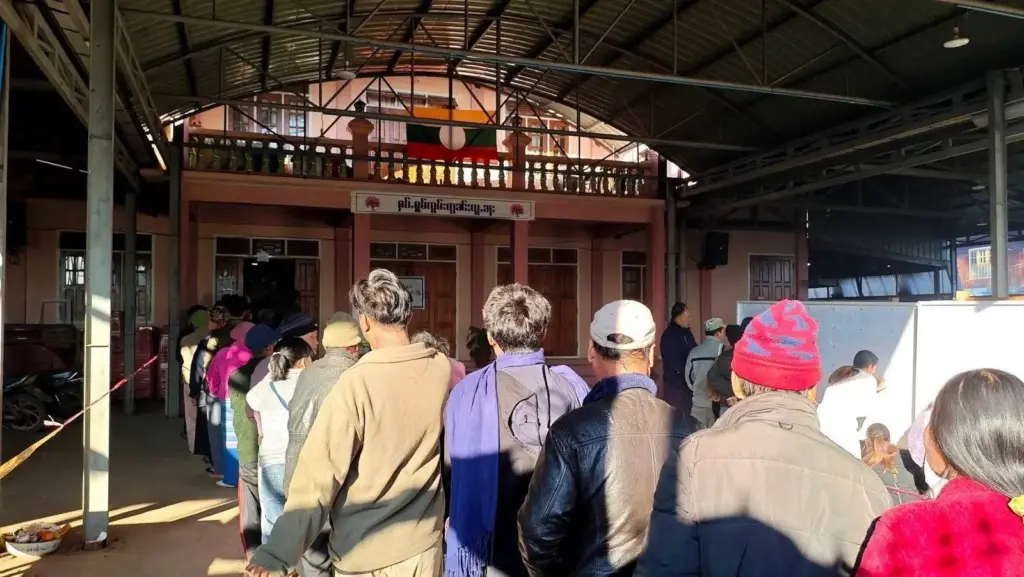
Residents further reported that voters were required to present national identification cards and that polling stations operated between 6:00 a.m. and 4:00 p.m. According to local accounts, authorities monitored non-participation by cross-checking voter lists.
On December 26, local administrators were reported to have exerted pressure on university students, elderly persons, persons with disabilities, and individuals who were ill to cast advance ballots. Residents stated that these practices increased concerns regarding the voluntariness of participation.
Overall, residents across the affected townships reported that extensive security deployments and alleged intimidation contributed to an environment of fear. According to these accounts, participation in the voting process appeared to be influenced by coercive factors rather than genuine political consent.

Leave a Comments