



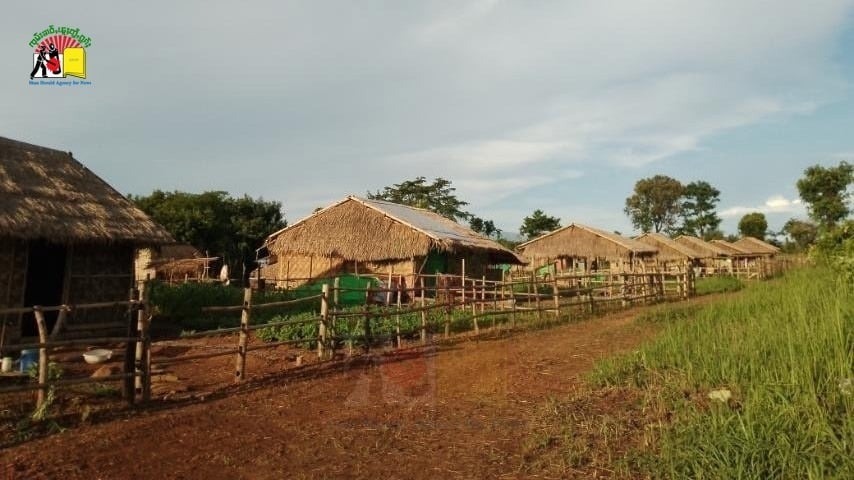
Nyaungshwe, Shan State – More than 1,700 internally displaced persons (IDPs) who fled escalating violence in eastern Pai Khun (Pekon) Township now face dire shortages of healthcare, food, and shelter as monsoon rains exacerbate their precarious living conditions.
The displacement crisis began in early June following a military offensive by the Myanmar military and the Pa-O National Organization (PNO) militia in eastern Pai Khun. Most of those displaced, primarily women, children, and the elderly, have sought refuge in Hmawbi Village, Nyaungshwe Township.
“The shelters are unstable, mosquito nets are scarce, and children are falling ill,” said a displaced man from Pai Khun. “Women lack menstrual supplies, and when people get sick, they must buy medicine themselves, no doctors or nurses come to help.”
Access to medical care remains a critical challenge. The nearest healthcare facilities are in Nampan Sub-township and Taunggyi, but the journey is fraught with obstacles. “Multiple military checkpoints block the way, making it nearly impossible for pregnant women and chronically ill patients to reach hospitals,” he added.
Local volunteers are providing limited aid, but resources are stretched thin. IDPs report severe shortages of food, clean water, and basic medical supplies.
The conflict has now displaced over 8,000 people from 13 villages in eastern Pai Khun Township, with no clear path for return. Many remain scattered across temporary camps in southern Shan State, including Kar Li Township in Kunhing.
Kar Li Township: A Struggle for Survival Without Electricity or Clean Water
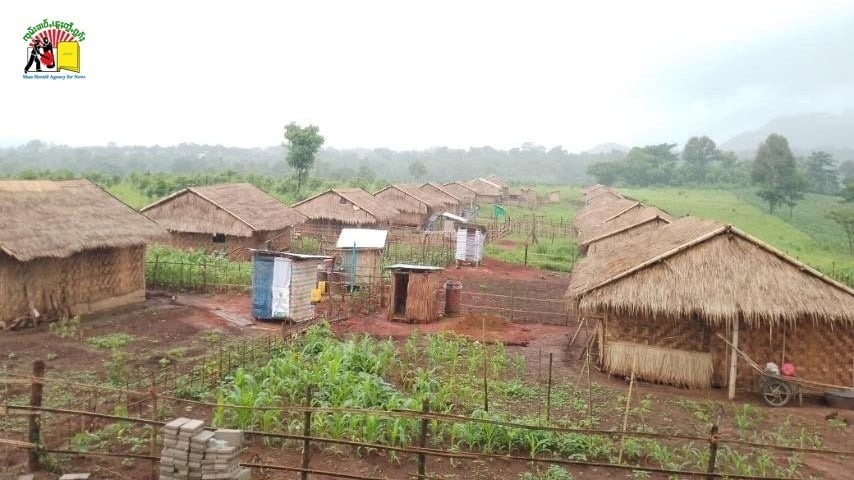
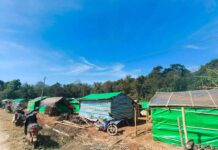
In Kar Li Township, nearly 100 displaced families from northern Shan State, including Hsenwi, Lashio, and Kyaukme, are living on a donated three-acre plot near Ward 5. Despite constructing makeshift shelters, the community still lacks electricity and safe drinking water.
“The nights are pitch black, no streetlights, no safety,” said a woman assisting displaced families. “We need a well, but digging one costs 7 million kyats (approx. $1,590). For now, we rely on a natural well down a ravine, which isn’t sustainable.”
Though locals have allowed the IDPs to farm corn and soybeans, the lack of electricity and irrigation stifles self-sufficiency.
“We spend our days hauling water and our nights in fear,” said an IDP committee member. “With light and water, we could grow fruit trees and reduce expenses. But right now, survival is a daily battle.”
Since the military’s “1027 Operation” began in 2023, over 300 families from northern Shan State have been displaced. Some have returned home, others have migrated to Thailand, but many remain trapped in limbo.
A Growing Humanitarian Emergency
Both Nyaungshwe and Kar Li townships are facing a protracted crisis. As the monsoon season intensifies and military operations persist, displaced communities endure worsening conditions without adequate shelter, medical care, or stability.
While local volunteers bear much of the relief effort, long-term solutions require urgent intervention from humanitarian organizations and international donors. Without immediate action, thousands risk further deterioration in health, safety, and dignity.


Leave a Comments