


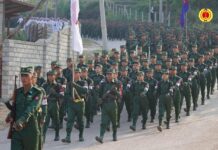
The Myanmar National Democratic Alliance Army (MNDAA), also known as the Kokang Army, is reportedly preparing to withdraw from Lashio, Shan State, under pressure from China. According to local residents, the withdrawal must be completed by April 17, Myanmar New Year’s Day, following the Thingyan festival.
Although the MNDAA and the military council met for talks in Kunming, China, on March 22 with Chinese mediation, no formal agreement was reached. Nonetheless, reports suggest the MNDAA will begin handing control of Lashio back to the military council after the Thingyan holiday.
Since early March, large groups of Kokang troops have been seen moving from Lashio to Hsenwi, raising concerns that the withdrawal may occur in phases through June, as previously speculated.
SHAN reporter Sai Khwan Murng spoke with a resident of Lashio, who requested anonymity for security reasons, to understand the situation on the ground.
Q: What is the current status of the MNDAA’s withdrawal from Lashio?
A: From what we can see, the MNDAA is fully prepared to leave. It’s practically a done deal. We’ve heard that the military council’s administrative offices will be the first to return, starting with general administration, followed by immigration, education, and healthcare. The State Administration Council (SAC) will gradually reestablish its presence.
However, this applies only to the city center, wards 1 through 12, which are the main residential areas. Surrounding regions are expected to remain under MNDAA control, at least for now.
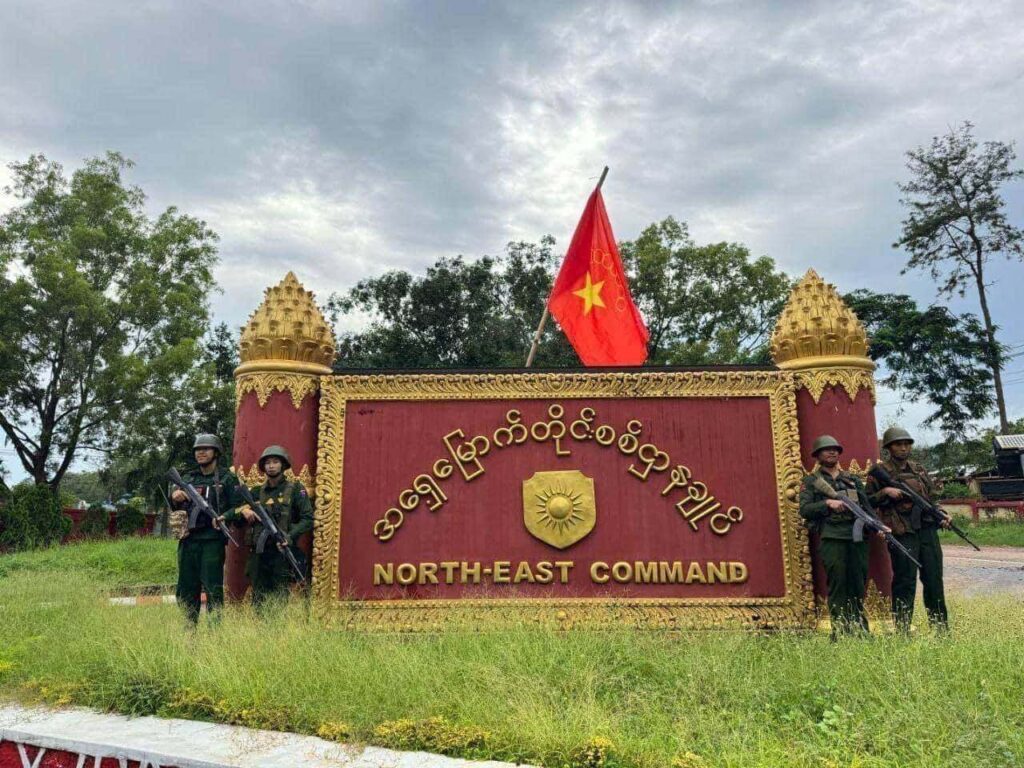
The military hasn’t re-entered yet, but there are reports that troops will be stationed near Hsenwi (Hopuek Village), Mong Yaw (near the 68th Military Base), Manaing (Ward 5), and parts of Hsipaw and Namtu. The Kokang forces are likely to maintain control of the bypass road area.
I think the military will reoccupy the city center, but not with the same scale as before. Their presence will be more limited, nothing like when the Northeastern Command was based here. There’s also talk that the MNDAA will retain a liaison office in Lashio, and China may even open a consulate. Rumors suggest China or the Wa Army (UWSA) may partner with the military to offer services like healthcare, but nothing has been confirmed.
Q: Some believe the MNDAA is withdrawing due to Chinese pressure and to avoid airstrikes. What’s your view?
A: Most people just want fairness. Whether it’s the military or the MNDAA, we want to be treated with dignity. But let’s be honest, Chinese influence is a major factor, and so is the threat of airstrikes.
As someone who’s lived through decades of conflict in northern Shan, I know these armed groups have always had to compromise. It’s not just about Operation 1027. Historically, no ethnic force has been able to openly defy China as they’ve always had to listen.
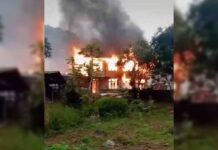
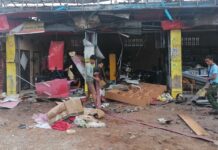
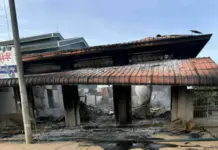
People were aware the military had air power. So why wasn’t there better preparation? Why didn’t they anticipate Chinese pressure or the risk of bombings? There doesn’t seem to have been a solid plan, and now it’s civilians who are paying the price. Houses have been destroyed, people are displaced, and some escaped war only to die in floods or earthquakes later.
We’re exhausted by this endless back-and-forth. It feels like a volleyball game: one side spikes, the other blocks, and we, the people, are stuck in the middle. This chaos was predictable. If there wasn’t a plan to manage the consequences, perhaps the offensive shouldn’t have happened at all.
Lashio is now in a state of lawlessness. People have fled, and looting has increased. The cost to civilians has been devastating.
Q: What kinds of protections should be in place for the people now that SAC is returning and the MNDAA is leaving?
A: This is crucial. Many residents worked under the MNDAA rule, not out of loyalty, but because they had no choice. Health workers, security guards, and others: they did what they had to do in order to survive.
Some former officials fled during the fighting, and those who stayed had to step up and keep basic services running. What guarantees do they have now? Will they be punished?
Even Civil Disobedience Movement (CDM) members and teachers are quietly returning not because they support the SAC, but because they feel stuck. If we ignore their situation, it’s as if the MNDAA is being erased from the political record and honestly, and that’s already happening.
Q: What should CDM staff or those who worked with the MNDAA do if the SAC returns, should they stay or relocate?
A: Some say those who support the MNDAA can leave with them. But that’s easier said than done. People have homes, families, and property. They can’t just pack up and leave. That’s why we need guarantees.
The SAC shouldn’t punish or interrogate those who worked for the MNDAA. They should be protected, not arrested. A firm commitment is needed to ensure safety.
Q: Public services improved significantly during the MNDAA’s control. What happens now?
A: This is a heartbreaking issue. The MNDAA’s influence in Lashio is now minimal. But they take the Lashio General Hospital and it belongs to the public. It’s neither private nor military property.
The hospital had advanced equipment, much of them were donated by NGOs and individuals, including major support from Japan around 2010–2011. But now the MNDAA has taken nearly everything including medical devices, school equipment, even transformers and meters.
EPC staff begged them not to strip everything bare. People pleaded, “Please leave something behind.” But almost nothing was spared. If the SAC takes over, it will be a disaster for public services. They’ve never shown a real commitment to healthcare or education. Equipment won’t be replaced, and even basic services will suffer.
The MNDAA says it fights the military, not the people. But actions like this such as taking public property raise serious questions.
Q: Is the MNDAA’s exit a result of Chinese pressure, or a diplomatic victory for the military council? How do you see the future of armed conflict in Northern Shan State?
A: Since the 2021 coup, central Myanmar has seen new forces emerge like the NUG and PDF leading to unprecedented battles. The SAC remains in power, and the NUG operates in parallel. Both are under international scrutiny.
Operation 1027 exposed major cracks among the so-called dictators. The NUG couldn’t unify the ethnic armed groups, and many PDFs operate independently. Corruption and disorganization, especially among diaspora leadership are growing problems.
Northern Shan saw perhaps the most success during Operation 1027, but even then, full control wasn’t achieved. Towns like Muse, Mongyai, and Tangyan remain contested. Ethnic groups even clashed among themselves, forcing civilians to flee. Fighting between Kokang, Palaung, and Kachin forces only undermines trust.
If Min Aung Hlaing keeps attending regional meetings, he may even be reintegrated into ASEAN. The revolution is fracturing between ethnic forces, PDFs, and the NUG. Unity remains elusive.
If the armed groups in Shan had truly united, Wa, RCSS, SSPP, Palaung, Kokang, Pa-O, Lahu, they could have changed the game. But dishonesty and mistrust, built over 70 years, continue to drag us down.
Q: Anything else you’d like to add?
A: If we truly want to defeat the military council, unity is essential. We need to move beyond power struggles and territorial control. As long as greed and lies dominate our politics, we’ll continue betraying each other—just like we’ve done for decades.

Leave a Comments