



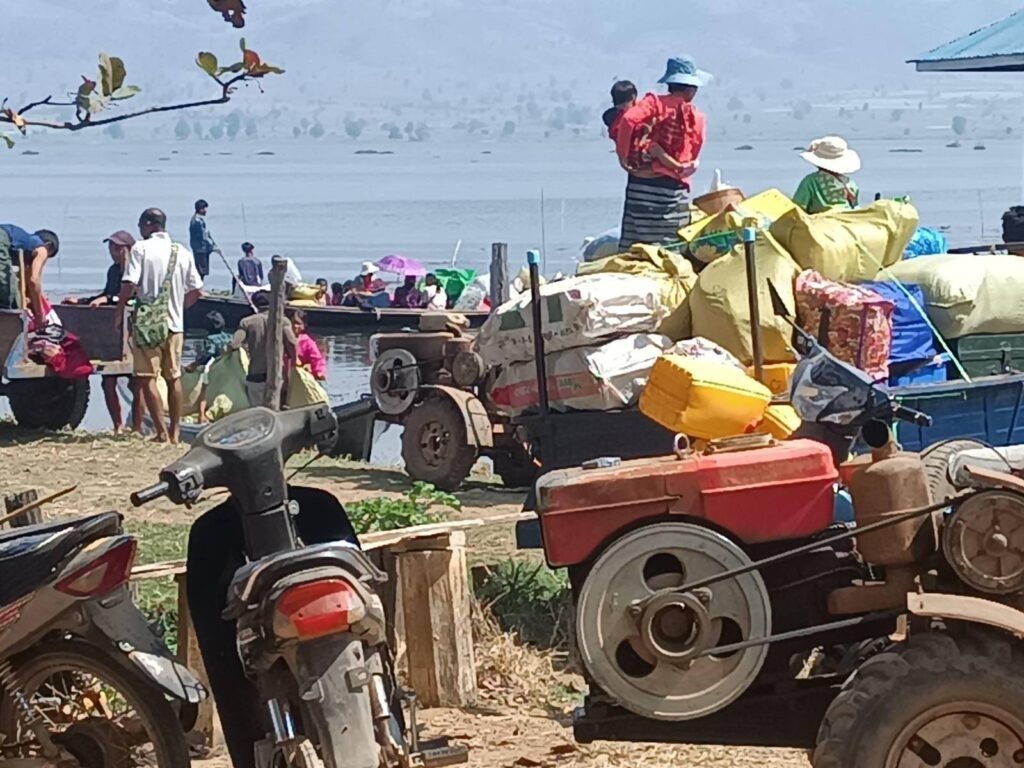
Relentless artillery attacks by the Myanmar military junta and the Pa-O National Army (PNA) militia have plunged Nyaung Shwe Township in Southern Shan State into a humanitarian crisis. Hundreds of villagers from six communities—including Nan Tok, Eain Mu, Nyaung Lay Pin, Ye Pu, Paya Taung, and Nwe Nwe—are abandoning their homes in fear of escalating violence.
“The shelling hasn’t reached us yet, but people are fleeing to avoid being caught in the crossfire. Villages are emptying out, though no one knows exactly how many have been displaced,” said a resident of Inn San Ka Village.
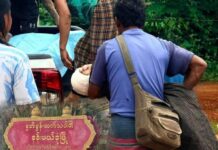
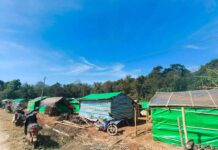
Many of those forced to flee have left with little more than the clothes on their backs. Some managed to carry basic supplies, but others face immense challenges as they search for safety. For many, the journey is fraught with danger, uncertainty, and severe shortages of food and shelter.
The situation is especially dire in the Inle region, where waterways are the main mode of travel. The military and PNA have imposed strict restrictions on movement, banning the use of boats for evacuation. However, a brief reprieve on February 8 allowed some villagers to escape by boat.
“They told us to leave by February 8 or risk being trapped. Before this, they’d shoot at anyone trying to escape by boat,” one evacuee recounted.
According to the Inle Region Human Rights Group, the military and PNA have conducted 54 artillery operations since January 1, killing three civilians and injuring 14 others. Recent attacks between February 5 and 10 claimed three more lives and injured six additional people.
The unrelenting violence has left entire communities gripped by fear and uncertainty. With no resolution to the conflict in sight, the lack of humanitarian assistance only deepens the crisis. Local and international aid organizations have yet to provide significant relief, leaving displaced villagers to fend for themselves.
As the attacks persist, the displaced populations remain in urgent need of shelter, food, and medical assistance, while hope for safety and stability remains elusive.




Leave a Comments