



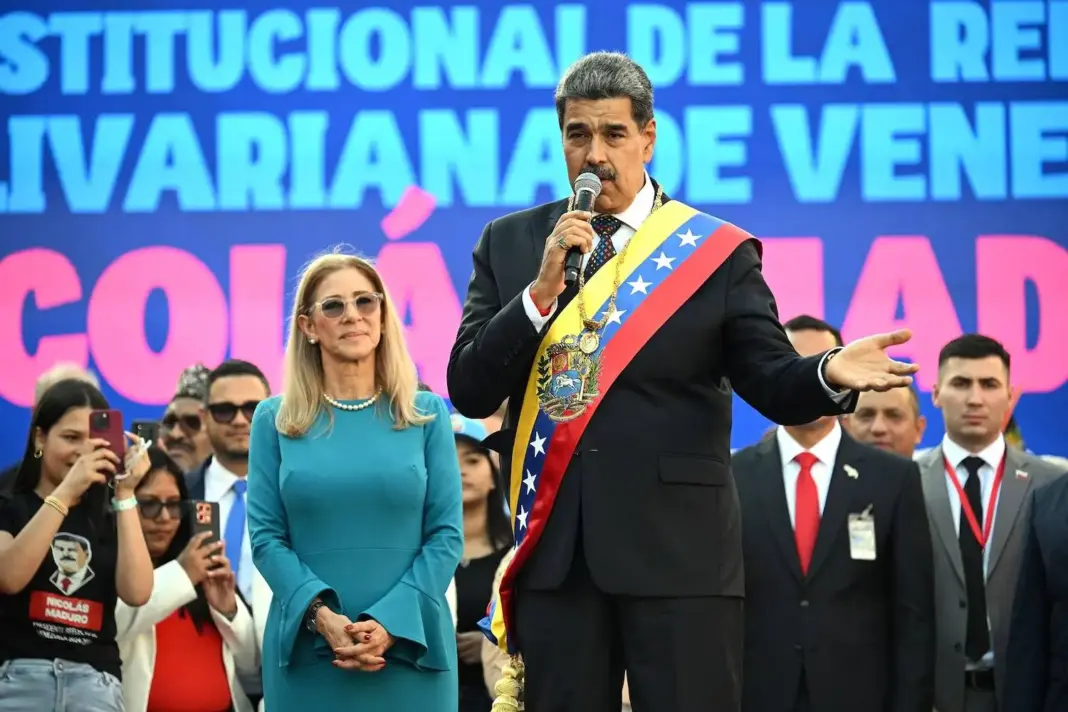
Lately, there’s been a lot of discussion about Trump’s alleged venture into invading Venezuela and abducting its President Nicolás Maduro. The main focus is on accusations of the Trump administration violating international sovereignty norms, and how global power players who disagree with his actions might respond now and in the future. Beyond that, there’s the general public sentiment, particularly from people in countries living under dictatorship or one-party authoritarian regimes.
Background summary
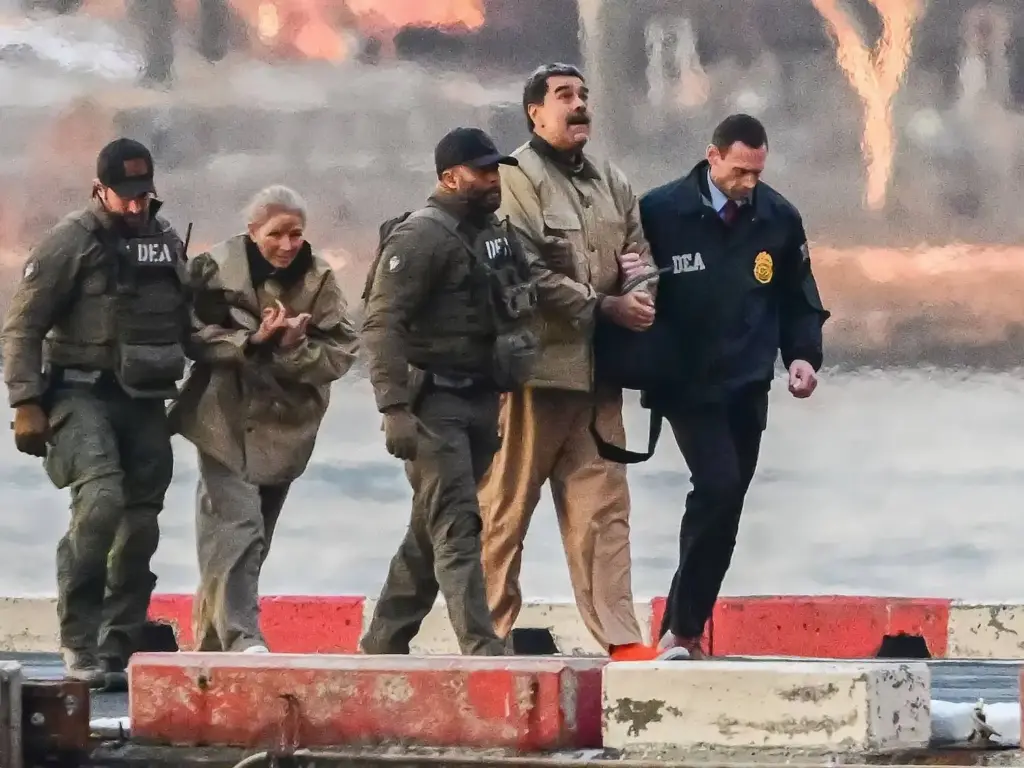
On January 3, 2026, the United States carried out “Operation Absolute Resolve”, a large-scale military mission that led to the capture of Venezuelan President Nicolás Maduro and his wife, Cilia Flores, in Caracas.
The raid, involving over 150 aircraft, targeted northern Venezuela’s infrastructure, including military bases and airfields. Maduro and his wife were taken to New York City to face narcoterrorism charges, which he called a kidnapping, maintaining his innocence and sovereignty.
The attack left more than 80 dead, including Cuban military personnel, who are said to be Maduro’s personal security force members, heightening U.S.–Venezuela tensions and regional instability.
Global leaders, including the United Nations, condemned the move as a breach of Venezuela’s sovereignty. Vice President Delcy Rodríguez became interim president, initially denouncing the abduction before later signaling willingness to work with the U.S. Meanwhile, President Donald Trump defended the operation as critical for U.S. security and economic interests, particularly control over Venezuela’s oil. The event has sparked serious concerns about its long-term impact on international relations.
Trump’s strategy to rule Venezuela without domestic support
President Donald Trump has hinted at taking control over Venezuela after the abduction of President Nicolás Maduro, but the plan faces big hurdles without domestic backing and with interim President Delcy Rodríguez still in place. A new leadership without popular support risks lacking legitimacy, especially since many citizens still side with Maduro. Local political and military forces could push back hard under Rodríguez’s leadership, possibly sparking unrest or conflict. On top of that, Venezuela’s shaky economy would make restoring stability and services incredibly difficult. To tackle these issues, Trump and the U.S. might consider options like sending large numbers of troops to enforce control—though that could be seen as an invasion—or using smaller military units to secure key areas and work alongside local administrations.
Trump’s softening of tones
The US has reportedly asked the Venezuelan government to expel advisory officers from China, Russia, Cuba, and Iran. According to officials, this includes intelligence and military personnel, though some diplomats may be allowed to remain. Foreign Minister Marco Rubio conveyed these demands to Venezuela’s new leader, Delce Rodriguez, in a secret meeting with congressional leaders on January 5, as reported by The New York Times. On January 3, US Delta Force commandos clashed with Cuban security forces while targeting President Nicolas Maduro, who relied on Cuban troops over his own military for protection. Meanwhile, leaders of the Colombian Panther group, believed to be based in Venezuela, are said to be fleeing following Maduro’s arrest by US forces, according to Colombian military sources.
In short, besides the US Secretary of State’s demand that Venezuela’s new administration expel military advisers from Cuba, China, and Iran while allowing their diplomatic missions to remain, President Donald Trump announced on his social media pages that the ‘interim authorities’ would sell 30 to 50 million barrels of high-quality crude oil to the United States at market price, as reported on January 6. It seems both sides are making concessions to avoid a prolonged war. Given the lessons of Vietnam and Afghanistan, the US should be cautious, and even the unpredictable and reckless Trump is no exception.
Myanmar people’s hope
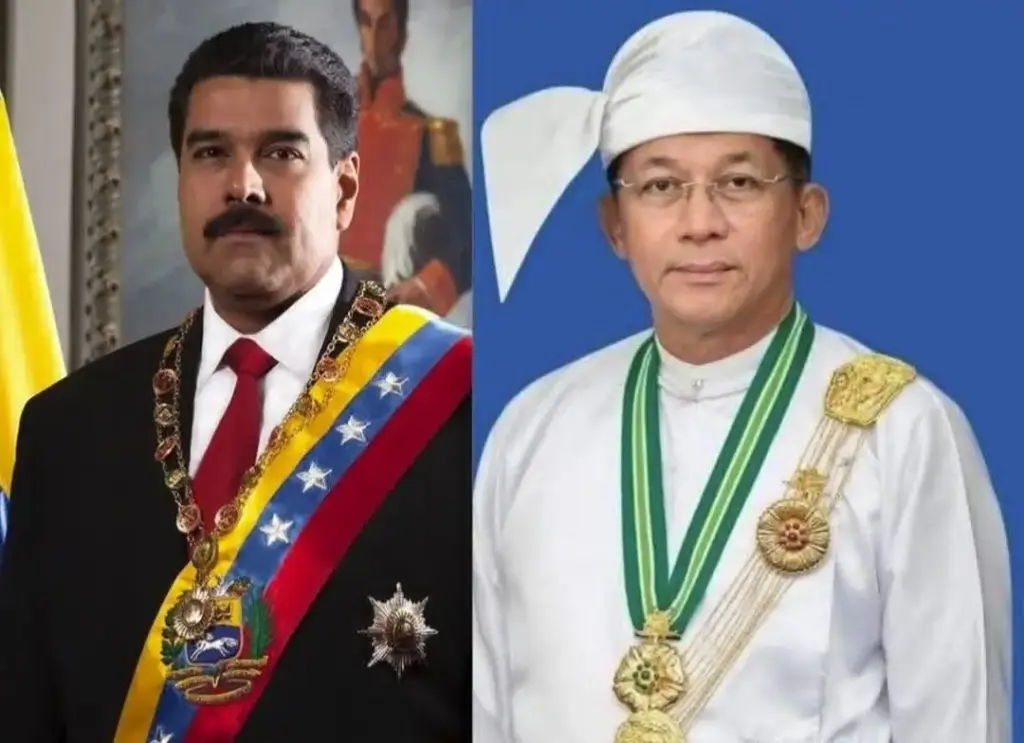
After U.S. forces ousted Venezuelan leader Nicolas Maduro and brought him to New York for trial, many Myanmar netizens took to social media urging Washington to take similar action against junta chief Min Aung Hlaing. Their calls came in response to a U.S. Independence Day message from Secretary of State Marco Rubio, posted on the U.S. Embassy’s Facebook page, which expressed concern over Myanmar’s crisis and reaffirmed support for its people. The statement urged the military to end violence, allow humanitarian aid, free political prisoners, and engage in peaceful dialogue. Min Aung Hlaing, who seized power in the 2021 coup, remains a central target of public outrage amid the country’s ongoing civil war.
International response
The global reaction to recent U.S. actions in Venezuela, including the capture of President Nicolás Maduro and President Trump’s remarks on interim governance and oil plans, has been mixed, ranging from sharp criticism to strong backing. The UN condemned the move as a breach of international law, stressing that nations must respect each other’s territorial integrity. Legal experts warned the abduction sets a dangerous precedent, violating the UN Charter’s ban on the use of force. Russia and Iran voiced support for Venezuela, framing the situation as resistance to outside interference, while some U.S. allies, like Germany and Mexico, questioned the legality and legitimacy of the intervention. Protests have broken out in Venezuela and worldwide, accusing the U.S. of colonial-style behavior, as the nation mourns soldiers lost during the operation.
The international community has reacted in mixed ways to recent U.S. actions in Venezuela, including the abduction of President Nicolás Maduro and President Trump’s remarks on interim governance and oil exploitation.
Responses range from harsh criticism to firm support.
The United Nations condemned the move as a breach of international law, with the High Commissioner for Human Rights stressing that states must not use force against another nation’s territorial integrity. Legal experts also denounced the abduction as a dangerous precedent violating Article 2(4) of the UN Charter and dismissed the U.S. justification as illegitimate. Russia and Iran voiced strong support for Venezuela, framing the events as resistance to external aggression and neocolonialism. However, some allies, like Germany and Mexico, expressed concern—Germany demanding a legal explanation and Mexico calling for a fair trial for Maduro. Protests have broken out in Venezuela and worldwide, condemning the intervention and mourning soldiers lost during the operation. An official mourning period was declared in Venezuela, while Trump’s oil strategy looms over the unfolding situation.
Going against Latin America leaders
President Trump may ramp up his rhetoric against Latin American leaders he opposes, like Nicolás Maduro, especially in line with his foreign policy goals.
Historically, he’s used strong language toward figures like Maduro, framing it around democracy and human rights. With the political climate heating up and elections ahead, he could lean on foreign policy—particularly hardline stances against regimes such as Maduro’s—to rally nationalist support.
Likely targets besides Maduro in Venezuela, Ortega in Nicaragua, and possibly López Obrador in Mexico, may be on the list, depending on bilateral relations. His strategy might involve labeling opponents as autocrats, stressing U.S. interests like energy and immigration, and backing opposition movements. Such moves could strain diplomatic ties and potentially push some nations toward rival powers.
Action against General Min Aung Hlaing
The likelihood of President Trump or his administration taking strong action against General Min Aung Hlaing of Myanmar depends on factors like U.S. foreign policy goals, global pressure, and strategic interests in Southeast Asia.
Min Aung Hlaing, who led the military coup that ousted Myanmar’s elected government in February 2021, has been condemned for crimes against humanity targeting ethnic minorities such as the Rohingya, and the ongoing brutal military campaigns against civilians and insurgents. There are also signs he’s tied to cyberscam networks, possibly working with Chinese syndicates, which has fueled his notoriety and unpopularity.
The U.S. has previously sanctioned Myanmar’s military leaders, and Trump’s tough stance on autocrats suggests he could do the same—through tighter sanctions, pushing for investigations in international bodies, or supporting opposition groups and humanitarian aid.
However, risks like China’s influence in Myanmar and domestic political considerations could limit how far the U.S. is willing to go.
Analysis
Given such unfolding scenarios, President Donald Trump has announced that the U.S. will oversee Venezuela until a “judicious transition” is arranged, with plans to send American oil companies to restore the country’s oil infrastructure and tap into its vast reserves.
The situation remains tense, as Vice President Delcy Rodríguez was sworn in as acting president by Venezuela’s Supreme Court and has rejected U.S. intervention, vowing to defend national sovereignty.
While the U.S. hasn’t taken direct control of Venezuela, the country’s military and government remain intact, with Defense Minister Vladimir Padrino pledging to resist the foreign “invasion.” Trump has threatened further military action if Venezuela’s government doesn’t cooperate, though Washington is also engaging diplomatically with Rodríguez, who has shown some willingness to talk while rejecting any notion of becoming a “colony of an empire.”
International reactions are largely critical, with countries like China, Russia, Iran, and several Latin American nations condemning the operation, while allies such as Argentina’s Javier Milei express support. The U.S. faces big challenges ahead, from domestic resistance and the difficulties of managing Venezuela’s heavy crude oil to the risk of regional instability, leaving the path forward uncertain as of second week January, 2026.
While Trump might leverage threats against some Latin American leaders, the likelihood of doing the same in Asia is slim. As a result, the hopes of the people of Myanmar to oust their tyrannical dictator, General Min Aung Hlaing, are unlikely to be realized anytime soon—especially with China firmly supporting him and pushing him through sham elections to establish a regime of army officers disguised in civilian attire.


Leave a Comments