




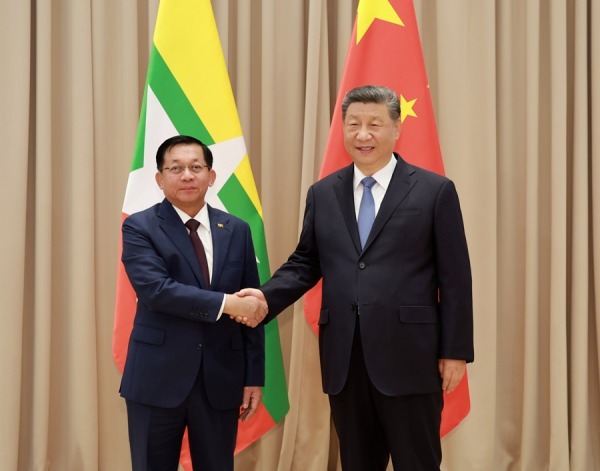
It is general knowledge that the anti-China tendency is rising rapidly, especially in the aftermath of Xi Jingpin’s open endorsement of the leader of the military junta, now styled as State Security and Peace Commission (SSPC) but formerly following the 2021 military coup was known as State Administrative Council (SAC), Gen. Min Aung Hlaing during his visit attending the Shanghai Cooperation Organization (SCO) and Second World War, Anti-Fascist 80th Anniversary parade in China as invited observer.
China endorsement no doubt lionized Min Aung Hlaing, who has been outcast internationally, by shoring up its regime’s legitimacy increased circle; backing up its planned and stage-managed general elections scheduled to be held from December 2025 to January 2026 in phases; signing a couple of MOUs (Memorandum of Understanding) to realize China-Myanmar Economic Corridor (CMEC) and Belt and Road Initiative (BRI) projects; among others.
On top of that the less publicized military know-how and material help to fight the war against the people’s revolution, better known as Spring Revolution, is the springing point that has angered the anti-junta stakeholders, including the majority of the country’s population, not to mention China’s pressure of the ethnic armed organizations (EAOs), like Kachin Independence Army (KIA), Myanmar National Democratic Alliance Army (MNDAA) or Kokang, Ta’ang National Liberation Army (TNLA), United Wa State Army (UWSA) and National Democratic Alliance Army (NDAA) or Mongla to toe China’s directive of not to aid the anti-junta forces, besides pressuring them with sanctions and so-called 5-Cuts sanction of border blockage, commodities, armament flows, arresting or threatening to arrest the ethnic armed organizations’ (EAOs) leaders, freezing financial assets and so on.
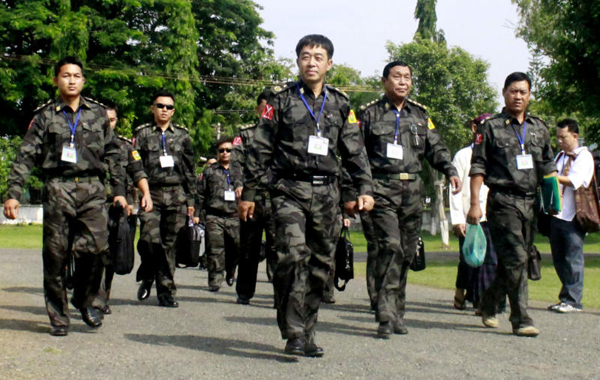
ISP-Myanmar Survey Findings
According to the Institute for Security and Peace (ISP)-Myanmar, even before the happenings of Min Aung Hlaing’s recent China visit, the anti-China tendency has been already rising rapidly according to its 2024 survey, but now may have reached a record high.
Reportedly, “Myanmar’s Key Stakeholders and their Perceptions of Sino-Myanmar Relations – A Survey (2024),” was published in August, 2025, as a translation of the original Burmese version published in June, 2025. This survey is a part of research conducted by the ISP-Myanmar’s China Studies. ISP-Myanmar has been conducting this annual survey since 2022, making the 2024 survey the third iteration.
The Executive Summary outlines several China’s assumption on how Myanmar or Burma should be run according to its perspective and how Myanmar’s stakeholders perceive on it is as follows:
“Among Ethnic Armed Organizations (EAOs), there is a prevalent belief that China seeks to position Myanmar as a client state. Pessimism has also grown regarding China’s involvement in Myanmar’s peace process and its outcomes. Many respondents view China’s policies on resolving Myanmar’s crisis regarding the Three Bottom Lines as impractical, with a rising number believing that China is actively interfering in Myanmar’s affairs and prefers an authoritarian governance system for the country.”
“Additionally, there is widespread disapproval of the implementation of China-Myanmar Economic Corridor (CMEC) projects. Findings indicated that Chinese companies have reached out to EAOs to ensure the continued operation of these projects. At the same time, The 2024 survey reveals a significant rise in negative perceptions of China within Myanmar’s policy community. Most notably, perceptions of China as “not a good neighbor” have increased significantly. This year’s most striking finding is a shift in concern: where economic dominance once topped the list, a majority of respondents now said China’s interference in Myanmar’s internal armed conflicts and security sector as the greatest challenge in bilateral relations. China has also contacted People’s Defense Forces and Local Defense Forces (PDFs/LDFs) in attempts to safeguard China-backed ventures. Regarding regional integration initiatives, awareness remains low—most respondents are unfamiliar with these projects, except for the Lancang-Mekong Cooperation (LMC). Additionally, China’s economic development model, ‘Democracy with Chinese Characteristics’, governance model, and related systems are increasingly disfavored.”
China’s Foreign Minister Wang Yi also laid out three “bottom lines” for Myanmar: the country must not descend into civil war, sever ties with ASEAN, or fall under the sway of foreign powers, according to the survey report.
Survey respondents
This year’s survey successfully interviewed 260 individuals from the six communities, including 105 from CSOs, 16 from political society, 42 from business associations, 66 prominent individuals, 16 from PDFs/LDFs, and 15 from EAOs.
ISP-Myanmar categorized respondents into six communities based on specific criteria: (1) political society, including political parties and politicians; (2) CSOs; (3) business community; (4) EAOs; (5) prominent individuals, such as scholars, professionals, activists, and influential social or religious figures; and (6) leaders of armed groups based in areas with Chinese projects, specifically groups that emerged during the Spring Revolution.
Five topics
The crucial five topics are: 1. Elections considered unlikely to resolve Myanmar’s conflict; 2. Democracy with Chinese characteristics widely unfavored for Myanmar; 3. China’s efforts in Myanmar’s crisis seen as protection of its strategic interests; 4. Negative views of China continue to rise; and 5. Chinese firms’ consultations on project continuations; survey results are as below:
- A strong majority of respondents—81 percent —viewed the State Administration Council’s (SAC) proposed elections, as encouraged by China as a path toward political settlement, as unlikely to help resolve Myanmar’s conflicts in the long run. This reflects an eight percentage point rise from last year, when 73 percent held a similar perspective. Only 16 percent believe the election could pave a constructive path.
- When asked whether a model of democracy with Chinese characteristics was suitable for Myanmar, 90 percent of respondents said it was not, while seven percent supported the idea. The group disfavoring the Chinese model has grown by three percentage points since the 2022 and 2023 surveys. Support, meanwhile, has declined—by one point compared to 2022 and two points compared to 2023.
- A majority of respondents—63 percent— believed that China’s increased involvement in Myanmar’s crisis stems primarily from the attacks on, and seizure of, its strategic projects. Military gains by the Three Brotherhood Alliance (3BHA) were also cited by 58 percent of respondents as a key factor. Meanwhile, 37 percent attributed China’s growing attention to the rising unity among Myanmar’s opposition forces
- Three-quarters of respondents said their views of China have become more negative—a trend that has grown steadily year by year.
- 50% Half of respondents (50 percent) who were contacted by Chinese companies involved in the China-Myanmar Economic Corridor (CMEC) said the main reason they were contacted was to request cooperation to continue project implementation. Many also reported being warned against disrupting China’s initiatives
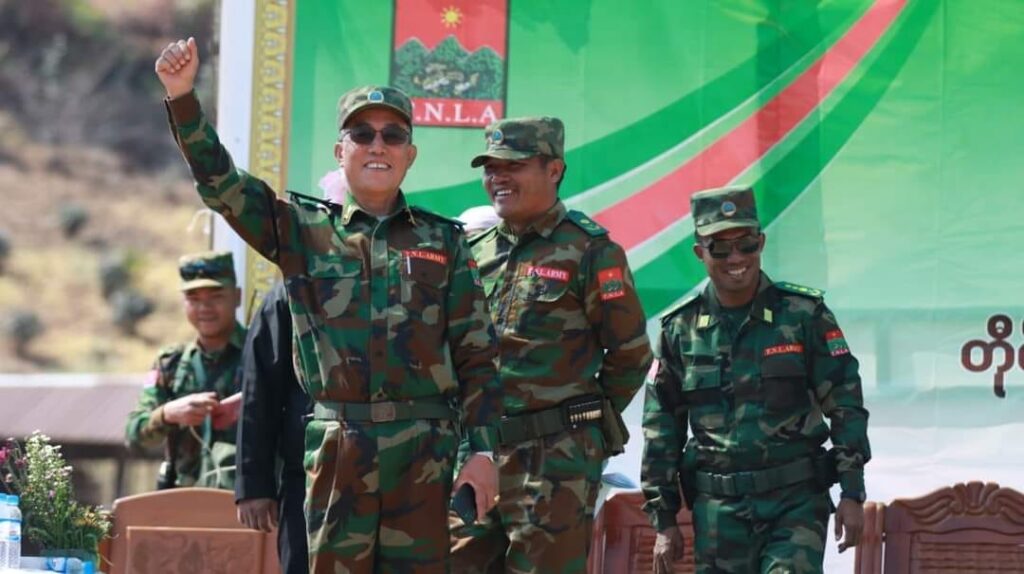
Outcome of some core questionnaire
On who benefits from China’s regional integration initiatives “(R)espondents broadly perceived two distinct camps in relation to the beneficiaries of China’s regional integration initiatives: those who benefit—namely the SAC, EAOs, and private business owners—and those who do not, particularly the NUG and ordinary citizens. An overwhelming majority (91 percent) believed the initiatives benefit the SAC, with only 5 percent expressing the opposite view. Similarly, 80 percent saw private business owners as beneficiaries, compared to 14 percent who disagreed. Perceptions toward EAOs were more mixed, though still leaned positive: 55 percent believed they benefit, while 37 percent did not. In stark contrast, only 13 percent of respondents viewed the NUG as benefiting from these initiatives, with 75 percent believing they do not. Likewise, just 25 percent believed Myanmar citizens benefit, while a substantial 69 percent indicated they do not.”
On the goal of China’s regional integration initiatives “(P)erceptions across stakeholder groups were relatively similar; the dominant view in all six was that China aims to establish a China-led regional framework, EAOs (67 percent), PDFs/LDFs (63 percent), and CSOs (61 percent) viewed this way. Meanwhile, the view that China seeks to expand geopolitical influence was also noted by prominent individuals (35 percent), CSOs (34 percent), and EAOs (33 percent).”
On which country benefits more from CMEC projects “(T)he majority of respondents – 84 percent – perceived that CMEC projects brought more benefit to China, while 12 percent indicated the projects as being beneficial to both countries equally. Only one percent viewed the projects as more beneficial to Myanmar. There were no significant differences compared to previous surveys.”
On to what extent do China’s economic investments benefit the general public in Myanmar “(V)iews among key stakeholder respondents were divided, 51 percent viewed China’s economic investments as beneficial, while 47 percent indicated that they were not beneficial. Compared to the 2022 and 2023 surveys, the proportion of respondents selecting “not beneficial at all” has increased annually.”
On how do you think China is most likely to respond to the impact of armed conflict on its interests in Myanmar, “ (F)ifty-nine percent of respondents believed China is likely to pressure all sides to find a conflict resolution in order to safeguard its investments. A further 17 percent anticipated China would throw its support behind the State Administration Council (SAC), while 12 percent expected it to prioritise engagement with resistance forces.”
“Across all groups, the largest proportion of respondents believed that China would pressure all parties to resolve any conflicts. This view was held by 77 percent of prominent individuals, 67 percent of EAOs, 55 percent of CSOs, 50 percent of the political society group, and 45 percent of the business community group. Meanwhile, the view that China would prioritize engagement with resistance forces was selected by 25 percent of PDFs/LDFs and 20 percent of EAOs.”
“In asking about China’s priorities in its peace efforts in Myanmar following the 2021 coup, the majority, 61 percent of respondents, indicated that China focuses on stabilizing regions where its interests are located. Only seven percent suggested that China prioritizes peace across all of Myanmar, and a mere one percent perceived that China seeks the emergence of a federal democratic Myanmar. Meanwhile, 10 percent believed that China emphasizes strengthening armed groups tied to its interests. Additionally, 14 percent rejected all the options provided. Compared to the 2023 survey, the view that China prioritizes stabilizing areas where its interests are located declined by five percentage points, while the belief in strengthening associated armed groups fell by four percentage points. Disagreement with all options rose by five points, and other perspectives increased by seven points.”
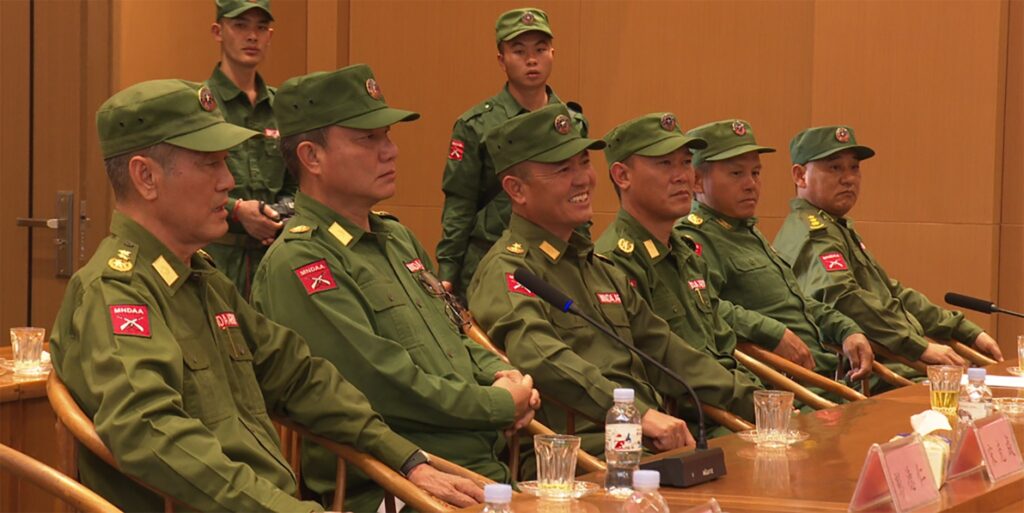
Rejection of China’s interference
Against this backdrop, reports lashing out at the developing situation linked to China’s abetment of the military junta can be seen increasingly in social media and media reports.
According to Development Media Group (DMG) editorial of September 8 it writes: “The Burmese revolution is at a crossroads. The military council, which has suffered historic defeats, is also showing its teeth again. Not on its own strength, but with Beijing’s help.”
“China is protecting its pipelines and ports while betraying the will of the Burmese people and suppressing revolutionary movements.
To put it simply, the military council has collapsed. Military headquarters in Rakhine, Shan, Karenni and along the border have fallen. The people’s forces have captured nearly 100 towns, and the military dictatorship is trapped for the first time in decades.
This is where China comes in. But not for justice. Not for peace. Only to save their economic partner in Nay Pyi Taw.
The fraternal allies, the Myanmar National Democratic Alliance Army (MNDAA), By pressuring the Ta’ang National Liberation Army (TNLA) and the Arakan Army (AA), as well as the Kachin Independence Army (KIA), to cease their offensives, Beijing has given Min Aung Hlaing a much-needed breathing space.
Nowhere is this betrayal more evident than in Rakhine State. Kyaukpyu, Sittwe, and the Kaladan River Delta are battlefields not only between the military council and the revolutionary army, but also between the people and their exploiters.
For China, Kyaukpyu is a fuel port, a special economic zone, and a crossroads for oil and gas pipelines. For the Rakhine people, it is a homeland, a place of honor, and a place of freedom.
However, Beijing’s actions, which are on the side of the junta and do not listen to the voices of the oppressed, demonstrates its position.”
According to Peope’s Spring September 9 report, the spokesperson of the Office of the Prime Minister of the National Unity Government (NUG), U Nay Phone Latt, warned that some countries that are supporting the military junta’s illegal and fraudulent elections, while ignoring the true situation in Myanmar and the wishes of the Burmese people, should not put their trust in the illegal and fraudulent elections.
The NUG made the following warning during its regular public and international outreach program on September 9.
“History has shown that democracy cannot flourish under any authoritarian regime that not only denies the basic rights and freedoms of the people, but also interferes with and destroys them. The National Unity Government and the revolutionary forces are ruling over important parts of Myanmar. The National Unity Government is ready to engage in constructive cooperation with neighboring countries for regional security, humanitarian assistance, and the safe and secure management of our common borders,” U Nay Phone Latt said.
U Nay Phone Latt said that only direct engagement with the popularly supported National Unity Government, rather than encouraging engagement with a terrorist group, can put Myanmar on a genuine path to democratic transition.
People’s Spring September 7 report writes. “The resistance movement was so powerful that it was able to break the hands and feet of the terrorist Burmese army. Therefore, the strength of the terrorist Burmese army has reached a point where it is almost exhausted. However, we are currently experiencing some sad events. That is, the terrorist Burmese army, which is about to be exhausted, is receiving military, political, financial and weapons support from regional countries,” the Acting President Duwa Lashi La said.
He said that regional countries are looking (up) more at the faces of their former military dictators than at the faces of the Burmese people who are living with hardship every day. “It is regrettable that regional countries are providing military technology to the terrorist Burmese army in pursuit of their own interests. I would like to once again appeal to regional countries not to leave our ethnic people in a hopeless situation,” Acting President Duwa Lashi La said.
Both Nay Phone Latt and Duwa Lashi La didn’t mention China and India by name in their statements, but it clearly meant that the two countries were abetting the military junta.
NUG Defense Minister told PVTV in an interview recently on September 11, “The main reason for the current terrorist group (military junta) to become more powerful is some authoritarian countries (have been aiding it). They are using this to gain the support of those countries and launch some offensives. As revolutionary forces, we may have to give up some territory at this time. But we can effectively repel the enemy’s offensive along the front. This is what we are trying to do. Recently, the TNLA, an important revolutionary organization, lost Nawngkhio. The Mandalay region PDFs also lost Thabeikkyin. But now is not the right time to fight defensively. That is why our own troops in the city are withdrawing from the city. Now is the time to fight back against the enemy with active warfare.”
In addition, he said that the revolutionary forces can continue to fight despite some obstacles in obtaining military equipment due to the interference of a foreign country in internal affairs.
“It is true that there is a huge need for weapons and ammunition. Especially at this time, when the other country (meaning China) is openly supporting the military regime that is an enemy of the people, interfering in our internal affairs, and threatening and pressuring our brotherly ethnic revolutionary groups, I must say that there are some obstacles in obtaining military equipment. But we are still getting the considerable amount. On the other hand, we are also developing our own production and technology. This is also progressing. Being able to make enemy weapons our own is an important progress. We will be able to continue fighting,” he said.
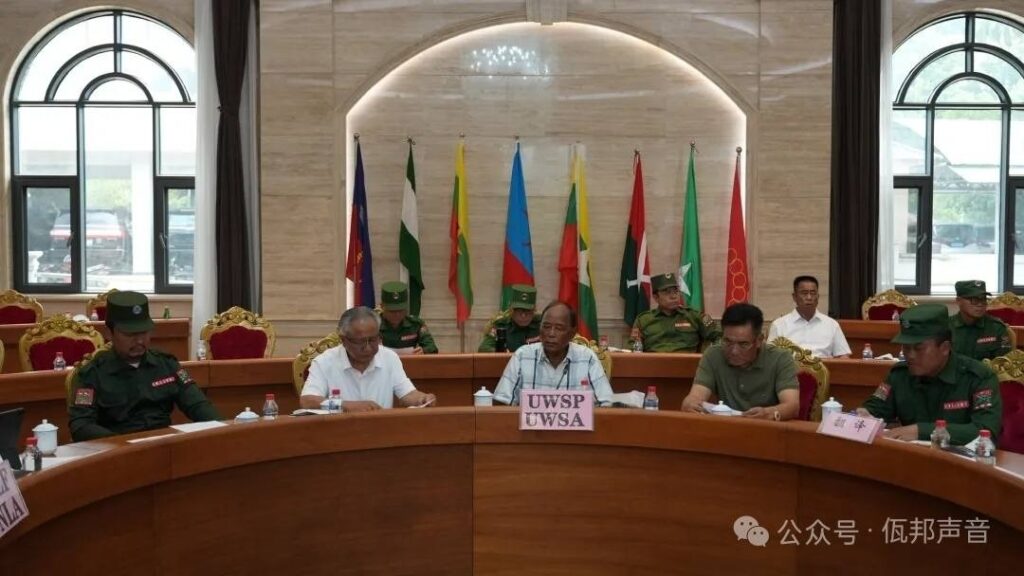
Shan Herald Agency for News report of September 10 writes, UWSA-controlled Hopang Township will imprison anyone who campaign for elections.
“The main thing is that the ‘Wa’ side does not want to let go of Hopang, they are afraid that they will lose power. They say that there must be only the ‘Wa’ party, the United Wa State Party (UWSP), in Hopang, and no other parties or organizations. No one, no matter whether they can use money or power to mobilize the public or campaign for elections (will be allowed).”
On September 4, the UWSA held a public meeting in Hopang Township regarding the military service law, and a local resident said that a UWSA official spoke at the public meeting. At the public meeting, he said the only party in Hopang Township was the United Wa State Party (UWSP), and there couldn’t be no other parties, and if they used power and money to campaign for the elections to be held by the military commission, 10 years of prison term to life-long imprisonment will be enacted on perpetrators.
This clearly is a challenge to the military junta and as well China, which has openly endorsed the junta’s planned election in coming December 2025 to January 2026.
Many other EAOs have openly announced the rejection of the elections and so do the National Unity Government (NUG), including CSOs countrywide, especially in liberated zones which covers more than 60 percent of the country’s territories.
China’s vulnerability
Since the February 2021 military coup in Myanmar, anti-junta resistance groups have increasingly targeted Chinese oil and gas pipeline projects, which are viewed as symbols of Beijing’s support for the military regime. These attacks are part of a broader surge in anti-China sentiment fueled by perceptions that China enables the junta’s rule through political backing, arms supplies, and economic investments.
In May 2021, the Natogyi Guerrilla Force (NGF), an anti-junta group, attacked an off-take station in Natogyi Township, Mandalay Region, that is associated with the China-linked oil and gas pipeline. This attack occurred amid widespread protests and online campaigns criticizing China’s support for the junta, with some social media users threatening to blow up the pipelines. At least 100 of the approximately 7,800 clashes recorded nationwide between February 2021 and early 2023 took place in the 19 townships where the pipelines run, highlighting the vulnerability of these strategic infrastructure projects.
The resistance has continued to escalate. In August of the previous year, coordinated operations by resistance forces, including the People’s Defense Force (PDF), led to the seizure of two junta positions guarding pipeline off-take stations at the entrances of Taung Tha and Natogyi towns. More recently, in May 2025, junta forces abandoned sections of the pipeline infrastructure amid sustained resistance attacks, indicating growing operational challenges in securing the route.
China has responded by seeking security assurances from the junta and increasing protective measures. Following early attacks in 2021, the Chinese government held emergency meetings with Myanmar military authorities to demand enhanced security for pipeline facilities. Despite these efforts, supply has remained under threat, and company sources have expressed concern over the long-term risks posed by ongoing instability. While crude oil supply to PetroChina’s Yunnan Petrochemical in Kunming has reportedly remained steady, the persistent targeting of pipeline infrastructure underscores the strategic and economic risks to China’s Belt and Road Initiative (BRI) investments in Myanmar.
Analysis
As we can see the anti-China sentiment in Myanmar has significantly intensified, particularly in response to Beijing’s continued support for the military junta, which is widely perceived as prioritizing China’s economic and strategic interests over the sovereignty and well-being of the Myanmar people.
China’s support, including military aid such as the provision of fighter jets and political backing, has fueled national outrage and is seen as enabling the junta’s brutal crackdowns on civilians, including attacks on internally displaced persons camps, schools, and marketplaces.
The perception that China is complicit in the junta’s oppression has led to a surge in public anger, with many Burmese viewing Beijing as an enabler of their suffering.
This sentiment is not limited to the general population; it extends to ethnic armed organizations (EAOs) that are key forces in the resistance against the junta. China’s actions, such as pressuring EAOs to halt military offensives like Operation 1027 and closing border crossings to disrupt supply chains, have been interpreted as efforts to prop up the junta at the expense of the resistance and local communities.
Now in the aftermath of General Min Aung Hlaing’s China visit and eventual lionizing him with increased legitimacy stature, signing trade MOUs and promising to endorse Myanmar as a full member of the SCO by Xi Jinping, including aiding militarily and economically, the anti-junta ethnic-democratic stakeholders and the vast majority population are more angry than ever at China for its openly siding with the junta.
No wonder that the anti-China tendency is on the rise as can be seen by massive interactions in social media calling for retaliatory measures against China’s economic interest linked to CMEC and BRI in Myanmar.
Given that many such facilities are within the control areas of anti-junta forces, it won’t be just a mere threat only. To quote the words of Than Soe Naing, an ex-Communist Party Burma (CPB) member and now a well known anti-junta activist and political analyst, recently said somewhat like: “It isn’t only urging to be careful and considerate anymore, but its now a stern warning,” that the public and anti-junta stakeholders anger could be transformed into China’s loss in a true sense.


Leave a Comments