




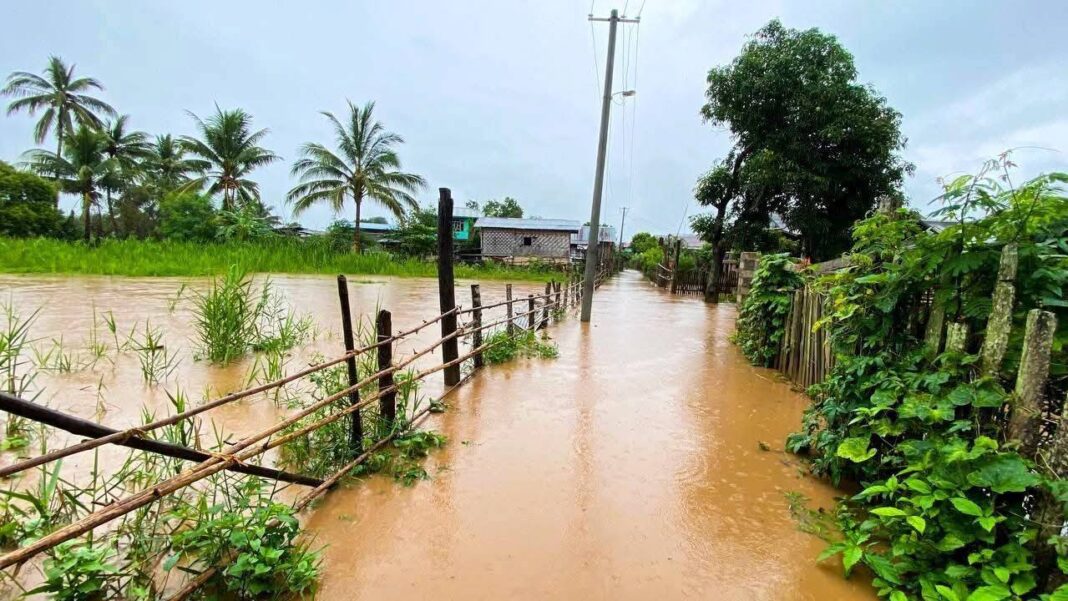
Weeks of relentless rainfall since June 10 have submerged thousands of acres of farmland in the Inle region of Nyaungshwe Township, southern Shan State, plunging local farming communities into a deepening crisis.
Just weeks ahead of the scheduled harvest, floodwaters inundated rice fields and vegetable plots, while landslides and the overflow of Inle Lake added to the devastation.
For many farmers who had planted their crops using credit, the losses are catastrophic.
“Our rice fields were completely flooded before we could harvest,” said a local woman. “We borrowed money to plant, and now we’re forced to repay the debt by working as daily laborers.”
The flooding struck approximately 20 days before harvest, wiping out seasonal yields and compounding food insecurity in the region. Once self-reliant farmers are now struggling to make ends meet through low-paying manual labor.
“This year, I have no income. I used to live off my farm, but now I work day to day just to eat,” said another woman who lost her crops to the floodwaters.
Women in the Inle region have been particularly hard-hit. Many now rely on gathering and selling wild vegetables, rolling traditional tobacco, or taking on informal jobs to survive. Meanwhile, men often turn to fishing or carpentry to scrape together income.
“I owe 5 million kyats (around USD 1,140),” explained one woman. “If I collect wild vegetables, I might earn 10,000 kyats a day. Rolling tobacco earns me 8,000. Fishing brings in about the same. Even if I work every day, it’s not enough to repay the debt and feed my family.”
Local residents say this year’s flooding is the worst the region has seen in 50 years. Many blame increasing environmental degradation, particularly along riverbanks and streams, where expanded agricultural activity has led to silt buildup and poor water drainage.
“There are more farmers now, and the streams have become shallow,” said a young man from Inle. “What used to be 12 feet deep is now just 4 feet. When it rains, the water spills out quickly.”
The region is still reeling from a major flood in September 2024 that displaced thousands. This year, June’s flooding struck before harvest, wiping out livelihoods yet again and worsening long-standing economic challenges.
As if the floods weren’t enough, a powerful earthquake in March 2025 destroyed thousands of homes across the region. Many families have yet to recover, leaving them even more vulnerable to climate-related disasters and deepening debt.
Without immediate support or long-term resilience planning, Inle’s farming communities face a grim future, caught between recurring natural disasters and mounting financial hardship.



Leave a Comments