





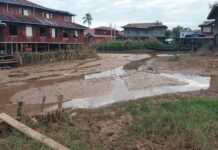
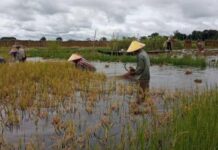
Heavy and continuous rains have flooded more than 1,000 acres of summer paddy fields in Shan State’s Taunggyi, Hopong, and Hsihseng townships, leaving local farmers grappling with widespread crop loss for the second year in a row.
The worst-hit areas include Narhee, A Thone Taw, and Pong Inn village tracts in Taunggyi Township, where farmers had just finished planting seedlings when the flooding began.
“Our seedlings were washed away before they could take root. And it’s not just the water, we’re also dealing with Grass Carp eating the young plants and a surge in Golden Apple Snails that are destroying what’s left,” said a Pong Inn farmer.
The damage echoes last August’s floods, which devastated over 10,000 acres of paddy fields in the same region and wiped out rice stocks stored in granaries. The financial toll from last year forced many farmers to reduce their acreage this season, planting only enough to survive.
“We planted just to get by this year because we had no choice,” said a local farmer in his 30s. “But with the rains hitting so early, even that might be lost. We’re living day by day now. There’s no hope left if the rain doesn’t stop.”
The economic impact has been severe. Last year, the destruction of crops drove rice prices in Pong Inn up to nearly 250,000 kyats (about USD 55.60) per 46-pound bag. This year, prices have dropped to around 100,000 kyats (USD 22.70), while production costs remain high. Farmers estimate the expense of cultivating just one acre, including labor, fertilizer, and seed, at roughly 1 million kyats (USD 222.70).
Farmers also criticized local authorities for what they describe as weak support systems. “The Department of Agriculture and the Land Registry Office aren’t doing their jobs. Without accurate records, there’s no way they can provide real help,” said another Pong Inn resident.
Climate patterns in the region are becoming increasingly unpredictable. Pong Inn traditionally experiences a six-month dry season followed by six months of rainfall. But farmers now report erratic conditions—water shortages during the plowing period and sudden floods immediately after planting, making farming increasingly unsustainable.







Leave a Comments