




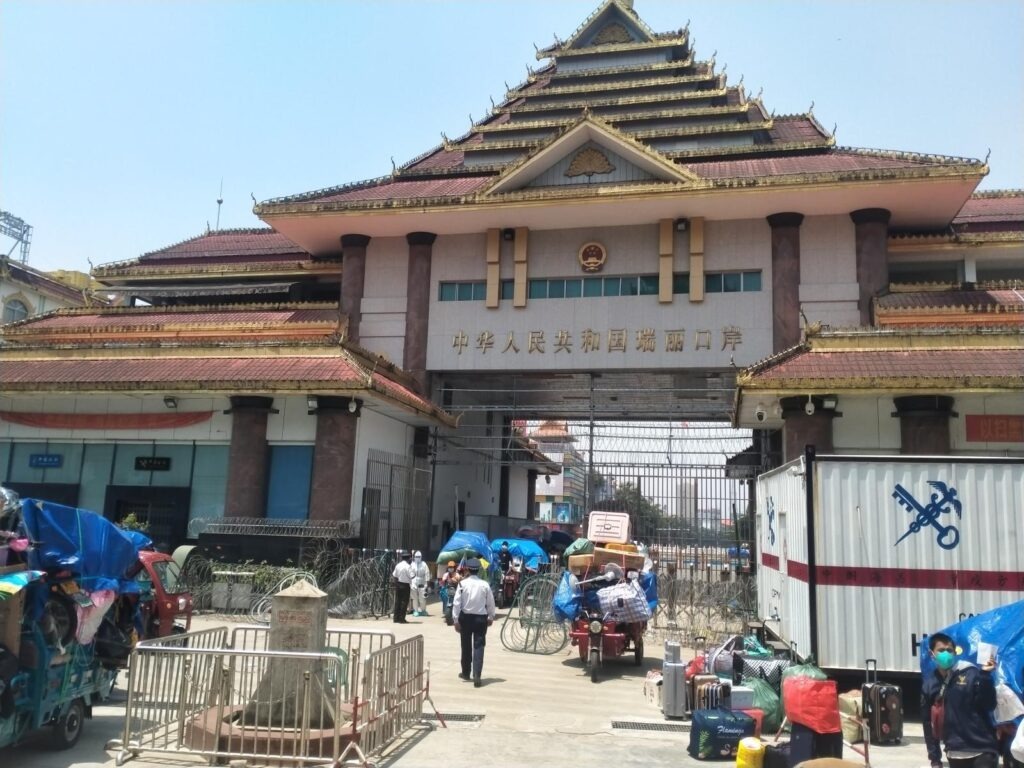
As conflict and economic collapse deepen in Myanmar, young people seeking work in China are increasingly falling into cycles of bribery, debt, and exploitation, driven by strict travel restrictions and limited opportunities at home.
Under the military’s People’s Military Service Law, men aged 18 to 35 are barred from traveling abroad for work. Local sources say the policy has created a black market in which officials, brokers, and intermediaries profit from those attempting to leave the country.
Many youths now rely on informal networks to cross the border, a process that often involves paying bribes to multiple departments, including immigration authorities, to alter official records and bypass restrictions.
“If you aren’t yet 27, they make it appear as though you are. Different departments work together to arrange it. The level of bribery is now very high,” a young man familiar with the process told SHAN.
The financial burden begins before migrants even reach China. According to sources, a worker heading to a garment factory may pay around 2,300 Chinese yuan on the Myanmar side, followed by an additional 2,500 yuan for documents and medical checks after crossing the border.
While some factory owners advance these costs, workers often fall into debt. Monthly wages typically range from 1,400 to 1,800 yuan, with repayments of 500 to 700 yuan deducted, leaving little take-home income.
“I want people to understand how these youth are being exploited. Most of what they earn goes straight toward repaying debt,” a resident of Muse said.
Once in China, many workers are issued short-term smart cards and confined to factory compounds. According to local accounts, they are not permitted to leave, effectively restricting their movement and isolating them from the outside world.
Most migrants come from economically struggling regions, including Lower Myanmar and conflict-affected areas in northern Shan State, such as Hsipaw, Kyaukme, and Nawnghkio.
Despite the high costs—exacerbated by an exchange rate exceeding 630,000 kyats per 1,000 yuan—many young people continue to take the risk due to a lack of jobs and security at home.
Local observers warn that this growing desperation is also contributing to an increase in human trafficking cases. In March, three young women were rescued in Muse after being lured by job offers and forced into the sex trade. In a separate incident in April, another woman was rescued after being deceived by brokers and taken to the border area.
Residents say that without safer migration pathways and stronger oversight, young people will remain vulnerable to exploitation both before and after crossing the border.





Leave a Comments