




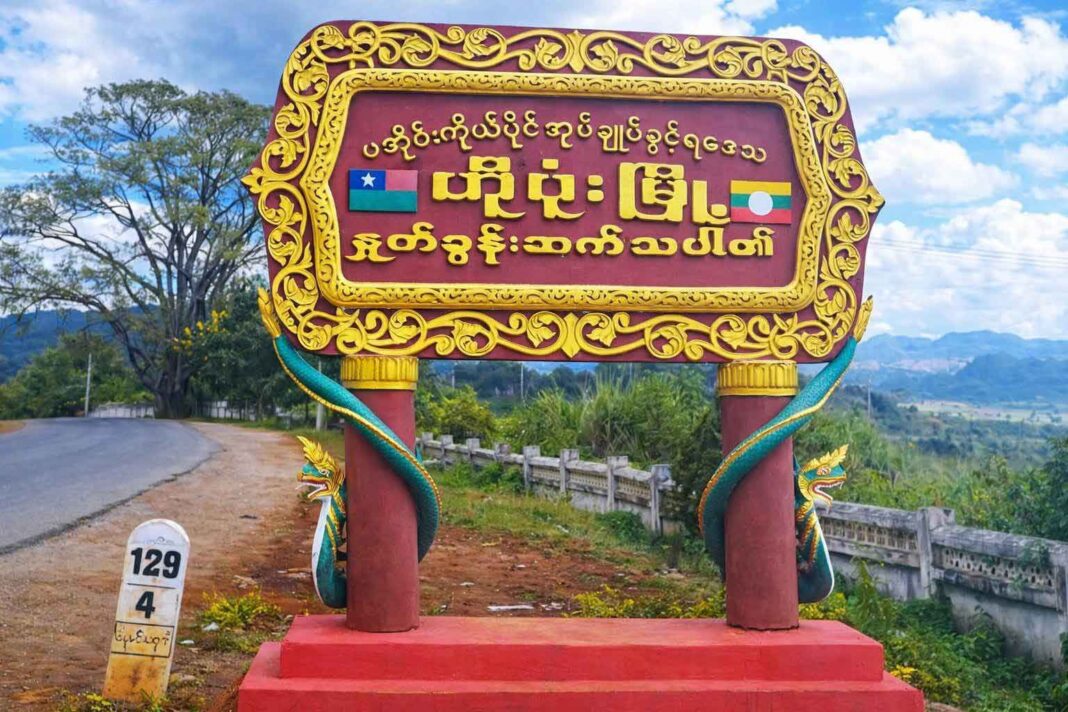
Junta forces in Hopong, southern Shan State, have reportedly detained at least eight young people for forced labor, commonly known as portering, according to local residents.
Since the final week of February, soldiers have been targeting youths traveling home by motorcycle after work in the evenings. Residents say that while some families have been able to secure the release of their children by paying ransoms amounting to tens of lakhs of kyats, others were reportedly taken directly to military training centers.
“They carry out inspections and arrest people in the evening when we are returning from work. You are only released if you can pay a large sum of money. For some people, no matter how much is offered, they will not let them go—they are sent straight to military training. It is no longer safe to move around like before,” a local man told SHAN.
The areas where the arrests are taking place are under the influence of the Pa-O National Organization (PNO), a militia group aligned with the military commission. Residents also report that the PNO has been collecting so-called “military service fees” from households, ranging from 50,000 to 100,000 kyats per month.
A resident in his 30s described the growing atmosphere of fear, saying that reports of forced recruitment circulating online are now being confirmed by local experiences. According to him, many young people are afraid to leave their homes, severely restricting their freedom of movement and ability to work.
A similar situation is also unfolding in the Inle region, where the threat of being seized for portering has made it difficult for daily wage workers to travel for employment, further destabilizing their livelihoods.
An Inle resident explained that men typically earn around 10,000 kyats per day, while women earn between 6,000 and 8,000 kyats, making it increasingly difficult for families to cope with both rising commodity prices and monthly military-related payments.
“No one wants to go when they call for military service, so they resort to forced seizures. If you stay home to avoid the draft, you lose your daily wage. It makes it even harder just to find enough to eat,” the resident said.
Residents added that the Inle region is still struggling to recover from recent natural disasters, including floods and earthquakes, which have already weakened the local economy as well as education and healthcare systems.
Since the activation of the People’s Military Service Law in February 2024, forced recruitment tactics—including the seizure of travelers, late-night household inspections, and lottery-based conscription—have reportedly become increasingly common across Myanmar, including in southern Shan State.





Leave a Comments