




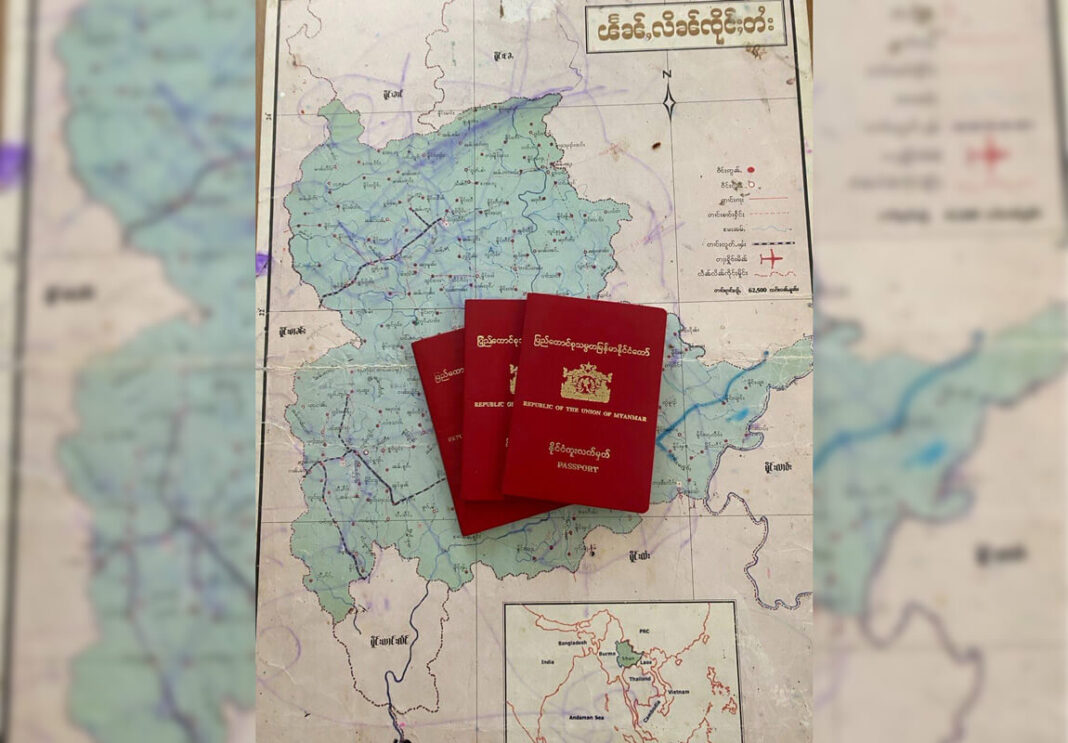
Escalating conflict, economic collapse, and the enforcement of mandatory military service are driving growing numbers of young people in Myanmar to seek ways to leave the country, according to residents and observers.
At the Immigration Department office in Taunggyi, Southern Shan State, the official cost of obtaining a passport through the Online Appointment (QR) system is approximately 100,000 kyats. However, amid rising demand and limited daily processing capacity, applicants seeking expedited service are paying brokers up to 500,000 kyats (approximately USD 128) per passport to receive documents within a week.
The Taunggyi immigration office processes only about 170 applicants per day, forcing many people—particularly those traveling from rural areas—to wait for hours or even days.
“I have to start waiting at 4 a.m., and some people arrive as early as 2 a.m. For those of us coming from villages, the costs quickly add up. When you factor in hotel fees and food, doing it ourselves ends up costing almost 500,000 kyats anyway,” a woman waiting for her passport told the SHAN.
She added that the cost of self-processing has become nearly identical to broker fees, which are reportedly paid to intermediaries working in coordination with certain officials to bypass the QR queue.
“If the price is the same, it’s faster to use a broker. Even when I tried to do it myself, I had to queue for three consecutive days. Some elderly people waiting in line became sick because of the early-morning cold,” she said.
According to a United Nations Development Programme (UNDP) report released on August 12, four out of ten young people in Myanmar want to leave the country due to armed conflict, economic hardship, and the enforcement of conscription.
“It’s no longer possible to live—or even eat—properly here. There is no security. I want to work abroad,” “Even at the fingerprint station, officers shout at people. We live in fear here.”said a young man waiting at the Taunggyi passport office.
While Japan is the most desired destination for many young people, the UNDP report notes that Thailand remains the most common destination in practice. The report also warns that 47 percent of youth lack proper travel documents, forcing them to rely on unsafe and illegal border crossings.
The situation in Taunggyi reflects a nationwide trend, in which the passport QR system has become a major bottleneck, giving rise to a broader informal economy around migration. Since the People’s Military Service Law was enacted in 2024, families have faced multiple unofficial costs at various stages of the departure process, from documentation to travel clearance. As a result, many now regard these expenses as a “life-saving” necessity to help their children leave the country before being forced into conscription.






Leave a Comments