



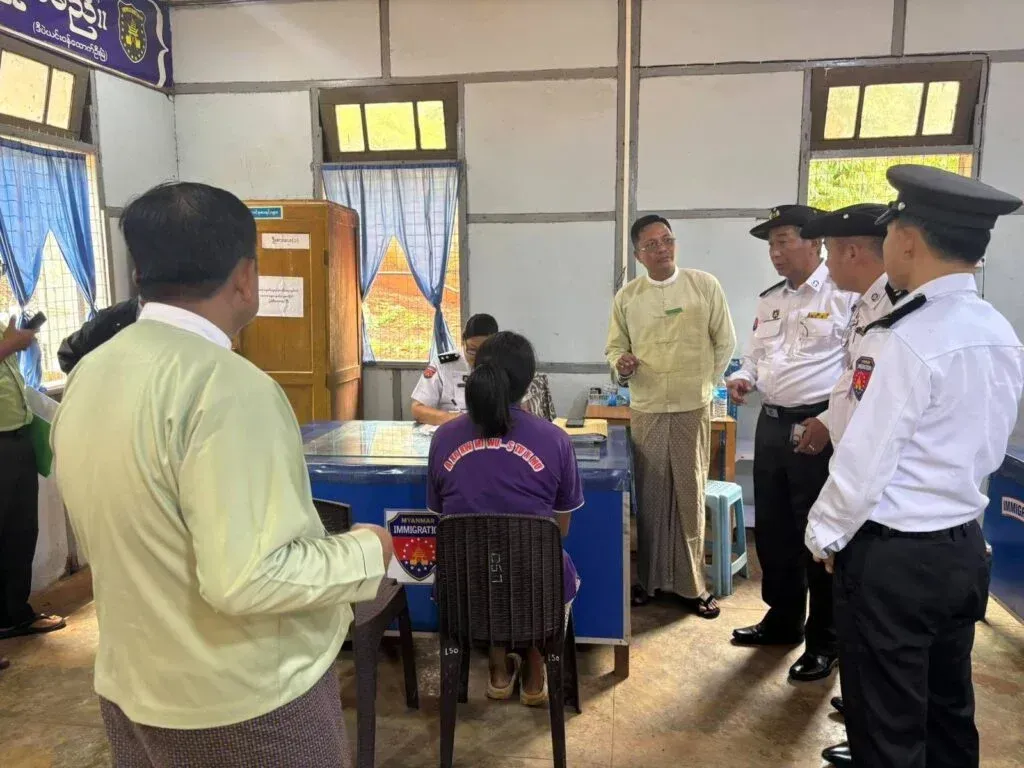
The junta has abruptly transferred the director of Lashio Township’s Immigration and Population Department following revelations of a large-scale bribery scheme that prioritized ethnic Chinese applicants—including Kokang communities—over local ethnic residents in the processing of citizenship documents.
Local sources confirmed that Township Director U Khin Maung Tun was reassigned in the second week of August after investigators uncovered a cash-for-documents racket worth millions of kyat. The operation allegedly granted National Registration Cards (NRCs) and birth certificates preferentially to Chinese nationals, while local ethnic groups faced inflated fees, long delays, or outright rejection.
“Their method was strict—no brokers allowed inside, everyone had to queue properly. But for ethnic Chinese, immigration officers would demand over 10 million Kyat at their discretion. Local people who couldn’t afford it often got no service at all, even after queuing daily,” a source said.
Staff at the Lashio Immigration Office (known locally as La-Wa-Ka) described a systematic pricing structure: Chinese nationals: 2–10 million kyat (US$464–$2,320) for NRCs and birth certificates.
Local ethnic residents: 300,000–1,000,000 kyat for the same services. Late birth registrations: “Age penalties” of 100,000 kyat per year of delay; 500,000 kyat if registered at age five.
Even after paying, locals often faced unexplained delays or rejections. One businessman alleged that Deputy Director Daw Thida Myint worked exclusively with high-paying Chinese brokers, ignoring smaller brokers unless they brought clients ready to pay millions.
A farewell ceremony for U Khin Maung Tun was held on August 10. Daw Thida Myint remains in charge and is believed by insiders to oversee an even more entrenched brokerage network.
The Lashio Immigration Office reopened on May 19 after junta forces regained control of the area. It processes NRCs and Unique Identity Numbers (UIDs) for residents from both junta-held and MNDAA-controlled areas, including Hsenwi and Kunlong townships.
On August 12, Union Minister for Immigration U Myint Kyaing visited nearby Nawnghkio Township to inspect ID card processing as part of the junta’s push to document populations in northern Shan State.
Locals, however, doubt the transfer will bring reform. “It doesn’t matter if they change officials,” said a longtime Lashio resident. “Unless they change the whole system, the new director will just continue the same practices. The problem isn’t individuals—it’s the structure that allows this corruption.”
The case highlights the persistent flaws in Myanmar’s citizenship documentation under military rule, where access to basic rights is determined less by legal entitlement and more by wealth and ethnicity.





Leave a Comments