



Good speech makes no one feel bad
Bad speech makes no one feel good
(Shan proverb)
Today’s session begins with yesterday’s exercise results from 4 discussion groups. I have put them together here. (Some of which are my own input, as readers who have seen my earlier article, Scholar: Why Burma won’t allow Shan secession, 5 July 2016, will immediately recall.)
Perceived Tatmadaw’s core interests
- Its mindset: to maintain the 4th Burmese empire. The previous three were established by kings Anawrahta, Bayinnaung and Alaungpaya, all Burmans. Which means Burmans have the historic mission (like the long ago White Man’s Burden) to lead and the non-Burmans have to follow.
- Greater acceptance by the international community
- Monopoly of the country’s natural resources
- No structural change (meaning no SSR) but only DDR
- Survival of the true Burman state which is surrounded by non-Burman states
It appears to be almost fanatically interested to keep the Shan State away from China, which is bordered in the north and Thailand, which is bordered in the south, both of them its historic adversaries.
“The answer seems quite clear if one examine a map of the area. Because it is land locked and has no major navigable river to link it to the sea, the state would have to unify or ally with China, Thailand, or join with another land-locked area—Laos,” wrote Silverstein.
Among the three, “there seems to be no political or economic reason—historic or current—to warrant the creation of a Laos-Shan union.” With the other two countries, the situation is different:
“In military terms, it (a merger) would bring China or Thailand into the heartland of the Union, and it would create such an exposed border that defense of Burma would be nearly impossible.”
After re-reading the article, I began to understand what the Tatmadaw’s “Three Sacred Causes”: Non-disintegration of the Union, Non-disintegration of National Solidarity, and Perpetuation of National Sovereignty, was all about. That it was just a plain corollary of its principal aim: The survival of the Burman State.
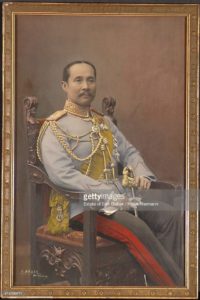
Which wasn’t different from what Bangkok had done when the British were pushing from the west and the French from the east in the 19th century. King Chulalongkorn (1853-1910) knew that had he allowed his northern and northeastern tributary kings to maintain their independent status, it was highly likely they would choose to join either the British or the French, leaving Bangkok exposed to eventual subjugation. And he set out to establish plans to reduce the tributaries into total submission. The result was Siam or Thailand as we know today.
Perceived Tatmadaw’s fears
- Losing power and leadership
- Unity of the ethnic armed organizations (EAOs) under the “Federal Union Army” banner
- Losing its business interests
- Transitional justice
- Decentralized federalism
- Shan State independence
- Civilian control
Moreover, the Tatmadaw appears to be suffering from a chronic siege mentality, “a defensive paranoid attitude based on the belief that others are hostile toward one,” according to its definition.
No doubt, for peacemakers, it would pose as a formidable challenge to decide how best to minimize these fears.
Low hanging fruits
“So far it has made some concessions with regards to formation of semi-autonomous armed units,”
said Steve, pointing out the emergence of People’s Militia Forces (PMFs), Border Guard Forces (BGFs) and Special Combat Police Forces.
U Aung Min, the former peace negotiator, had also mentioned the planned resurrection of ethnic armed units which were disbanded later, such as Chin Rifles, Kachin Rifles and Shan Rifles. “Signing the NCA which contains acceptance of federalism and the call to negotiate SSR/DDR may also be considered as signals that there are several things it is ready to offer.”
He then gives us a short presentation of case studies which include El Salvador, Democratic Republic of the Congo, Nepal, the Philippines, and Burundi.
We then go into another group exercise on hypothetical options spectrum: How the former foes in Burma can merge with each other.
The following is the result.
| Group Ⅰ | Group Ⅱ | Group Ⅲ |
| Step1. Demarkation and recognition of semiautonomous status
Step 2. Becoming state reserve forces and local police forces
Step 3. SSR negotiations
Step 4. Implementation | Practically same as Group Ⅰ, with an additional proposal that there must be shared responsibility in the supreme command | 1. Becoming local police forces 2. Becoming state reserve forces 3. Shared responsibility in the supreme command |
By the end of the day, Steve still has a lot to tell us. But it is already 17:00.
I hope we see him again.



Leave a Comments