





Beijing’s detention of U Min Zin is not merely a legal maneuver; it is a calculated warning to the entire ecosystem of independent analysis in Southeast Asia, signaling a shift from quiet influence to overt intimidation.
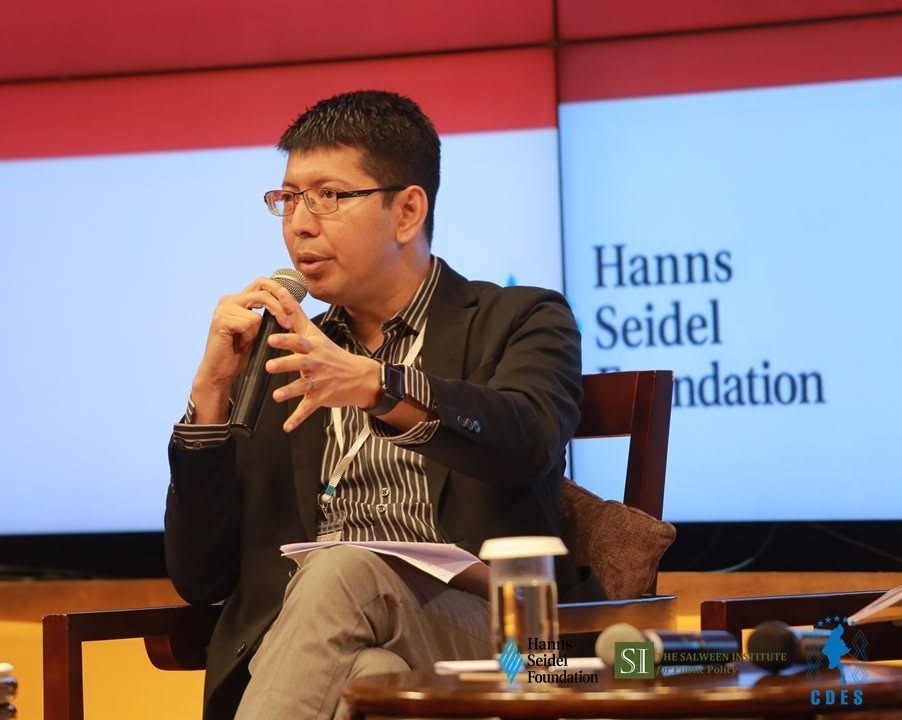
When Chinese authorities detained U Min Zin, a US-based scholar and director of the Myanmar Institute for Strategic and Policy Studies (ISP-Myanmar), at Kunming airport in early June 2026, they did more than arrest an individual. They sent a chilling message to the entire ecosystem of independent analysts, journalists, and scholars studying China’s role in Myanmar: critical inquiry is now a dangerous enterprise. Accused of the vague and politically charged crime of “spying and endangering Chinese national security,” Min Zin’s detention transforms a routine academic conference into a geopolitical warning.
This incident marks a pivotal turning point in Beijing’s strategy. For decades, China relied on quiet economic leverage and behind-the-scenes political maneuvering to shape Myanmar’s trajectory. Today, however, as anti-China sentiment spreads across Burmese society and the junta’s grip weakens, Beijing has abandoned subtlety for overt intimidation. The arrest of Min Zin is not an isolated legal dispute; it is a strategic signal that Beijing is willing to cross borders, weaponize legal frameworks, and silence dissent to protect its interests. As this crackdown extends from the airport to the hills of Shan State, it reveals a fundamental shift: China is no longer just a partner of the Myanmar junta—it is an active participant in the war for the region’s information space, determined to silence the voices that threaten its narrative.
The Arrest as Strategic Message
China’s decision to arrest Min Zin rather than simply deny him entry or send him back is strategically calculated. The scholar, detained at Kunming airport while attending a conference on June 3, was accused of “spying and endangering Chinese national security”—charges deliberately vague and politically motivated rather than legally substantive. This approach serves multiple purposes simultaneously.
First, it sends a chilling message to the entire ecosystem of independent analysts, journalists, and scholars who study China’s role in Myanmar: critical analysis of China’s behavior is not merely inconvenient—it is dangerous. By making the punishment disproportionate to the “crime” of attending a meeting and conducting academic research, Beijing creates maximum deterrent effect with minimal cost. Other scholars will think twice before publishing work examining China’s strategic interests, economic penetration, or regional influence in Myanmar.
Second, the arrest demonstrates Beijing’s willingness to operate globally in pursuit of its interests. Min Zin, though based in Thailand and studying at UC Berkeley, was not safe from Chinese reach. This signals that Beijing’s definition of “national security” extends far beyond its borders and applies to anyone, anywhere, who engages in critical analysis of Chinese policy.
Third, the timing is crucial. The arrest preceded Myanmar’s President Min Aung Hlaing’s scheduled visit to Beijing by just weeks, and followed a high-profile meeting between U.S. President Donald Trump and Chinese leadership. This creates a strategic signal to the junta leadership that Beijing will protect its interests by suppressing dissent, reinforcing the message that China is a reliable partner in the face of internal challenges.
Fourth, the use of vague “spying” charges serves a dual purpose. It provides Beijing with a legal framework to justify the arrest while maintaining deniability about political motivations. The accusation of endangering national security allows China to frame the arrest as a matter of protecting itself rather than suppressing free speech—making it more difficult for critics to challenge.
China’s Approach in Northern Shan State
China has intensified its operations in northern Shan State, particularly through the Myanmar National Democratic Alliance Army (MNDAA) and allied ethnic armed organizations. These operations aim to secure strategic trade routes from the China border across Burma to the Gulf of Martaban, while protecting Chinese economic interests in mineral resources, timber, and agriculture. However, these actions have resulted in the displacement of local populations and deepened resentment toward Chinese presence. The takeover of trading routes and economic activities by Chinese-controlled armed groups has created a narrative of Chinese colonization that resonates across ethnic and political lines.
The Anti-China Sentiment Problem
A critical factor driving China’s response is the growing anti-China sentiment among ordinary Burmese people. This sentiment has multiple roots. Economic grievances arise as Chinese businesses have aggressively penetrated Myanmar’s markets, taking over banana plantations, mineral resource extraction operations, and other sectors. Cultural resentment emerges from perceptions of cultural imperialism from their northern neighbor. Environmental concerns stem from Chinese-led development projects—mining operations, dams, and deforestation—that have caused significant ecological damage while displacing local communities and undermining traditional livelihoods.
Political anger focuses on the junta’s dependence on Chinese military support, creating resentment that Beijing’s propaganda efforts have struggled to counter. Beijing monitors this anti-China sentiment closely and recognizes its threat to Chinese influence. The Chinese ambassador’s campaign to portray Myanmar and China as “Swe Myo Pauk Phaw” meaning kinship or brethren is a direct response to these growing grievances. The propaganda aims to reframe China’s narrative from that of an exploitative outsider to a benevolent partner, create a sense of national identity centered on “brotherhood,” and preempt popular resistance by shaping public perception before it can organize.
Strategic Implications and Broader Patterns
The arrest of Min Zin aligns with China’s broader approach to managing criticism and dissent globally. By blurring lines between legitimate activity and perceived threats, using legal mechanisms for political purposes, and demonstrating that Beijing will use all tools at its disposal, China creates an environment of self-censorship among critics. The disproportionate nature of the response—arresting a scholar for attending a meeting and doing academic work—signals that Beijing is not merely concerned with specific threats but with establishing a deterrent effect.
This reflects China’s strategy of “managed dissent”: suppressing open opposition while co-opting or silencing independent voices, and controlling the narrative to ensure only pro-China perspectives remain acceptable. The arrest is part of this comprehensive approach to managing the information space and preventing anti-China narratives from gaining traction.
The Domestic Anti-China Factor and Its Role
The domestic anti-China sentiment identified is particularly significant because it represents a challenge that cannot be managed solely through military support for the junta. As the junta loses popular legitimacy, Beijing needs to manage both the military leadership and the broader population. The growing resentment toward Chinese economic activities, environmental destruction, and political support for the junta creates a threat to Chinese influence that must be addressed.
This domestic factor makes Beijing’s response more vindictive and heavy-handed. Traditional approaches to managing Myanmar relationships—relying on the junta to maintain order—become insufficient when the population itself begins to oppose Chinese interests. The arrest of Min Zin, combined with military operations in Shan State and propaganda campaigns, represents Beijing’s attempt to reassert control over both the military hierarchy and the broader society.
The Long-Term Risk for China
The danger for Beijing is that its heavy-handed approach may be creating more resentment rather than less. By using force against ethnic armed organizations, arresting critics without clear justification, and framing all criticism as espionage, China risks driving anti-China sentiment deeper into Burmese society. If the population comes to see China as an exploitative force rather than a benevolent partner, Beijing’s influence could erode much faster than the junta’s.
The arrest of Min Zin represents Beijing’s attempt to manage this growing problem through a combination of intimidation, propaganda, and force. However, the very tactics Beijing uses to manage anti-China sentiment—economic penetration, military force, and information control—may be accelerating the very resentment they seek to prevent. In trying to silence the scholar, Beijing may be silencing its own future in Myanmar.
Conclusion
The arrest of Min Zin is a multi-faceted response to China’s complex strategic challenges in Myanmar. It addresses domestic anti-China sentiment, maintains control over the junta, secures economic interests through military means, and establishes a deterrent effect against independent criticism. The arrest is not merely about preventing a single scholar from attending a conference but about sending a broader message about Beijing’s willingness to use all available tools to protect its interests and maintain control over the information space in Myanmar.
As China continues to navigate the delicate balance between supporting the junta and managing the broader population, incidents like the arrest of Min Zin will likely become more frequent and more visible. The strategy of “silencing the scholar” reveals a deep insecurity in Beijing’s position: the harder it tries to suppress the truth, the more it exposes the fragility of its influence. Ultimately, China’s attempt to control the narrative through fear may prove to be its greatest strategic blunder, turning a regional partner into a global pariah in the eyes of the very people it seeks to dominate.





Leave a Comments