

Day Six-Seven. Wednesday-Thursday, 14-15 December 2016
Before you seek change, the sages said, be very sure you have savored all the joys of the present.
The Water Margin, David Weir
Today’s presentation begins with criticisms on the ongoing peace process:
- The August Union Peace Conference 21st Century Panglong (UPC 21 CP) wasn’t a political dialogue. It was Just a “Yin-Phwint-Bwe” (where people came to get things out of their chests).
- The mechanism for the people’s participation is inadequate
- Only those who have arms appear to be making their voices heard
- The whole process is still top down. The decision making still lies with the UPDJC. Others are just recommendation makers.
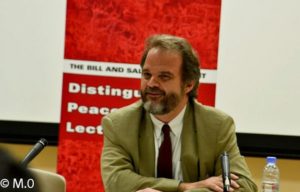
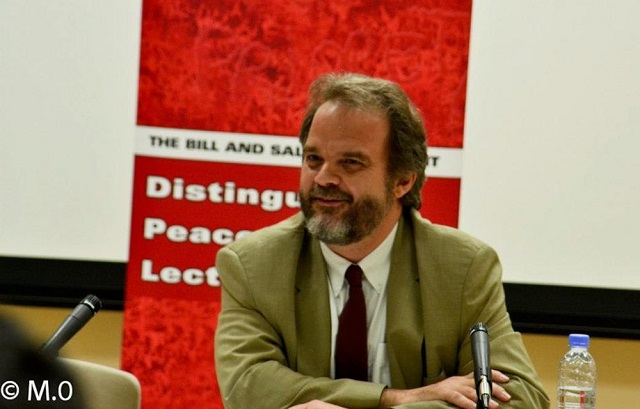
Hannes is then introduced. A South African who had worked with Nelson Mandela, his experience in making peace has covered several countries, including Colombia, Cyprus, Lebanon, Nepal, Sri Lanka, Yemen, etc.
According to him, Burma’s peace process has reached a critical point where it can fall apart, if its weak points are not strengthened in time. Most of the past 5 years had been spent in structuring change instruments.
Existing change instruments include:
- The 2008 constitution- the military’s framework for change
- The Nationwide Ceasefire Agreement (NCA)
- The 2015 elections which have produced a unity government (some may call 2 governments) The ethnic people have no control of the parliament, either in the state or union level, unlike 1947.
- The Framework for Political Dialogue (FPD) designed by tripartite (government, EAOs-, and political parties) agreement


- #3 and #4 can also be called constitutional change instruments. Their difference is in decision-making:
- #3 by majority consent
- #4 by consensus
- The states and regions share common union principles, but different state/regional designs due to their different realities. Some are economically dependent on the central government, while others are not. Some of them may be satisfied with having state police forces, but others may wish to maintain state defense forces.
- Meanwhile the NLD and the military’s position is for minimum decentralization, which is contrary to the states and regions’ maximum federalization. 3-4 different modalities are therefore necessary for each of them to negotiate with the government and the military. (The Wa model may be unacceptable to the military)
- His recommendation is a three-phase process:
- Phase One, where all stakeholders negotiate for a common set of federal principles


- Phase Two, where each state/region negotiates with the government/military on its own
- Phase Three, where the stateholders return to the Union Peace Conference (21st Century Panglong) to finalize their agreements
No decision is made or asked to. But I feel that many leave the workshop with something to think over, something to take a relook of their own existing plans.
The rest of the day and the next are spent visiting a childhood friend I haven’t seen since 1969, and making calls to others.


Leave a Comments