

Day Two. Tuesday, 9 January 2017
How does the sea become the king of all streams?
Because it lies lower than they!
Tao Teh Ching, Chapter 66
John C.H.Wu translation
Today, our friends go over what they had learned yesterday. And here are some of their comments:
- The Tatmadaw wants unity and we want unity. But what they want and what we want are different like oil and water.
What the Tatmadaw wants is Unity in Uniformity, the kind some scholars liken to a melting pot, and what the Abhidhamma calls Sampayutta Paccaya (Supporting each other by merger).
What we want, on the other hand, is Unity in Diversity, the kind some scholars liken to a salad bowl, and what the Abhidhamma calls Vippayutta Paccaya (Supporting each other while maintaining each’s identity, like matter and spirit)
- But, we, the EAOs, lack consistency. With others, we want Unity in Diversity. But among ourselves, we want Unity in Uniformity.
Challenges facing EAOs
- Top-down practice in the peace process, eg. The Union Peace and Dialogue Joint Committee (UPDJC) that organizes political dialogues and the UPC 21 CP. As a result, the first two conferences had been more of being theaters than being serous dialogues for peace.
- The government’s new negotiating team is still learning its trade by doing it the hard way. The result:
While, with the unpopular USDP government, it was easier to negotiate, it has become a real challenge negotiating with the popular NLD government, although it has been outwardly singing the same tune with the EAOs: constitutional change to fit in with the aim for establishing a democratic federal union.
- The more the non-signatories refuse to sign the NCA, the more they are dancing to the Tatmadaw’s tune
- Both the Tatmadaw and the NLD will never accept the Wa’s “One country, two systems”
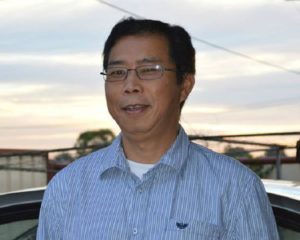
Dr Sai Oo position
- With the Tatmadaw, it doesn’t trust any EAOs, not even the KNU. But instead of scheming to weaken them, it should meet more often with them, talk to them about its concern and ask questions. Then they have a chance to reach understanding and agreement
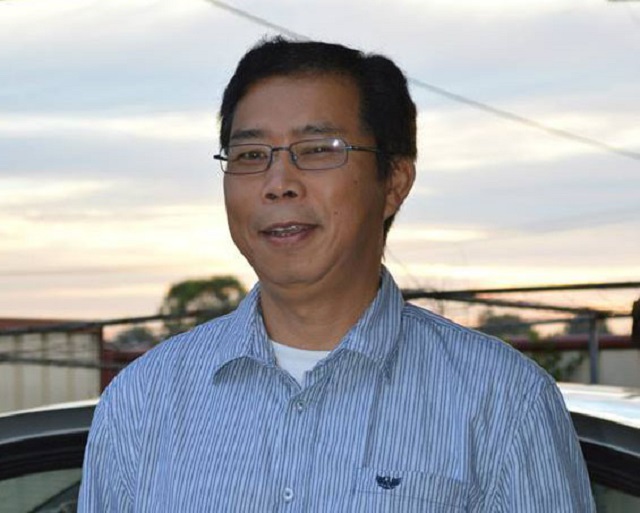
In the afternoon, I have another meeting with the Pyidaungsu Institute Yangon (PIY), led by Dr Sai Oo whom I have known for more than 20 years as Sai Lao Leng.
Though it has only 5 permanent members (one of whom deals with the dreary but essential administrative details), 1 part timer and 1 intern, it has done quite a lot last year: research, strategic studies, publication, capacity building trainings, and providing technical assistance to the EAOs’ JICM, JMC and UPDJC.
This year, with the PI Chiangmai having been downsized, the PIY will be hunting for more researchers, they tell me.
On the publication side, a few booklets are expected to come out in a few months: Federal Glossary, Comparisons of 3 Constitutions (1947, 1974 and 2008) and 3 Draft Constitutions (AFPFL, NCUB and FCDCC), and Compilation of Bilateral Ceasefire Agreements, to name a few. “We are also working on the local government systems that we hope will answer the current calls for new statehoods,” says Sai Oo.
We have dinner with him and his newlywed wife in the evening.
I haven’t much to say for Day Three, except that I make a call at the office of one of the brightest young scholars who used to work with The Irrawaddy in Chiangmai. He is hoping to pick my brains, but the day ends up with me doing that to him.
Day Four is also good. The traffic in the city has become wonderfully less congested during the 4 days I’m there. I ask the driver what’s causing it.
“It’s the Japanese,” he says. “They’ve been helping the city fathers with a better traffic light system. Thanks to them, you’ll be at the terminal in a few minutes.”
And so I am.

Leave a Comments